
Leche de Tigre is one of the most recognizable flavors in Peruvian seafood cooking. This bright, citrusy mixture is made with lime juice, fish, red onion, cilantro, chili pepper, and a little fish stock. It has a fresh taste, a pleasant heat, and a balance of sour and savory flavors that makes it a popular part of Peruvian ceviche.
The name means “tiger’s milk” in Spanish, but this sauce contains no milk. Instead, it gets its name from its cloudy, milky appearance and its strong, lively flavor. In Peru, Leche de Tigre is served in small glasses, alongside ceviche, or as a flavorful base for seafood dishes.
You can make this Peruvian Leche de Tigre recipe at home with a few fresh ingredients. The important things are using suitable seafood, balancing the lime juice with the other ingredients, and keeping everything properly chilled.
What Is Leche de Tigre?
Leche de Tigre is a traditional Peruvian citrus-based seafood mixture commonly associated with ceviche. It is usually prepared with fresh lime juice, small pieces of fish, red onion, cilantro, garlic, chili pepper, salt, and fish stock.
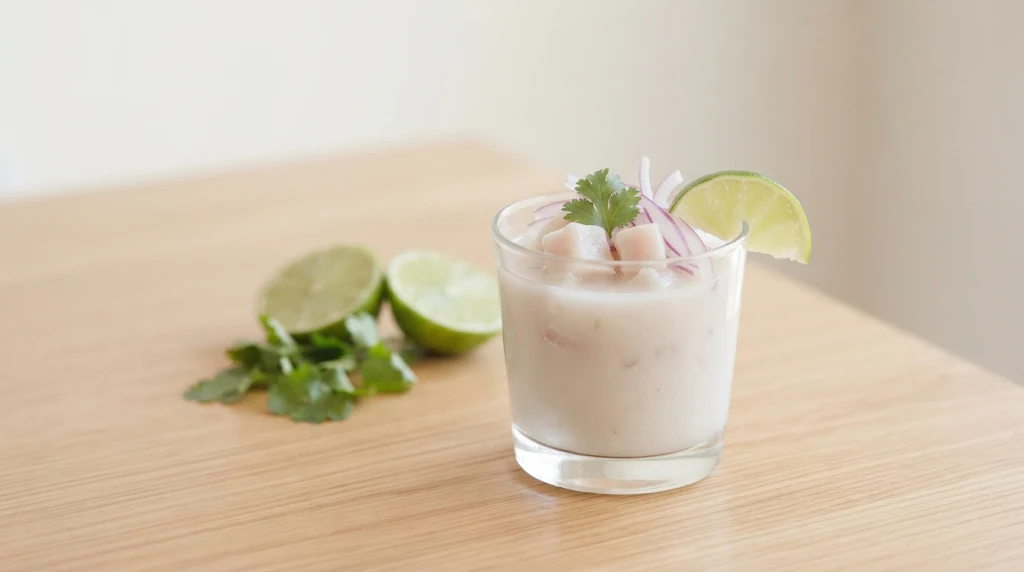
The ingredients are blended or mixed together to create a cloudy liquid with a strong citrus flavor. Some versions are strained until smooth, while others keep a little texture from the fish and vegetables.
In Peruvian cooking, Leche de Tigre has several uses. It can be served in a small glass as a seafood starter, poured over ceviche, or used to add flavor to other seafood preparations.
Every cook has a slightly different method. Some prefer a stronger lime flavor, while others add more fish stock for a softer taste. The amount of chili also depends on personal preference.
Although it is closely connected to ceviche, Leche de Tigre is not exactly the same dish. Ceviche usually features pieces of fish served with citrus and other ingredients, while Leche de Tigre refers to the flavorful liquid associated with that preparation.
Why Is It Called Leche de Tigre?
The Spanish name Leche de Tigre translates to “tiger’s milk.” There are a few explanations for the name, but its cloudy, whitish appearance is commonly associated with the word leche, meaning milk.
The tiger reference is often linked to the mixture’s strong, sharp, and lively flavor. It is traditionally known as a bold seafood preparation rather than a mild sauce.
Leche de Tigre has also become popular as a small drink served in seafood restaurants. Some people enjoy it on its own, while others prefer it with a plate of ceviche.
Today, the name is widely recognized in Peruvian cuisine and is often used for different versions of the citrus-based mixture.
Ingredients for Authentic Peruvian Leche de Tigre
You do not need a long list of ingredients to prepare Leche de Tigre. Fresh lime juice, suitable fish, herbs, chili, and a few seasonings provide most of its flavor.
This recipe makes approximately 2 cups and serves 4 people as a small starter or accompaniment.
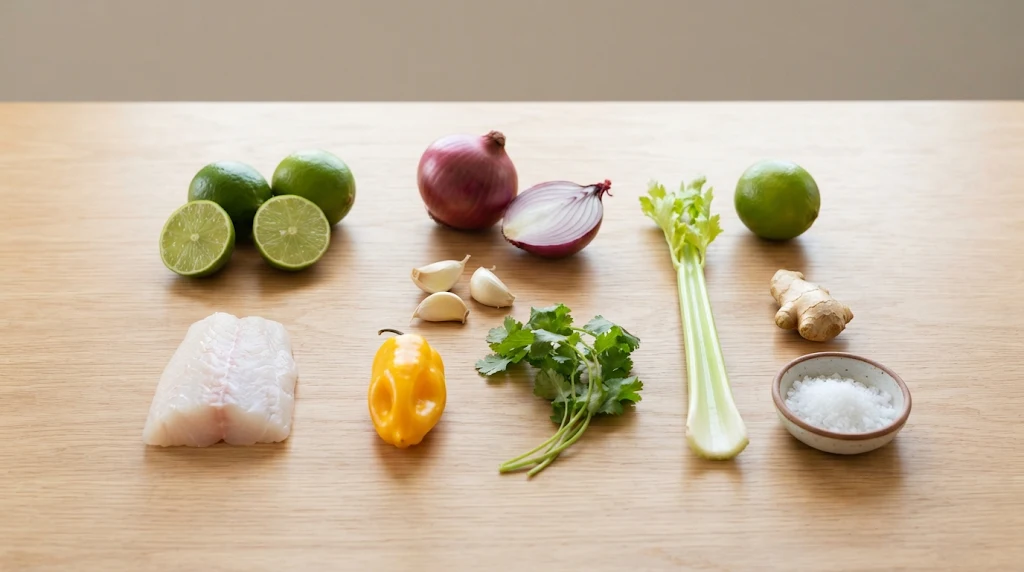
Main Ingredients
- Fresh white fish – 4 ounces (115 g): Use a firm, mild-flavored fish suitable for raw consumption. It provides the seafood flavor and body of the mixture.
- Fresh lime juice – ¾ cup (180 ml): Lime juice gives Leche de Tigre its signature sour and refreshing taste. Use freshly squeezed juice.
- Cold fish stock – ½ cup (120 ml): Adds depth and helps balance the strong citrus flavor. Use a properly prepared, chilled stock.
- Red onion – ¼ small onion: Adds a sharp, slightly sweet flavor.
- Garlic – 1 small clove: Gives the mixture a savory background.
- Ají limo – ½ small pepper, seeds removed: This traditional Peruvian chili adds heat and a distinctive fruity flavor. Adjust the quantity to your taste.
- Fresh cilantro – 2 tablespoons: Adds a fresh herbal note.
- Salt – ½ teaspoon, or to taste: Brings the flavors together.
- Black pepper – ⅛ teaspoon: Adds mild warmth.
Optional Ingredients
- 1 tablespoon finely chopped celery for a fresh vegetable note.
- 1 teaspoon finely chopped ginger for extra aroma.
- 1 tablespoon ice-cold water if the mixture tastes too concentrated.
Ají limo can be difficult to find outside Peru. If it is unavailable, use a small amount of red chili or another mild hot pepper. The flavor will not be exactly the same, but it will still give the mixture some heat.
If you want to learn more about traditional Peruvian peppers, read our guide to ají panca paste. Ají panca is different from ají limo, so do not use it as a direct replacement in this recipe.
How to Make Leche de Tigre Step by Step
Preparing Leche de Tigre is fairly simple, but the order of preparation matters. Keep the ingredients cold, prepare the vegetables before blending, and avoid leaving raw seafood at room temperature.
Step 1: Prepare the Fish
Start with fish that has been specifically sourced and handled for raw consumption. Ask your seafood supplier about its suitability and parasite-control history. Ordinary fresh fish intended for cooking should not automatically be considered safe to eat raw.
Cut the fish into small pieces using a clean knife and a separate cutting board. Remove any bones and place the fish in a clean, chilled bowl.
Keep it refrigerated while you prepare the remaining ingredients.
Step 2: Prepare the Vegetables and Herbs
Peel and roughly chop the red onion and garlic. Remove the seeds and inner white membrane from the ají limo if you want a milder result.
Wash the cilantro thoroughly and remove any damaged leaves. Chop the celery and ginger if you are using them.
Preparing everything before blending makes the process easier and helps you avoid handling the fish for longer than necessary.
Step 3: Add the Lime Juice
Place the lime juice in a blender. Add the cold fish stock, red onion, garlic, ají limo, cilantro, salt, and black pepper.
Add the prepared fish pieces last.
Use freshly squeezed lime juice for the best flavor. Avoid squeezing the limes too aggressively because the white pith can add bitterness.
Step 4: Blend the Mixture
Blend the ingredients briefly until they are combined and the mixture looks cloudy.
You do not need to blend it for a long time. Over-blending can make the mixture too thick and may create a stronger onion flavor.
If you prefer a lighter texture, add a little more cold fish stock. If you want a stronger citrus flavor, add a small amount of lime juice.
Step 5: Strain the Leche de Tigre
Place a fine-mesh strainer over a clean bowl. Pour the mixture through it and allow the liquid to pass through.
Press gently with a spoon if needed, but do not force too much pulp through the strainer.
Straining creates a smoother texture and removes larger pieces of onion, herbs, and fish. If you prefer a more rustic preparation, you can leave some of the small ingredients in the mixture.
Step 6: Taste and Adjust
Taste the mixture with a clean spoon.
Add a little salt if it needs more seasoning. If the lime flavor is too strong, add a small amount of cold fish stock. For more heat, add a little finely chopped chili.
The final mixture should taste fresh, citrusy, lightly savory, and pleasantly spicy. It should not taste overwhelmingly sour or salty.
Step 7: Serve Immediately
Transfer the finished Leche de Tigre to small chilled glasses or a serving bowl.
You can garnish it with a little chopped cilantro, finely diced red onion, or a small piece of chili.
Serve it cold and promptly. Do not leave it sitting at room temperature.
Leche de Tigre Recipe Card
Preparation time: 15 minutes
Cooking time: None
Total time: 15 minutes
Servings: 4 small portions
Yield: Approximately 2 cups
Ingredients
- 4 ounces (115 g) suitable raw white fish
- ¾ cup (180 ml) fresh lime juice
- ½ cup (120 ml) cold fish stock
- ¼ small red onion
- 1 small garlic clove
- ½ small ají limo, adjusted to taste
- 2 tablespoons fresh cilantro
- ½ teaspoon salt, or to taste
- ⅛ teaspoon black pepper
- 1 tablespoon chopped celery, optional
- 1 teaspoon chopped ginger, optional
Instructions
- Cut the fish into small pieces and keep it refrigerated.
- Roughly chop the onion, garlic, chili, and cilantro.
- Add the lime juice and cold fish stock to a blender.
- Add the vegetables, herbs, seasonings, and fish.
- Blend briefly until the mixture becomes cloudy.
- Strain through a fine-mesh strainer if you prefer a smooth texture.
- Taste and adjust the salt, lime juice, and chili.
- Serve immediately in chilled glasses or with seafood.
Important: Lime juice changes the texture of raw fish, but it does not reliably make raw seafood safe. Follow the raw-fish safety guidance below.
What Does Leche de Tigre Taste Like?
Leche de Tigre has a strong and refreshing flavor. The first thing you notice is the sharp taste of lime juice. After that, the fish stock gives it a savory seafood flavor, while cilantro and onion add freshness.
Ají limo brings a gentle to noticeable heat, depending on how much you use. Garlic adds depth without needing a large amount.
The overall taste is a mixture of sour, savory, fresh, and spicy flavors. It is usually more concentrated than an ordinary seafood broth or dressing.
If you enjoy citrus-based seafood dishes, Leche de Tigre is worth trying because it offers a different way to experience the flavors used in Peruvian coastal cooking.
How Is Leche de Tigre Used in Peruvian Cuisine?
Leche de Tigre is closely connected to ceviche and other seafood preparations in Peru. It can be served in different ways depending on the restaurant, region, and recipe.
Served as a Small Drink
Some Peruvian seafood restaurants serve Leche de Tigre in a small glass. It is usually chilled and may be garnished with cilantro, onion, or chili.
This presentation allows people to enjoy the concentrated citrus and seafood flavors on their own.
Served with Ceviche
Leche de Tigre can also be served alongside or poured over ceviche. It adds more citrus flavor and seasoning to the fish.
If you enjoy traditional seafood dishes, you can also explore our Peruvian food recipes guide for more ideas.
Used in Seafood Preparations
Some cooks use Leche de Tigre as a flavorful base for seafood combinations. It can complement shrimp, fish, squid, and other seafood when prepared and handled safely.
For a warm seafood option, try Sudado de Pescado, a Peruvian fish stew made with fish, tomatoes, onion, garlic, cilantro, and Peruvian pepper pastes.
What Is the Difference Between Leche de Tigre and Ceviche?
Leche de Tigre and ceviche are closely related, but they are not the same thing.
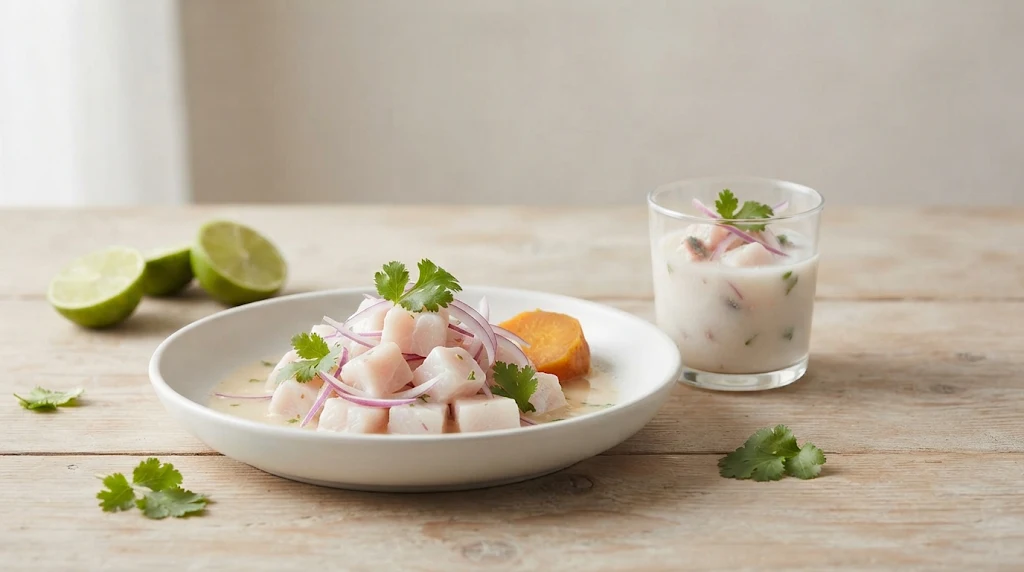
Ceviche is a seafood dish usually made with pieces of fish mixed with lime juice, onion, chili, cilantro, and seasonings. It is commonly served with accompaniments such as sweet potato and corn.
Leche de Tigre is the citrus-based liquid associated with ceviche. It can contain fish, lime juice, fish stock, chili, onion, and herbs. It is often blended and strained to create a drinkable or pourable mixture.
The easiest way to remember the difference is that ceviche is the complete seafood dish, while Leche de Tigre is the flavorful liquid that can accompany it.
Tips for Making the Best Leche de Tigre
A few simple techniques can help you get a better result.
Use fresh lime juice: Freshly squeezed lime juice gives the mixture a bright flavor. Bottled juice may taste different and can lack the freshness you want.
Keep the ingredients cold: Cold ingredients help maintain freshness and are important when working with raw seafood.
Choose the right chili: Ají limo is a traditional choice, but you can adjust the quantity according to your spice preference.
Do not over-blend: Blend only until the ingredients are combined. Excessive blending can make the mixture too thick or give it an overly strong onion taste.
Balance the citrus: Lime juice should be noticeable, but it should not completely overpower the fish stock and herbs.
Strain for a smooth texture: A fine-mesh strainer removes larger pieces and gives the mixture a cleaner finish.
Serve promptly: Leche de Tigre tastes best when freshly prepared and properly chilled.
Important Food Safety Tips for Raw Fish
Traditional Leche de Tigre often includes raw fish, so food safety deserves special attention.
Lime juice changes the fish’s texture and makes it appear opaque, but this process is not the same as cooking. Citrus juice does not reliably destroy all harmful bacteria or parasites.
Follow these precautions:
- Buy fish from a reputable supplier who can confirm that it is suitable for raw consumption.
- Ask whether the fish has undergone appropriate parasite-control freezing. Do not assume that ordinary freezing or a “fresh” label is enough.
- Keep raw fish refrigerated until preparation.
- Use clean hands, utensils, bowls, and cutting boards.
- Keep raw seafood separate from ready-to-eat foods.
- Prepare the mixture in small batches and serve it promptly.
- Do not leave raw fish or the finished mixture at room temperature.
The safest option is to cook seafood thoroughly. Pregnant women, young children, older adults, and people with weakened immune systems should avoid raw or undercooked seafood.
If you want the citrus flavor without using raw fish, prepare a cooked version: cook the fish thoroughly, cool it safely in the refrigerator, and then blend it with the lime juice, stock, herbs, and seasonings. The taste and texture will be different from the traditional raw-fish preparation, but it is an alternative for people who want to avoid raw seafood.
What to Serve with Leche de Tigre
Leche de Tigre is usually served in small portions, so it works well with other Peruvian seafood dishes and simple accompaniments.
Here are a few ideas:
- Peruvian ceviche: A natural pairing because both preparations use lime, fish, onion, and chili.
- Sweet potato: Its natural sweetness balances the sharp citrus flavor.
- Peruvian corn (choclo): Large corn kernels provide a pleasant contrast in texture.
- Cancha: Toasted corn adds a crunchy element to a seafood meal.
- Seafood appetizers: Small portions of shrimp or other cooked seafood can complement the fresh citrus flavor.
For a refreshing drink alongside a Peruvian meal, try chicha morada. It is made with purple corn and has a fruity, slightly spiced taste.
How to Store Leche de Tigre
Leche de Tigre made with raw fish is best prepared shortly before serving. It is not a good make-ahead recipe because raw seafood needs careful temperature control and the quality can change quickly.
Keep the mixture refrigerated at 40°F (4°C) or below while handling it, and serve it promptly. Do not store it for several days or assume that the lime juice preserves it.
If you have prepared a cooked-fish version, refrigerate it promptly in a clean, covered container and use it within a short period. Always follow safe seafood storage practices and discard it if it has been left out too long or shows signs of spoilage.
For the best flavor and texture, make only the amount you plan to serve.
Frequently Asked Questions
What is Leche de Tigre made of?
Leche de Tigre is commonly made with lime juice, fish, fish stock, red onion, garlic, cilantro, chili pepper, salt, and black pepper. Recipes vary, and some include celery or ginger.
Is Leche de Tigre the same as ceviche?
No. Ceviche is a complete seafood dish made with fish and other ingredients. Leche de Tigre is the citrus-based liquid associated with ceviche and can also be served separately.
Why is it called Leche de Tigre?
The name means “tiger’s milk” in Spanish. Its cloudy, milky appearance is commonly linked to the word milk, while the tiger reference is associated with its strong flavor.
Is Leche de Tigre spicy?
It can be mildly spicy or quite hot, depending on the amount and type of chili used. Ají limo is a traditional choice, but you can reduce the amount to make a milder version.
Can I make Leche de Tigre without ají limo?
Yes. You can use a small amount of red chili or another pepper with a similar heat level. The flavor will be different, but the mixture will still have a pleasant spicy note.
Can you drink Leche de Tigre?
Yes. It is commonly served in small glasses in Peruvian seafood restaurants. However, traditional versions may contain raw fish, so the same food safety risks apply as with other raw seafood dishes.
Does lime juice cook the fish?
Lime juice changes the fish’s texture and makes it look opaque, but it does not reliably kill all harmful bacteria or parasites. It should not be treated as a substitute for proper seafood safety measures.
What fish is best for Leche de Tigre?
A firm, mild-flavored white fish is commonly used. More important than the specific variety is buying fish that has been properly handled and confirmed suitable for raw consumption.
Can I make Leche de Tigre without raw fish?
Yes. You can use thoroughly cooked fish and blend it with lime juice, chilled fish stock, chili, onion, and herbs. The result will have a different texture and flavor from the traditional raw-fish version.
How long does Leche de Tigre last?
A raw-fish version should be prepared shortly before serving and not kept for several days. Keep it cold and serve it promptly. A cooked version also needs prompt refrigeration and careful storage.
Conclusion
Leche de Tigre is a flavorful part of Peruvian seafood cooking. Made with lime juice, fish, red onion, cilantro, chili, and fish stock, it brings together fresh, sour, savory, and spicy flavors in one simple preparation.
Whether served in a small glass or alongside ceviche, it offers a taste of Peru’s coastal food traditions. The recipe is easy to adjust at home: change the chili for your preferred heat level, balance the lime with fish stock, and strain the mixture for a smoother finish.
For the best result, use carefully sourced seafood, keep the ingredients chilled, and serve the mixture promptly. You can then enjoy the bright flavors of this well-known Peruvian preparation as part of a seafood meal.

1 Comment
Pingback: Best Peruvian Ceviche Recipe: Fresh, Zesty & Easy