
Peruvian tamales are a classic part of Peru’s food tradition. They are made with corn masa, filled with seasoned chicken or pork, wrapped in leaves, and cooked by steaming. A warm tamal is soft, filling, and full of simple Peruvian flavors. You may find tamales at breakfast, family gatherings, local markets, and special occasions. While the basic idea is simple, each family can have its own way of making them. Some use chicken, others prefer pork, and the seasoning can change from one region to another.
What Are Peruvian Tamales?
A Peruvian tamal is made from a corn-based mixture that is cooked with seasoning and fat or oil until it reaches a soft, workable texture. A small amount of filling is placed in the center before the mixture is wrapped in a leaf and steamed.
Traditional tamales can be made with different fillings. Chicken and pork are common choices, and some versions include black olives and pieces of hard-boiled egg. The filling is usually seasoned with onion, garlic, and Peruvian ají peppers.
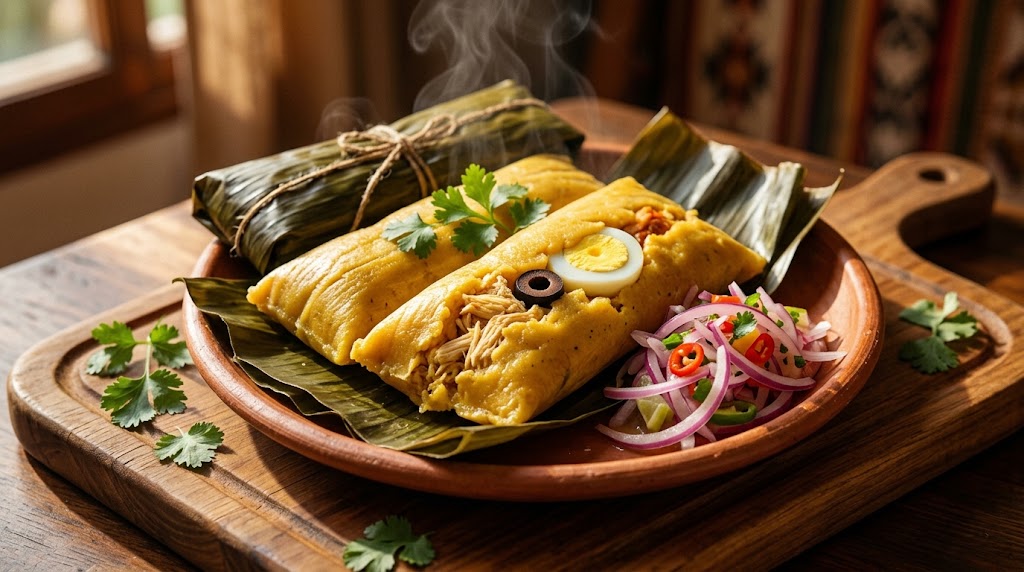
The wrapping is also part of the experience. Depending on the recipe and region, tamales may be wrapped in corn husks or banana leaves. The wrapper helps hold the tamal together while it cooks and gives it a pleasant smell.
What makes these tamales special is not one single ingredient. It is the balance of corn, seasoning, filling, and the slow steaming process.
What Makes Peruvian Tamales Different?
Peruvian tamales have their own place within the large world of Latin American tamales. Recipes vary across countries, and even within Peru, the style can change from one area to another.
One noticeable feature is the seasoning. Ají panca can give the filling a deep red color and mild pepper flavor. Garlic, onion, cumin, and other seasonings are often used to build the taste.
The masa is also important. It should not be hard or dry. A good tamal has a soft texture that holds together when you open the wrapper.
Another familiar combination is the use of black olives and boiled egg inside the filling. These small additions give the tamal a mix of salty, rich, and mild flavors.
Peruvian tamales are also closely linked with home cooking. They are not just something people eat at restaurants. They are often prepared in large batches when families have time to cook together.
Traditional Peruvian Tamales Ingredients
Before making tamales, it helps to organize everything. The recipe has several parts, but most ingredients are easy to find.
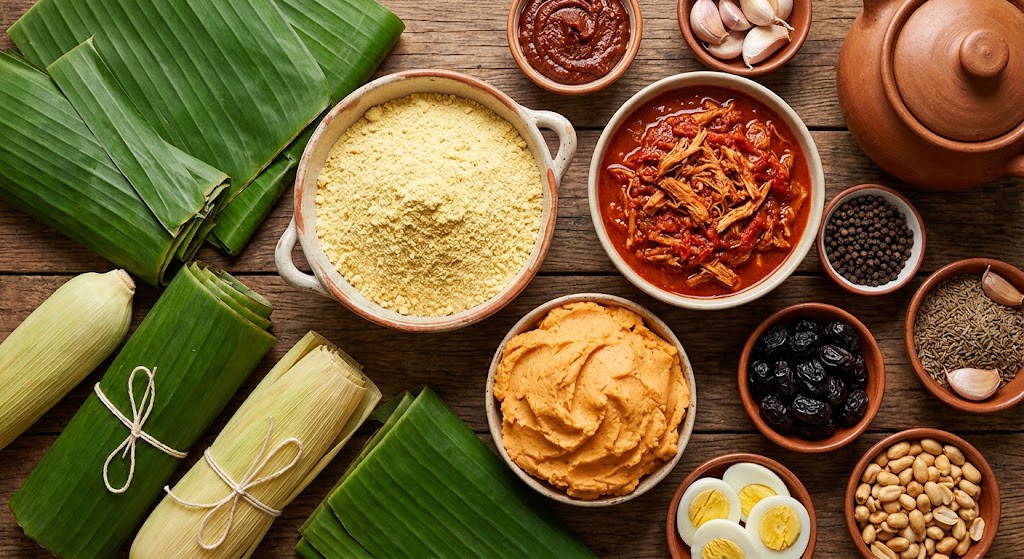
Ingredients for the Masa
- 4 cups masa harina or finely ground corn flour
- 2½ cups chicken or pork broth, warm
- ½ cup vegetable oil or melted lard
- 2 tablespoons ají panca paste
- 1 teaspoon salt
- ½ teaspoon ground cumin
- 2 cloves garlic, finely minced
- ¼ teaspoon black pepper
Ingredients for the Filling
- 1½ lb (680 g) chicken thighs or pork shoulder
- 1 medium onion, finely chopped
- 2 cloves garlic, minced
- 2 tablespoons ají panca paste
- 1 teaspoon ground cumin
- 1 teaspoon salt
- ½ teaspoon black pepper
- 12 black olives, pitted
- 2 hard-boiled eggs, cut into small pieces
- 2 tablespoons roasted peanuts, optional
For Wrapping
Kitchen string, as needed
12–16 large banana leaves, cleaned
How to Make Peruvian Tamales
Making tamales takes some time, but the process becomes much easier once you understand the order. It is also a recipe where preparing everything before you start can save a lot of trouble.
1. Prepare the Filling
Start by cooking the chicken or pork until tender. Once cooked, let it cool enough to handle and cut or shred it into small pieces.
Heat a little oil in a pan. Add chopped onion and cook until it becomes soft. Add garlic, ají panca paste, cumin, salt, and black pepper.
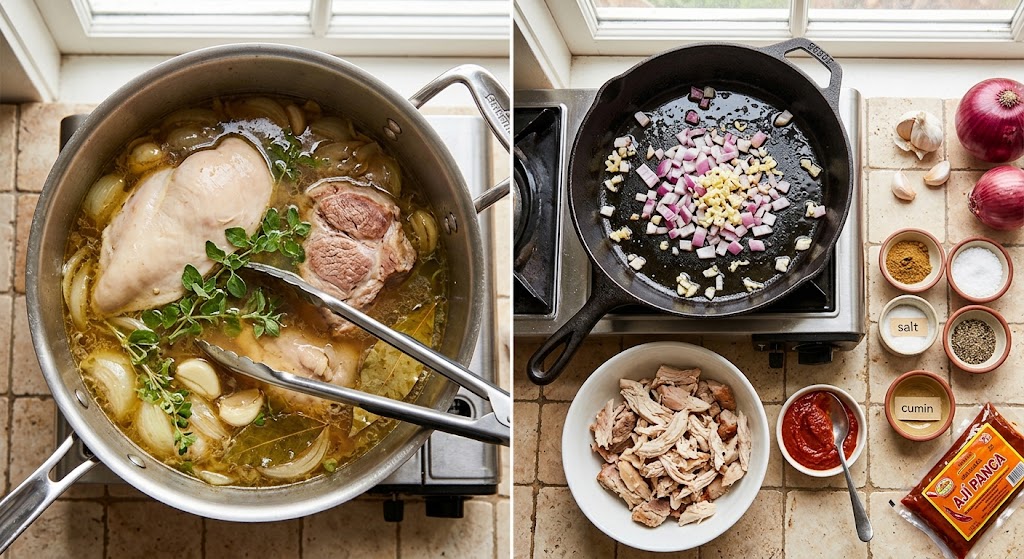
Stir everything together and cook for a few minutes. Add the chicken or pork and mix until the meat is well coated with the seasoning.
The filling should have plenty of flavor because it will be surrounded by the mild corn masa.
Set the filling aside while you prepare the masa.
2. Prepare the Masa
Place the corn masa in a large bowl or pot. Add the oil or melted lard and begin mixing.
Slowly add warm broth while stirring. Do not add all the liquid at once. You want a soft masa that is easy to spread but not runny.
Add salt and the seasonings you prefer.
The final mixture should be smooth and soft. If it feels too dry, add a little more broth. If it becomes too wet, add a little more corn mixture.
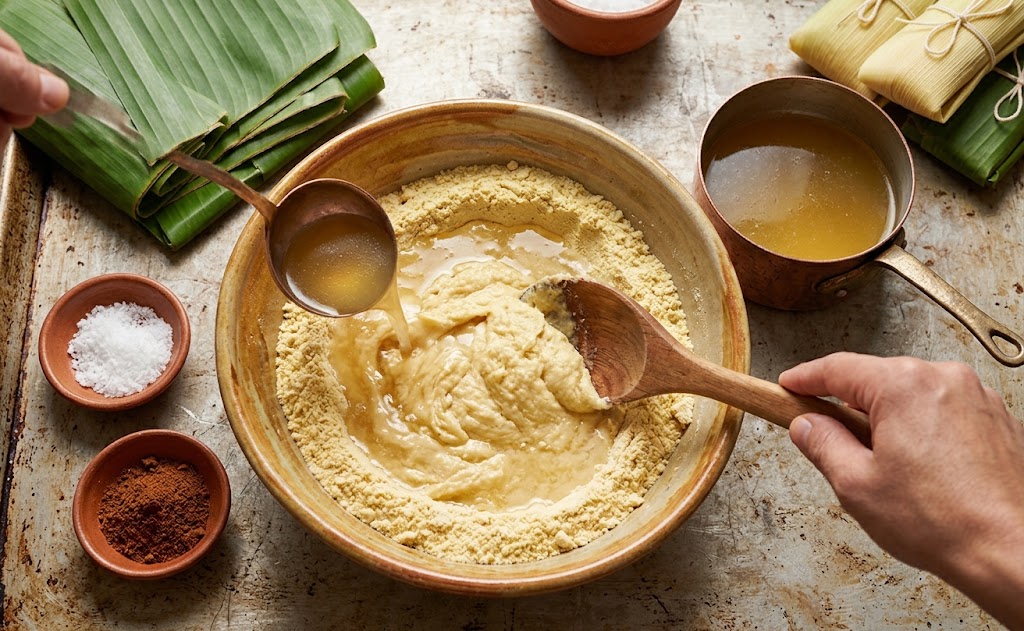
This step is worth taking your time with. The texture of the masa has a big effect on the finished tamal.
3. Prepare the Leaves
Clean the banana leaves or corn husks before using them.
If you are using banana leaves, pass them briefly over low heat or warm them until they become flexible. Do not burn them.
For corn husks, soak them in warm water until they soften. Drain them well before assembling the tamales.
Place the prepared leaves or husks on a clean surface so everything is ready for wrapping.
4. Assemble the Tamales
Place one wrapper flat on your work surface.
Take a portion of masa and spread it into the center of the leaf. Keep it thick enough to hold the filling but not so thick that the tamal becomes heavy.
Place some chicken or pork in the middle. Add a piece of boiled egg and a black olive if you are using them.
Fold the sides of the wrapper toward the center. Then fold the ends so the masa and filling are fully covered.
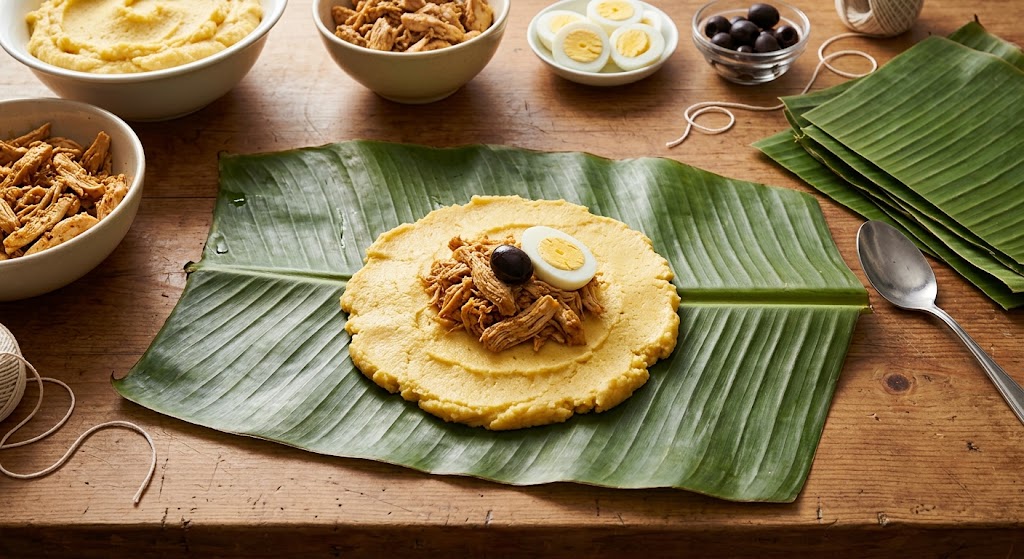
Tie the tamal with kitchen string if needed.
Try to keep each tamal about the same size. This helps them cook more evenly.
5. Steam the Tamales
Place a steaming rack inside a large pot and add water below the rack. The water should not cover the tamales.
Arrange the tamales upright or in a way that allows the steam to move around them.
Cover the pot with a lid and steam until the masa is firm and cooked through. The exact cooking time depends on the size of the tamales and the type of masa you use.
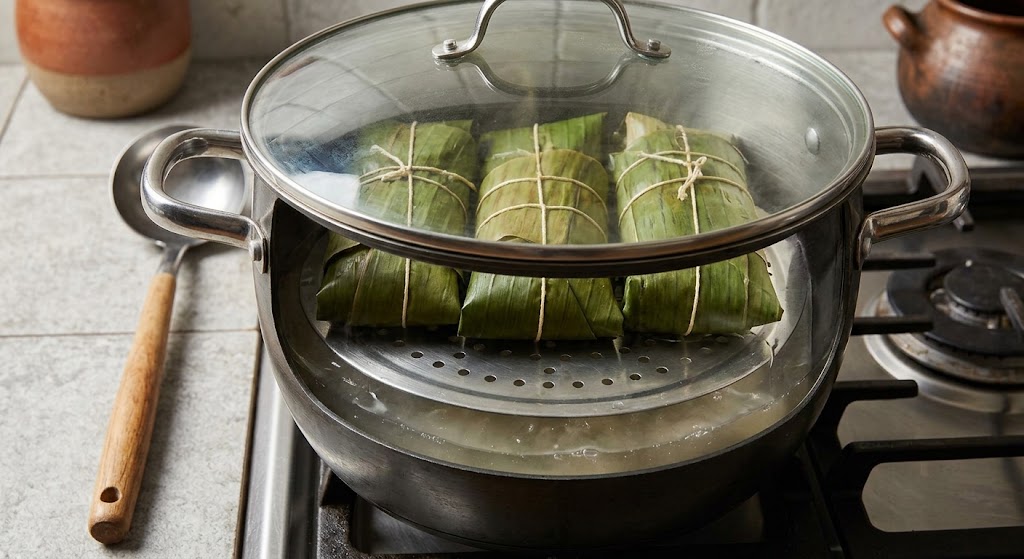
Check the water from time to time. If the pot becomes dry, carefully add more hot water.
When the masa feels firm and separates from the wrapper easily, the tamales are usually ready.
6. Let Them Rest Before Serving
Do not rush to open the tamales as soon as they come out of the pot.
Let them rest for a few minutes. This allows the masa to settle and makes the wrappers easier to remove.
Open one carefully and check the center. The masa should be cooked and soft, while the filling should be hot and well seasoned.
Tamales Peruanos Receta: An Easy Home Method
If you are searching for a tamales peruanos receta, the most useful thing to remember is that preparation matters as much as the cooking itself.
Prepare the filling first. While it cools, work on the masa. At the same time, soften and clean the wrappers.
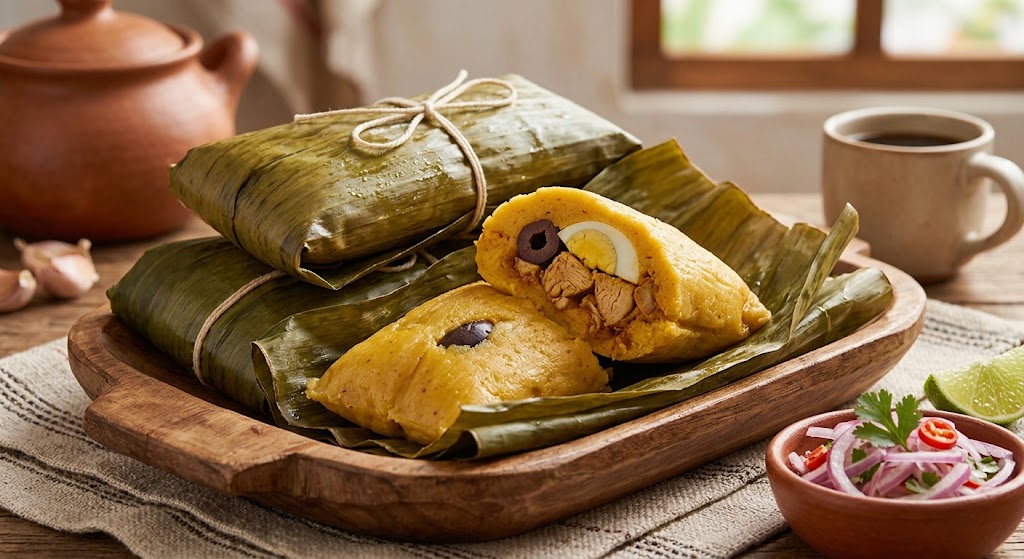
Once everything is ready, the assembly becomes much faster.
For a home batch, you can make several tamales at once rather than preparing them one by one over a long period. Place the finished tamales on a tray as you work, then steam the whole batch together.
This is also a good recipe to make with family members. One person can prepare the masa, another can add the filling, and someone else can wrap and tie the tamales.
The result feels more special when everyone has a small part in the cooking.
Chicken or Pork: Which Filling Should You Use?
Both chicken and pork work well in Peruvian tamales. The choice mostly comes down to the flavor you enjoy.
Chicken Tamales
Chicken gives the filling a lighter taste. It also absorbs the ají and other seasonings well.
Chicken tamales are a good choice if you want a filling that is tender without being too rich.
Pork Tamales
Pork gives the tamal a deeper and richer flavor. It works especially well with garlic, onion, cumin, and ají panca.
If you enjoy hearty dishes, pork can be a great choice.
There is no need to treat one filling as the only correct option. Peruvian cooking has many regional and family variations, and both versions can be part of the tradition.
What Are Tamalitos Verdes?
Tamalitos verdes are another interesting part of Peruvian tamale culture. As the name suggests, they have a green color and a fresh herb flavor.
They are especially associated with northern Peru, including the Piura region. Fresh corn and herbs such as cilantro or culantro help give them their green appearance and fresh taste.
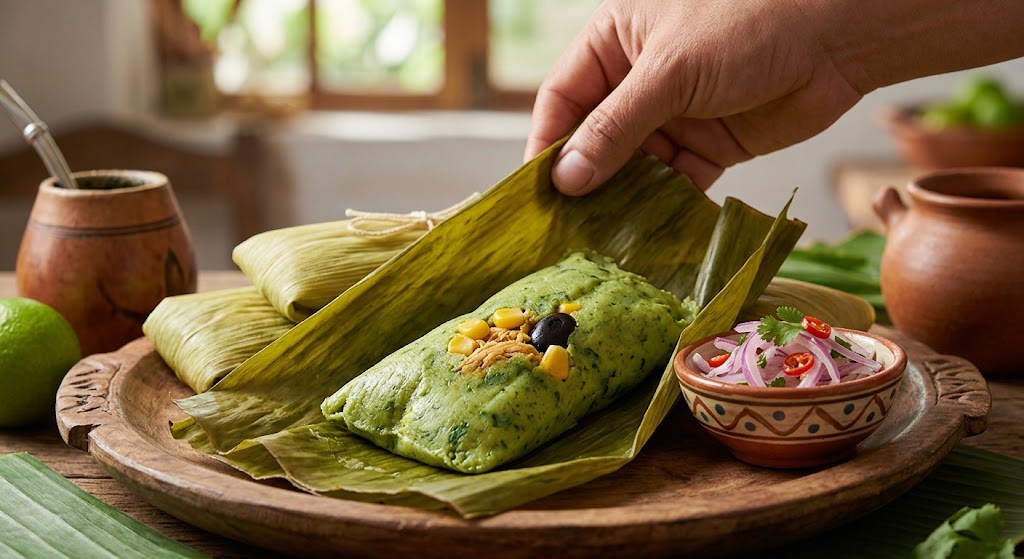
Unlike a heavily filled savory tamal, tamalitos verdes can have a simpler corn mixture. Some versions are served as a side dish, while others can be enjoyed as part of a larger meal.
The texture is usually soft and tender, with a noticeable corn and herb flavor.
Why Are Tamalitos Verdes Green?
The green color comes mainly from the herbs used in the corn mixture.
Fresh herbs are blended or finely mixed with the corn, creating both the color and part of the flavor.
The result is very different from the darker, more strongly seasoned masa used in some traditional savory tamales.
How Are Tamalitos Verdes Served?
Tamalitos verdes can be served with foods such as salsa criolla, chicken, or other traditional Peruvian dishes.
They can work as a side dish or a light meal, depending on how they are prepared.
Their fresh flavor makes them a nice contrast to richer Peruvian dishes.
Peruvian Tamales vs. Tamalitos Verdes
Although both are part of Peruvian cooking, they are not exactly the same.
Traditional savory tamales often have a seasoned masa with a chicken or pork filling. They may also contain olives and boiled egg.
Tamalitos verdes focus more on fresh corn and herbs. Their green color and fresh taste are what make them easy to recognize.
The difference is useful to understand because someone looking for Peruvian tamales may come across both dishes.
Rather than thinking of one as a replacement for the other, it is better to see them as two different preparations within Peru’s wide food tradition.
What to Serve With Peruvian Tamales
A warm tamal can be filling on its own, but a few simple foods can make the meal even better.
Salsa Criolla
Salsa criolla is one of the most natural choices. The fresh onion, lime, and pepper bring brightness to the rich tamal.
Coffee
In Peru, tamales are often enjoyed at breakfast. A cup of coffee can be a simple and comforting pairing.
Chicha Morada
For a more traditional Peruvian drink, chicha morada can add a sweet and fruity contrast.
Fresh Bread
Some people enjoy tamales with bread, especially as part of a larger breakfast.
You do not need many side dishes. A good tamal already contains several layers of flavor.
Tips for Making Soft and Flavorful Tamales
A few small details can make the cooking process easier.
Keep the masa soft. Dry masa can lead to dry tamales after steaming.
Season the masa. The filling should not be responsible for all the flavor.
Do not overfill. Too much filling can make wrapping difficult and may cause the tamal to open.
Prepare the leaves properly. Flexible wrappers are much easier to fold.
Keep the steaming pot covered. Steam needs to stay inside the pot for the tamales to cook properly.
Do not let the pot run dry. Check the water during a long steaming session.
Let the tamales rest. A short rest makes them easier to open and gives the masa time to settle.
Make similar-sized tamales. If some are much larger than others, they may not finish cooking at the same time.
Common Mistakes When Making Tamales
Tamales can seem difficult the first time, but most problems come from a few simple mistakes.
One common problem is making the masa too dry. If the mixture is difficult to spread, add a little broth rather than forcing it onto the wrapper.
Another mistake is using too much filling. A generous-looking filling may seem appealing, but it can make the tamal difficult to close.
Some people also skip the step of softening the leaves. This can cause the wrapper to tear during folding.
Finally, avoid opening every tamal while it is still steaming. Give the batch enough time to cook before checking one.
Can You Prepare Tamales Ahead of Time?
Yes, tamales are well suited to batch cooking.
You can prepare the filling and masa before assembly. You can also assemble the tamales and keep them ready for steaming.
Once cooked, allow them to cool before storing them. Keep them covered in the refrigerator if you plan to eat them soon.
For longer storage, freezing is another option. When reheating, steaming helps bring back the soft texture of the masa.
Always make sure the center is heated properly before serving.
Where Can You Find Tamales Peruanos Near Me?
If you want to try tamales peruanos near me, look for Peruvian restaurants, Latin American food shops, bakeries, food markets, and Peruvian community events in your area.
Local restaurants may have tamales only on certain days, especially during weekends or special occasions. It is worth checking the menu or calling ahead before making a trip.
Trying a restaurant version can also help you understand the texture and seasoning before making your own at home.
Frequently Asked Questions
What are Peruvian tamales made of?
They are generally made with corn-based masa, seasoning, broth, and oil or lard. Chicken or pork is often used as the filling, with ingredients such as olives and boiled egg in some traditional versions.
Are Peruvian tamales spicy?
Not always. Peruvian ají peppers are used for flavor as well as heat. The amount used can be adjusted, so homemade tamales can be mild or more spicy.
What are tamalitos verdes?
Tamalitos verdes are green Peruvian tamales made with fresh corn and herbs. They are strongly associated with northern Peru and are known for their fresh color and herb flavor.
What do you eat with Peruvian tamales?
Salsa criolla is a popular choice. Tamales can also be served with coffee, bread, chicha morada, or other Peruvian dishes.
Can I use chicken instead of pork?
Yes. Chicken is a common filling and works very well with the seasoned corn masa.
Can I freeze Peruvian tamales?
Yes, cooked tamales can be frozen for later use. Reheating them with steam can help keep the masa soft.
How do I know when a tamal is cooked?
The masa should feel firm and cooked rather than wet or sticky. It should also separate from the wrapper more easily when the tamal is ready.
Final Thoughts
Peruvian tamales are a good example of how simple ingredients can become a meaningful traditional dish. Corn, seasoning, meat, leaves, and steam come together to make something that is filling and full of flavor.
There is also plenty of room to make the recipe your own. You can choose chicken or pork, adjust the seasoning, and serve the tamales with fresh salsa criolla. If you want to explore another side of Peruvian tamale cooking, tamalitos verdes are also worth trying.
The best part is that making tamales does not have to be a rushed process. Prepare the ingredients, take your time with the masa, wrap each one carefully, and let the steam do the work. Once you make a batch yourself, the process becomes much more familiar—and the warm tamales at the end make the effort worthwhile.

1 Comment
Pingback: Famous Peruvian Food: Best Dishes, Street Food & Easy Recipe