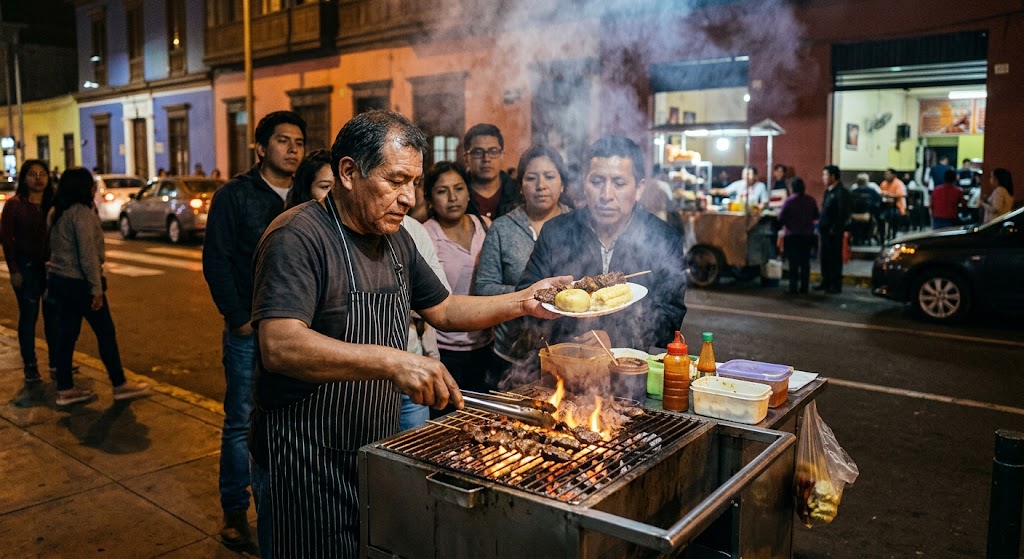
The first time I understood Peru’s food culture wasn’t in a restaurant — it was standing on a corner in Lima at nine at night, watching a guy flip skewers of grilled beef heart over charcoal while a line of people waited behind me. Nobody was in a hurry. The smell alone had stopped half the block. That’s when it clicked that the real food scene in Peru isn’t in the sit-down places with menus — it’s on the sidewalk, coming off a cart.
Peruvian street food is cheap, it’s fast, and somehow it still manages to taste like something someone’s grandmother spent hours on. A lot of it has been made the same way for generations, sold by the same families in the same spots, and that consistency is part of why it works so well.
What Makes Street Food in Peru Different
Part of it is just how many cultures ended up cooking in the same kitchen, so to speak. Peru’s food carries fingerprints from Indigenous Andean communities, Spanish colonizers, enslaved Africans brought during the colonial period, and later waves of Chinese and Japanese immigrants. You can taste all of it if you pay attention — the charred, spiced meat that traces back to African cooking traditions, the wheat and pork from Spain,
Peruvian Street Food: What to Actually Eat on the Streets of Peru
The first time I understood Peru’s food culture wasn’t in a restaurant — it was standing on a corner in Lima at nine at night, watching a guy flip skewers of grilled beef heart over charcoal while a line of people waited behind me. Nobody was in a hurry. The smell alone had stopped half the block. That’s when it clicked that the real food scene in Peru isn’t in the sit-down places with menus — it’s on the sidewalk, coming off a cart.
Peruvian street food is cheap, it’s fast, and somehow it still manages to taste like something someone’s grandmother spent hours on. A lot of it has been made the same way for generations, sold by the same families in the same spots, and that consistency is part of why it works so well.
What Makes Street Food in Peru Different
Part of it is just how many cultures ended up cooking in the same kitchen, so to speak. Peru’s food carries fingerprints from Indigenous Andean communities, Spanish colonizers, enslaved Africans brought during the colonial period, and later waves of Chinese and Japanese immigrants. You can taste all of it if you pay attention — the charred, spiced meat that traces back to African cooking traditions, the wheat and pork from Spain, the stir-fry techniques that came with Chinese immigrants and turned into Chifa cuisine.
The other big piece is what’s actually available to cook with. Peru grows something like four thousand varieties of potato and dozens of types of corn, plus chili peppers that show up in nearly every sauce you’ll find on a cart. None of that is imported or fancy — it’s just what grows there, and it’s been grown there for thousands of years, long before any of the outside influences arrived.
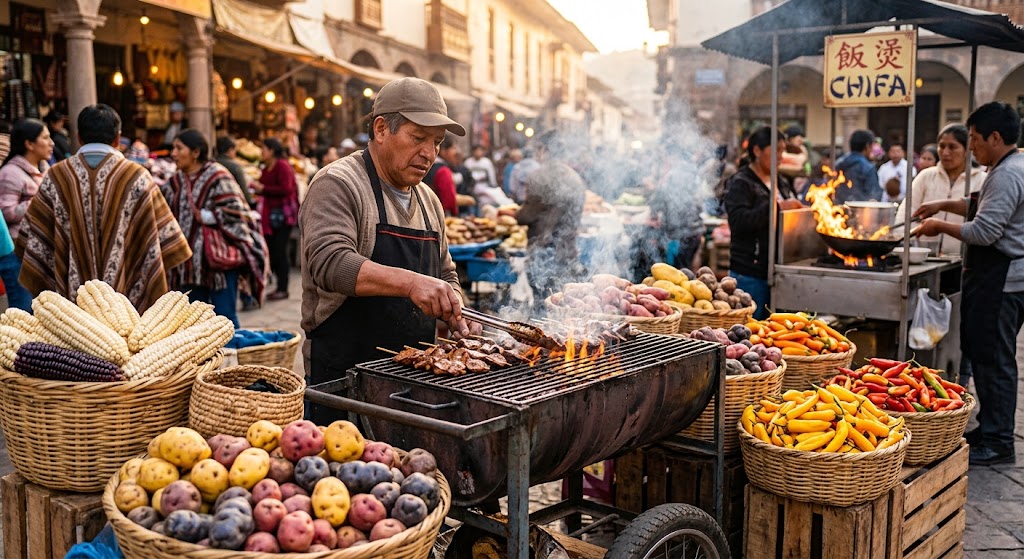
Then there’s the fact that vendors cook right in front of you. There’s no kitchen hidden behind a wall. You watch the meat go on the grill, you watch the fries drop into the oil, and by the time it’s handed to you, you already know it’s fresh because you watched it happen.
A Quick Word on Where These Dishes Came From
If you dig into the history a bit, the layering becomes obvious. Indigenous communities were already working with potatoes, corn, and chili long before anyone else showed up. Spanish settlers brought wheat, rice, garlic, and different cuts of meat, which slowly worked their way into local recipes.
African communities, many of whom were enslaved and given the least desirable cuts of meat to work with, turned things like beef heart into something people now travel across the world to try — that’s anticuchos, and it’s one of the clearest examples of necessity turning into tradition. Later on, Chinese immigrants arriving in the 19th century brought wok cooking and soy sauce, eventually blending into what’s now called Chifa. Japanese immigrants added their own mark, particularly around raw fish preparation, which shows up in things like ceviche today.
None of this happened in isolation. It’s layered on top of itself over a couple hundred years, and that’s really the short version of why a plate of street food in Lima can taste like nothing else on earth.
Fresh Ingredients Behind the Flavor
A lot of what makes this food taste the way it does comes down to what’s actually in it, and Peru has an unusual amount of raw material to work with. Choclo, the large-kernel Andean corn, is sweeter and starchier than what most people are used to, and it shows up boiled, grilled, or paired simply with cheese as its own snack.
Potatoes are everywhere, obviously, given that Peru is where the potato originated. Different varieties get used for different things — some hold their shape well for frying, others mash down soft and are better suited for something like causa or papa rellena.
Aji peppers are the backbone of most of the sauces you’ll run into. Aji amarillo brings a fruity, medium heat and a bright yellow color. Rocoto is hotter and shows up more in bold, spicier preparations. Along the coast, fresh fish and shellfish get pulled straight from the ocean that morning, which is part of why ceviche tastes so different when you have it in a coastal city versus somewhere landlocked.
None of these ingredients are unusual to find — what’s unusual is how consistently they show up, dish after dish, cart after cart.
Eating Street Food Without Spending Much
One thing that surprised me early on was how little this all costs. A full anticuchos plate with potato and corn on the side might run you the equivalent of two or three dollars. Salchipapas is even cheaper. You could eat well on the street for an entire day in Lima for less than a single sit-down meal would cost back home.
Part of that affordability comes from the setup itself — no rent for a dining room, no waitstaff, just a cart, a grill or fryer, and a vendor who’s usually been doing this for years. What you’re paying for is mostly the ingredients and the skill, not overhead.
It also means street food isn’t treated as a lesser option by locals. People who could easily afford a restaurant still line up at a cart because the food is genuinely that good, and because it’s often tied to a specific vendor’s family recipe that you simply can’t get anywhere else.
The Dishes Worth Actually Trying
Anticuchos (Grilled Beef Heart Skewers)
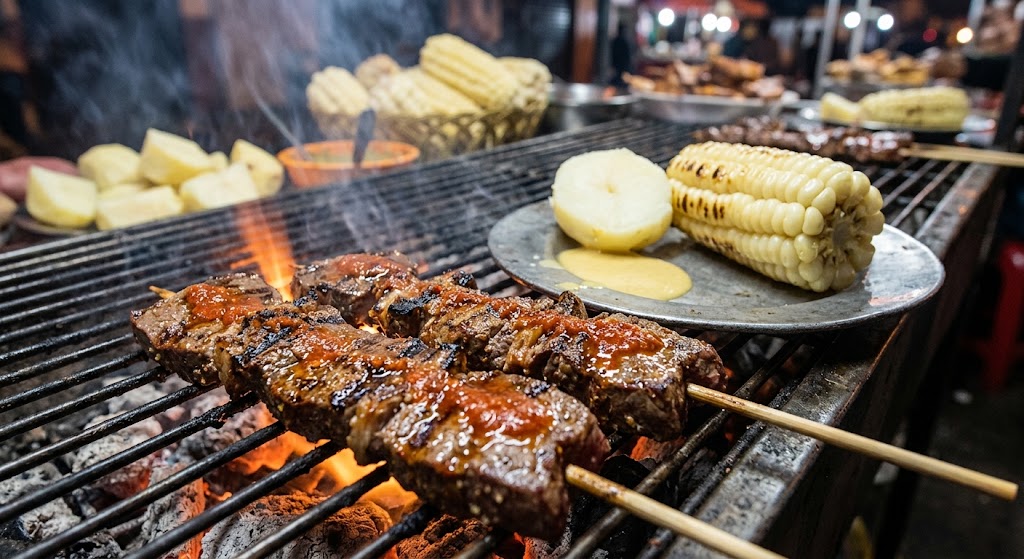
I’ll admit I hesitated before trying this the first time — beef heart isn’t exactly a cut most people grow up eating. But marinated overnight in vinegar, garlic, cumin, and aji panca, then grilled hard over charcoal, it comes out tender and smoky, closer in texture to a well-cooked steak than anything offal-like. It’s usually served with a chunk of boiled potato and a piece of choclo on the side, sometimes with a spicy aji sauce brushed on top while it’s still on the grill.
Salchipapas (Sausage and Fries)
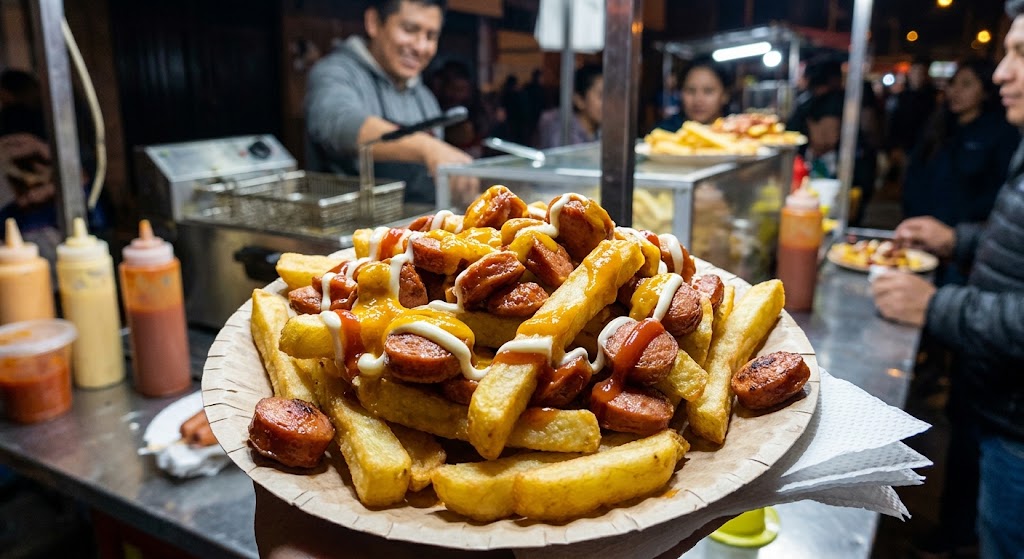
This is comfort food, plain and simple — thick-cut fries piled with sliced hot dog or sausage, fried until both are crispy, then drowned in a mix of ketchup, mayo, and whatever spicy sauce the vendor has on hand. It’s late-night food, the thing you grab after a night out, and it’s popular with kids and adults for exactly the same reason: it’s salty, hot, and doesn’t require any thought.
Picarones (Peruvian Sweet Donuts)
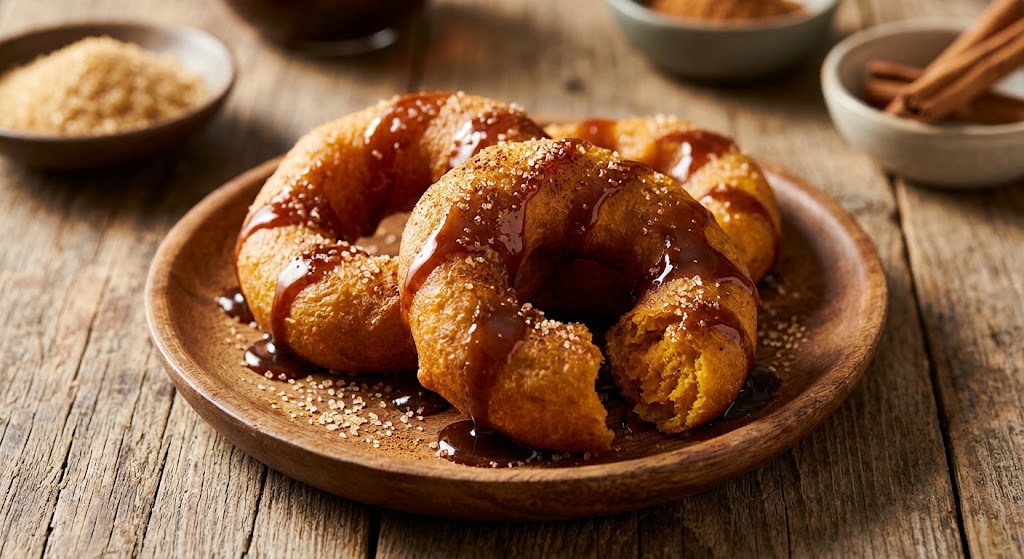
These are rings of fried dough made from sweet potato and squash rather than regular flour, which gives them a slightly denser, earthier flavor than a normal donut. They come drizzled with chancaca, a syrup made from raw cane sugar and cinnamon that tastes a bit like a rougher, less refined molasses. Vendors usually start selling them in the evening, and there’s something about eating a warm picarone on a cool night that makes it feel more special than it probably should.
Choclo con Queso (Corn with Cheese)
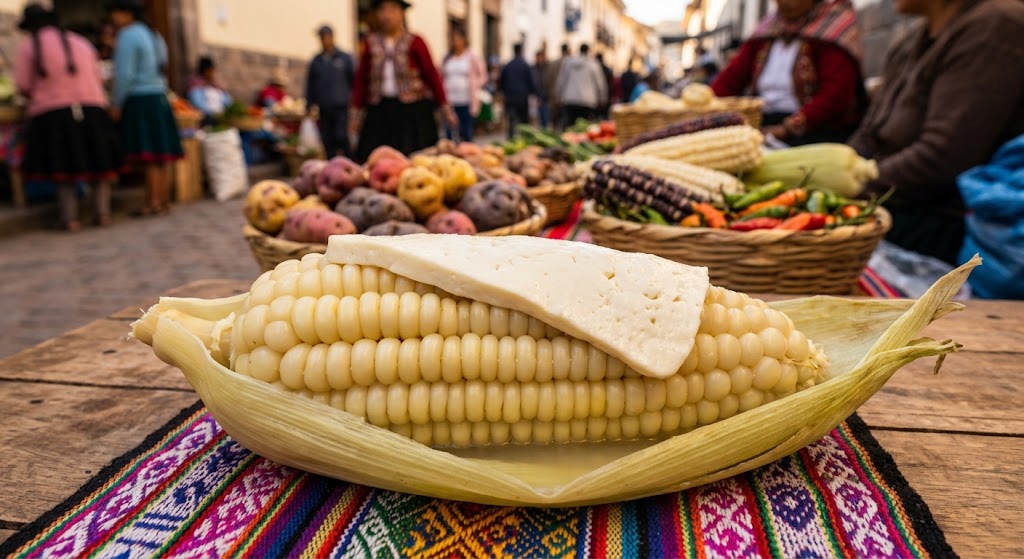
About as simple as street food gets — a boiled ear of large-kernel choclo served with a slab of fresh, mild cheese. That’s it. But the corn itself is starchy and slightly sweet in a way that pairs naturally with the salty cheese, and it’s the kind of snack office workers grab on a lunch break because it’s fast and doesn’t leave your hands greasy.
Tamales (Peruvian Style)
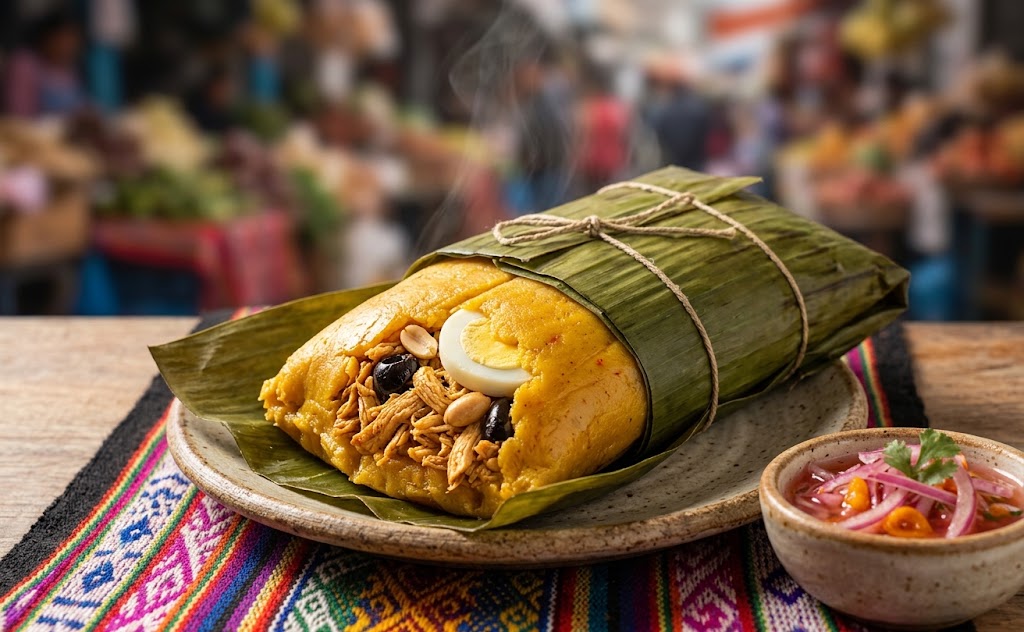
Peruvian tamales lean savory more often than sweet, usually filled with chicken or pork and a bit of chili, wrapped tight in banana leaf or corn husk, then steamed for hours. Vendors sell them early in the morning near bus stations and markets, and they’re dense enough to genuinely count as a meal rather than a snack.
Causa Rellena
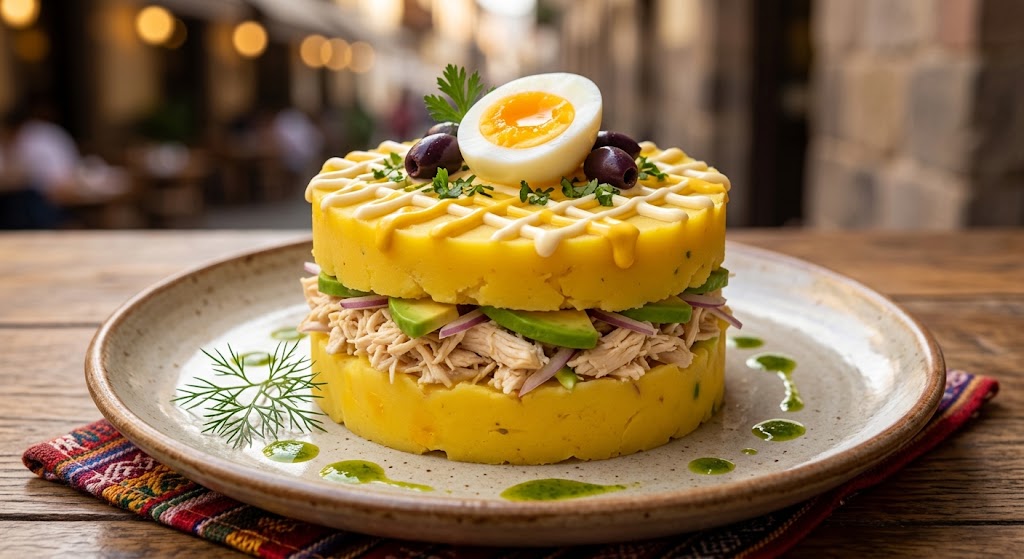
Causa looks almost too neat to be street food — layered yellow mashed potato mixed with lime and aji amarillo, filled with shredded chicken or tuna and avocado, sometimes topped with mayonnaise and a boiled egg. It’s served cold, which makes it a good choice on a hot day when the last thing you want is fried food.
Butifarra Sandwich
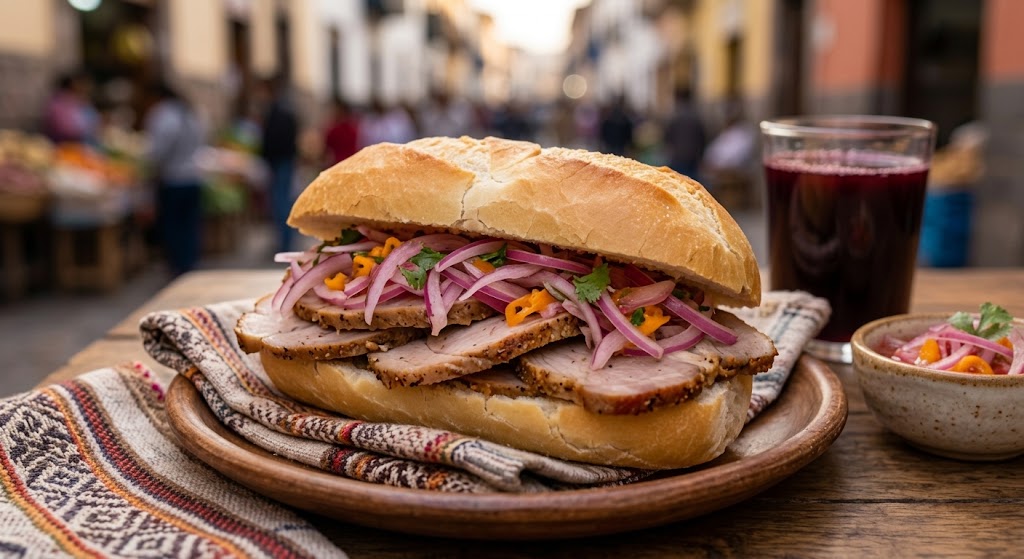
This one’s more common up north, but you’ll still find it in Lima — roast pork sliced thin, stuffed into a soft roll, topped with salsa criolla, the tangy pickled onion mix that shows up throughout Peruvian cooking. It’s simple in a way that works because the pork itself is well seasoned and the bread isn’t trying to compete with it.
Papa Rellena (Stuffed Potatoes)
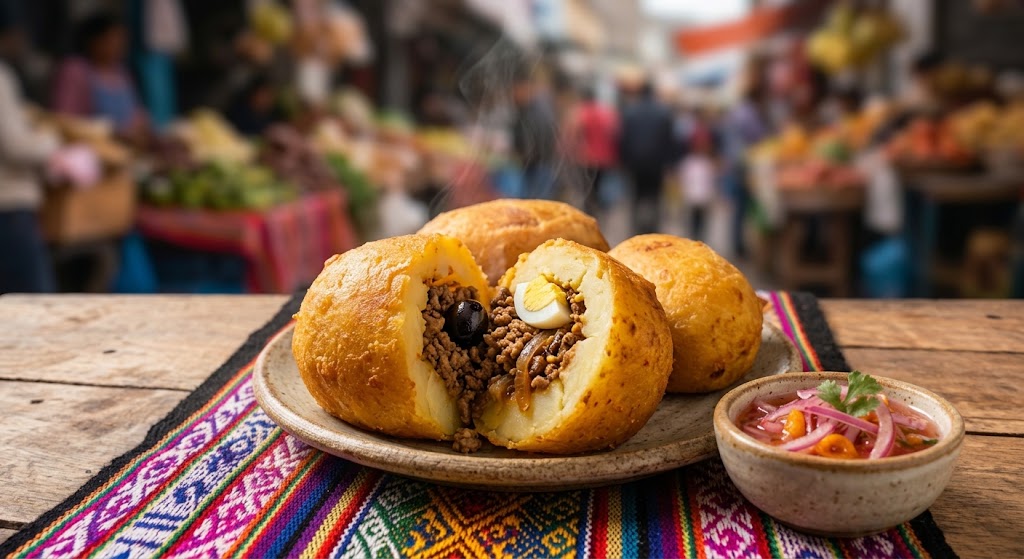
Mashed potato shaped into an oval, stuffed with a mixture of ground beef, olives, egg, and onion, then deep-fried until the outside turns a deep golden brown. Biting into one is a bit of a gamble in the best way — you never quite know how much filling you’re going to get until you’re into it.
Empanadas
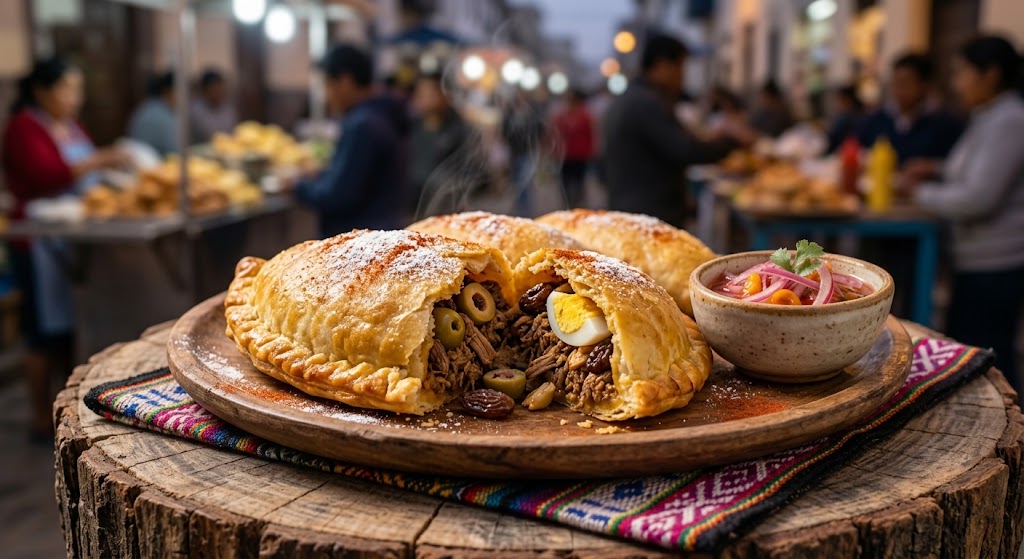
Peru’s version leans on the Spanish original but fills it with local ingredients — chicken, beef, cheese, sometimes seafood near the coast. Baked versions are lighter and flakier; fried ones are crispier and heavier. Either way, they’re built to be eaten standing up, no plate required.
Pollo a la Brasa (Street-Style Roasted Chicken)
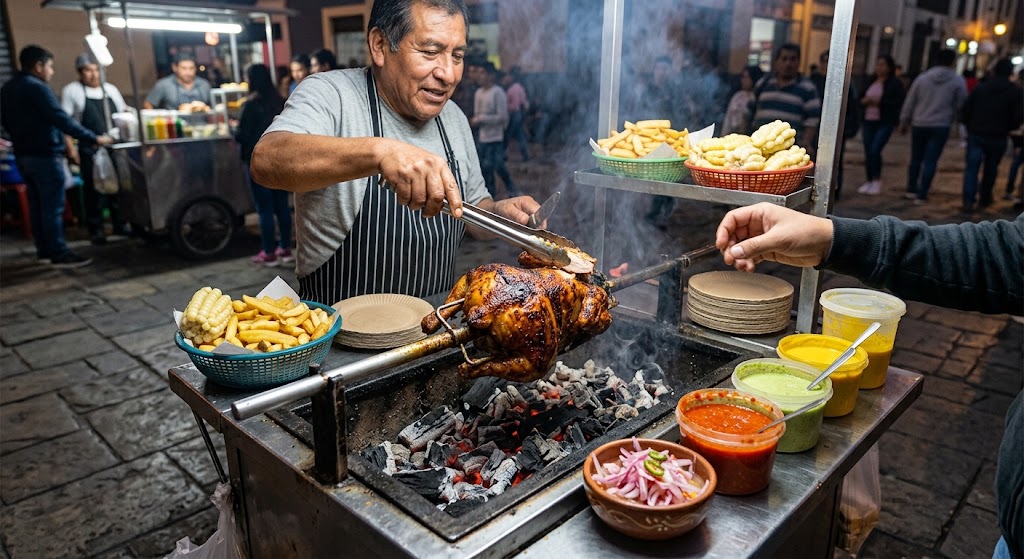
Technically more of a restaurant dish, but plenty of street vendors sell smaller cuts or sandwiches made from it. The chicken gets marinated in a mix of garlic, soy sauce, and spices, then roasted over charcoal until the skin turns dark and crisp while the meat stays juicy.
Sauces That Make the Difference
Almost none of these dishes are eaten plain, and the sauces are honestly half the reason the food is memorable.
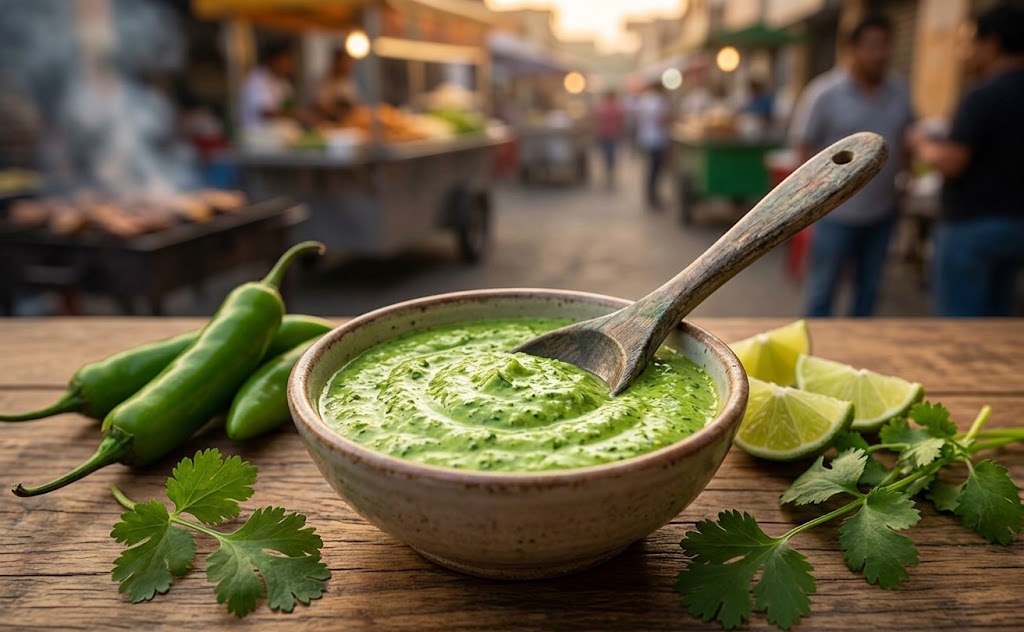
Aji Verde is a bright green, slightly creamy sauce built from aji peppers, cilantro, garlic, and usually a bit of mayo or oil to bind it. It shows up on almost everything grilled and has a freshness that cuts through richer meats.
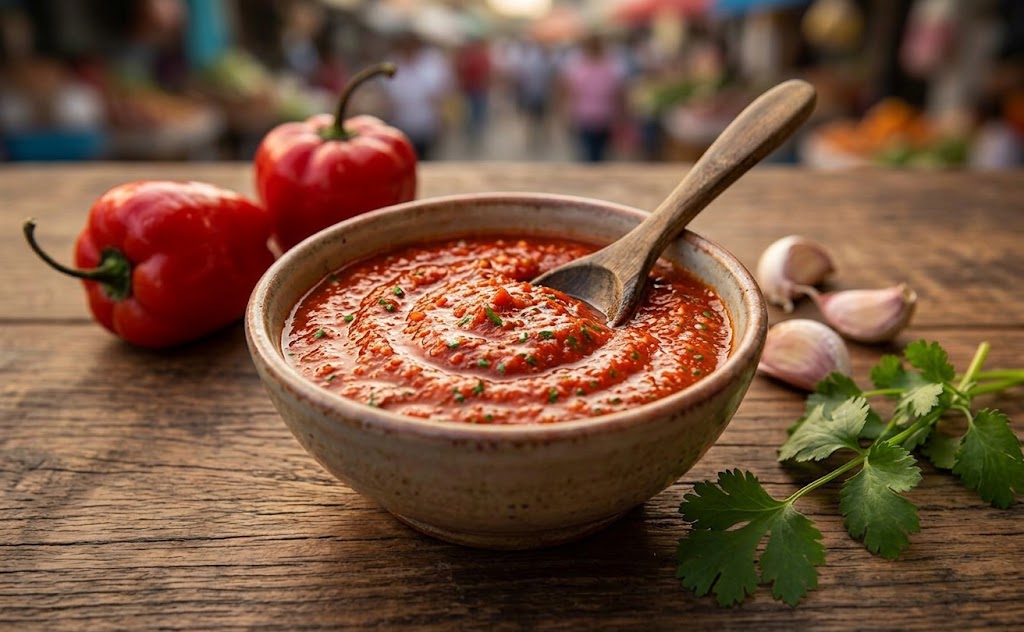
Rocoto sauce is hotter, more aggressive, made from rocoto peppers that carry real heat. It’s the one to be cautious with if you don’t handle spice well.
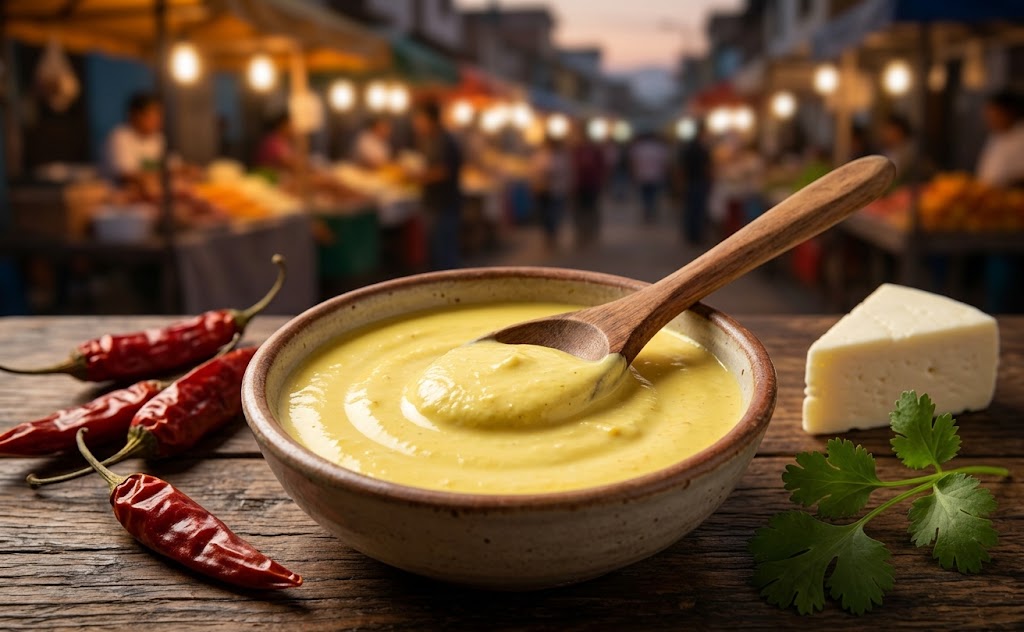
Huancaína sauce, made from aji amarillo, fresh cheese, milk, and crackers to thicken it, is creamier and milder, closer to a dressing than a hot sauce. It turns up over potatoes and simple snacks constantly.
Where You’ll Actually Find the Best of It
Lima is the obvious starting point — Barranco and the areas around Mercado Central have some of the highest concentration of vendors, and you can eat your way through half this list in a single afternoon without much effort.
Cusco leans more toward Andean staples — tamales, choclo con queso, empanadas — often made with ingredients grown in the surrounding valleys.
Arequipa has its own regional specialties, including rocoto relleno, stuffed and baked rather than fried, and a slightly different style of papa rellena than what you’ll find in Lima.
Local markets, wherever you are, tend to be more reliable than isolated street carts simply because there’s more foot traffic and turnover, which usually means fresher food.
A Few Practical Things to Keep in Mind
Go where the line is. A busy cart with locals waiting is almost always a better bet than an empty one — high turnover means the food isn’t sitting around.
Watch it get made. If you can see the meat go on the grill or the fries drop into hot oil in front of you, you’re in good shape.
Be a little more careful with raw seafood specifically. Ceviche is safe from a reputable, busy stall, but it’s the one category where I’d rather pay slightly more at a place with a good reputation than gamble on the cheapest option.
Stick to bottled water, and don’t feel bad about it — it’s a small habit that avoids a ruined day.
Ease into it if it’s your first time. I made the mistake of trying five different things in one afternoon on my first day in Lima, which wasn’t the smartest move. Pacing yourself means you actually get to enjoy each dish instead of feeling overwhelmed by the second one.
Why This Food Travels Well Beyond Peru’s Borders
It’s not an accident that dishes like ceviche and anticuchos have made their way onto menus outside Peru. Part of it is just how balanced the flavors are — spicy, acidic, and rich all show up in the same bite more often than not, which makes the food interesting without being exhausting.
The other part is that none of it feels like it’s trying too hard. Nobody’s plating salchipapas for a photo. It’s built for eating quickly, standing up, often with your hands, and that honesty comes through in the flavor.
Frequently Asked Questions
What is the most popular street food in Peru?
Anticuchos, salchipapas, and picarones are probably the three you’ll see most often, though it varies a bit by region.
Is Peruvian street food spicy?
Some of it is, mostly because of the aji-based sauces served on the side. Most dishes themselves are fairly mild, and you can control the heat by how much sauce you add.
Is it actually safe to eat?
Generally yes, especially if you’re choosing busy vendors and watching your food get cooked fresh. Raw seafood is the one category worth being a bit more selective about.
What’s the cheapest option to try?
Choclo con queso and small empanadas are usually the least expensive, often costing less than a dollar or two.
Should tourists be worried about trying everything?
Not particularly, as long as you follow a few basic precautions — busy stalls, freshly cooked food, bottled water. Most travelers have no issues at all.
Final Thoughts
What’s stuck with me most about Peruvian street food isn’t any single dish — it’s the pace of it. Nobody rushes you, nobody’s trying to upsell you on something you didn’t ask for, and the person cooking your food has usually been doing it for years, sometimes decades, in the exact same spot. There’s a kind of confidence in that.
If you ever find yourself in Lima, Cusco, or Arequipa, skip the restaurant with the English menu for at least one meal and go find a cart instead. Follow the smell, follow the line, and order whatever the person ahead of you just got. That’s usually the best way to eat in Peru, and it’s rarely let me down.