
Hi everyone! Today I want to share one of my favorite dishes with you —Authentic Peruvian Ceviche. Honestly, the first time I tried this, I couldn’t believe how much fresh, bold flavor came from just lime juice and a few simple ingredients. No stove, no oven, just a little patience and really fresh fish — that’s all you need.
In this post, I’ll walk you through exactly how to make it, which fish works best, and a few small tips that will make your ceviche taste like something straight out of a Peruvian restaurant. Let’s get started.
What Is Best Peruvian Ceviche?
In simple words, ceviche is a cold fish dish where fresh raw fish is cut into small pieces and marinated in lime juice. Here’s the fun part — without any heat at all, the acid in the lime juice “cooks” the fish. The texture ends up just like lightly cooked fish — soft, juicy, and incredibly fresh.
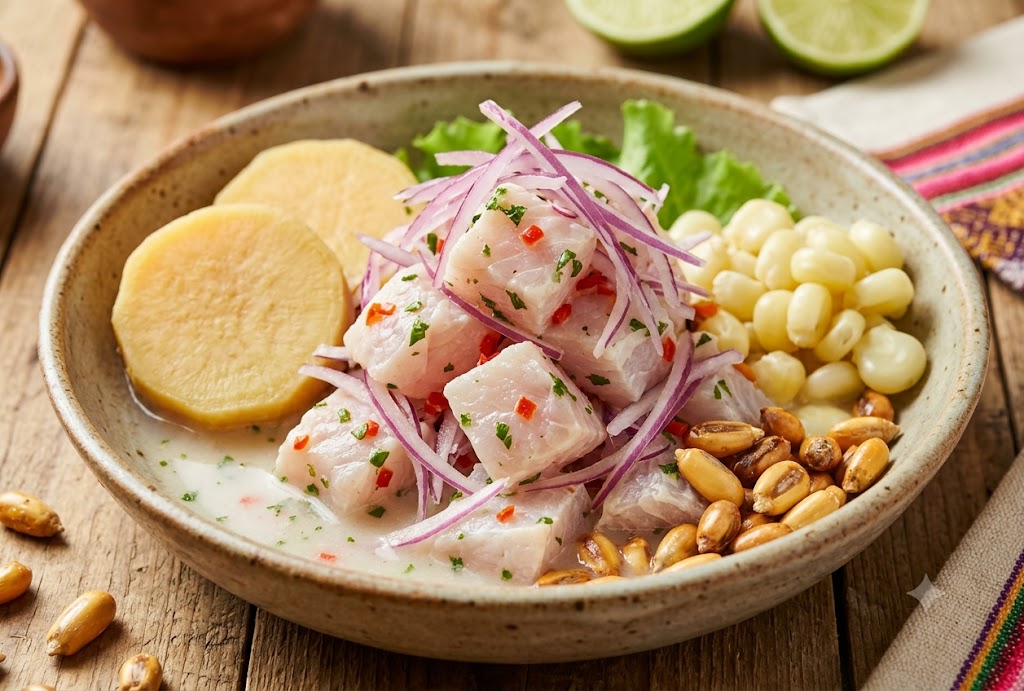
What makes Peruvian ceviche different from ceviche in other countries is the use of aji amarillo chili, red onion, and a special sauce called leche de tigre, which literally means “tiger’s milk.” This sauce is really the heart of the dish, and it’s what gives ceviche that bright, tangy, slightly spicy flavor Peru is famous for.
Why Is It So Popular Best Peruvian Ceviche?
People in Peru have been eating this dish for over 2,000 years. It’s such a big part of the culture that Peru even celebrates National Ceviche Day on July 28th every year. You’ll find it everywhere — from small street food stalls to fancy restaurants. These days, it’s loved all around the world because it’s fresh, healthy, and honestly pretty simple to make once you know the steps.
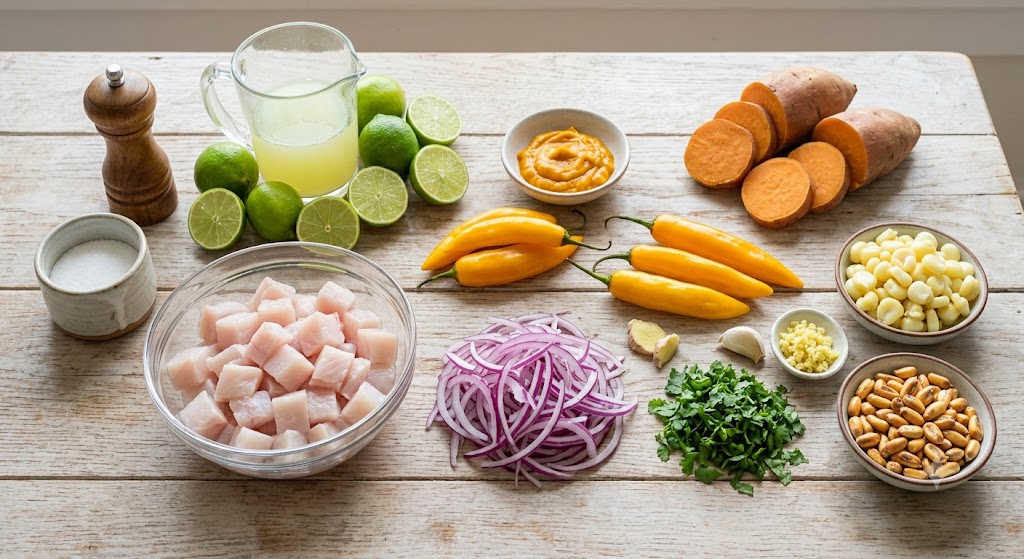
Ingredients You’ll Need
This recipe makes enough for 4 people.
For the Ceviche
- 500g fresh white fish (sea bass, tilapia, or sole all work great)
- 1 cup fresh lime juice (about 8 to 10 limes)
- 1 large red onion, thinly sliced
- 2 aji amarillo chilies (fresh or paste, either works)
- 1 garlic clove, finely chopped
- Half a cup fresh cilantro, roughly chopped
- 1 teaspoon salt
- Half a teaspoon black pepper
- 1 teaspoon fresh ginger, grated (optional, but I really recommend it)
For Serving on the Side
- 1 cup cooked corn (Peruvian choclo or regular sweet corn)
- 2 sweet potatoes, boiled and sliced
- Lettuce leaves for the base of the plate
- Extra cilantro and red chili slices to garnish
How to Choose the Best Fish
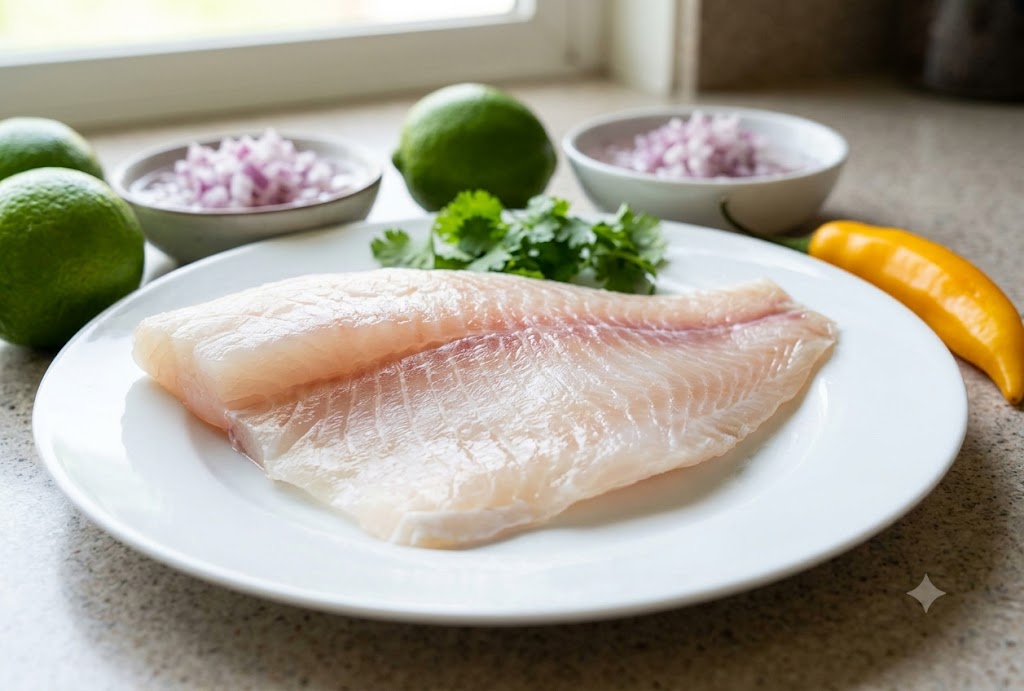
Here’s something really important — the fish is the star of this dish. Since there’s no actual cooking with heat involved, the fish absolutely needs to be fresh. If the fish isn’t good, the whole dish will suffer, no matter how well you do everything else.
Best Fish Options
- Sea Bass (Corvina) — the most traditional choice in Peru, firm with a mild flavor
- Sole — very common in Lima’s restaurants, soft with a slightly sweet taste
- Tilapia — easy to find, budget-friendly, and great if you’re just starting out
- Flounder — light flavor, clean taste, a solid option
- Halibut — firm texture that holds its shape well even in lime juice
Quick tip: Always buy the freshest fish you can find. It should smell clean, like the ocean. If it smells strong or off in any way, don’t use it for ceviche.
Step-by-Step — How to Make It
Now for the part you’ve been waiting for. Follow these steps and you’ll get a perfect ceviche every single time.
Step 1 — Cut the Fish into Small Cubes
Cut your fish into small cubes, about 1 to 2 cm each. Smaller pieces soak up the lime juice faster and taste better overall. Put the fish in a glass bowl, add a small pinch of salt, and mix it gently. Pop it in the fridge for 5 minutes while you get everything else ready.
Step 2 — Make the Leche de Tigre (Tiger’s Milk Sauce)
This is the special sauce that gives the whole dish its famous flavor. To make it, put the following in a blender: lime juice, garlic, ginger, a small piece of fish, a slice of red onion, a small piece of aji amarillo, cilantro stems, and a pinch of salt. Blend for about 30 seconds, then strain it through a sieve. Keep this sauce cold in the fridge until you need it.
Step 3 — Mix the Fish with the Sauce
Pour the leche de tigre over the fish and mix gently. Add in the thin slices of red onion and mix again. The lime juice will immediately start “cooking” the fish. For the best texture, let it sit for just 3 to 5 minutes — this keeps the fish soft and tender. If you prefer it a bit more cooked through, you can leave it up to 15 minutes. Just don’t go past 20 minutes, or the fish will turn tough.
Step 4 — Add the Final Touches
Now add fresh cilantro, sliced aji amarillo, and black pepper. Give it a taste — it should feel tangy, spicy, and fresh all at once. Want more heat? Add a bit more aji amarillo. Need more tang? Squeeze in a little extra lime. Adjust the salt to your liking too.
Step 5 — Plate It and Serve Right Away
Ceviche should always be eaten fresh — don’t make it and let it sit around for hours. Place lettuce leaves on a plate or in a bowl, then spoon the ceviche on top. Add the sweet potato slices and corn on the side. Finish it off with a bit more cilantro and some red chili on top. Serve it cold and enjoy immediately.
Tips to Make Your Ceviche Even Better
- Always use fresh limes, never bottled lime juice. You can really taste the difference.
- Keep everything cold throughout the process — cold bowl, cold fish. This keeps the dish both safe and fresh.
- Soak your sliced red onion in cold, salted water for about 10 minutes before using. It softens the sharp bite and makes them mild and crunchy.
- Skip metal bowls. Metal reacts with lime juice and can change the taste. Stick to glass or ceramic.
- Try to find real aji amarillo if you can — it’s what gives ceviche its true, authentic flavor. If you can’t find it fresh, the paste works well and is easy to order online.
- Serve in a bowl straight from the fridge so the ceviche stays at its best until the very last bite.
3 Easy Variations Worth Trying
Once you’ve got the basic recipe down, try these popular twists too.
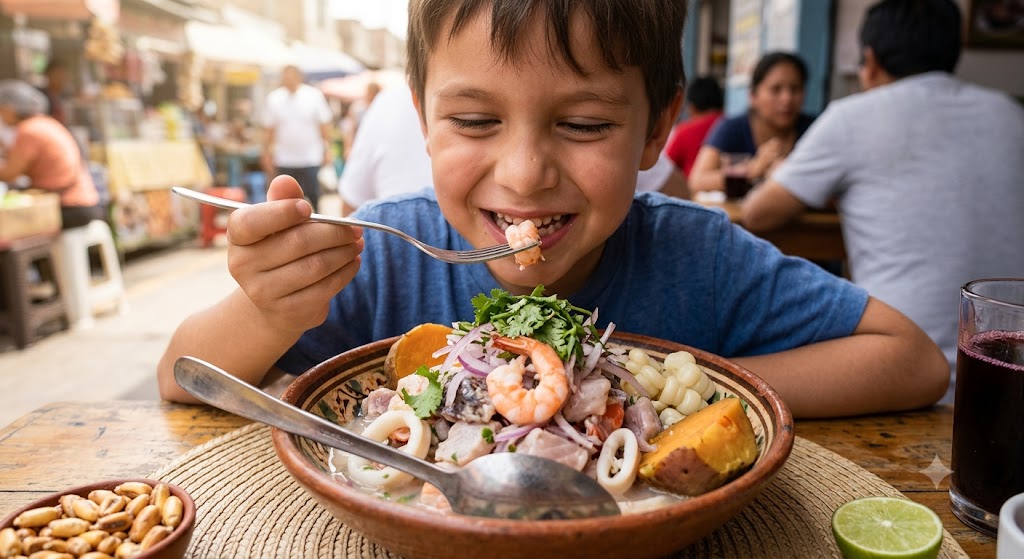
1. Ceviche Mixto — Mixed Seafood Ceviche
This version mixes in shrimp, squid, and octopus along with the fish. It’s a huge favorite in Lima. The method stays the same — just swap some of the fish for a mix of seafood. It looks beautiful on the plate and tastes even better.
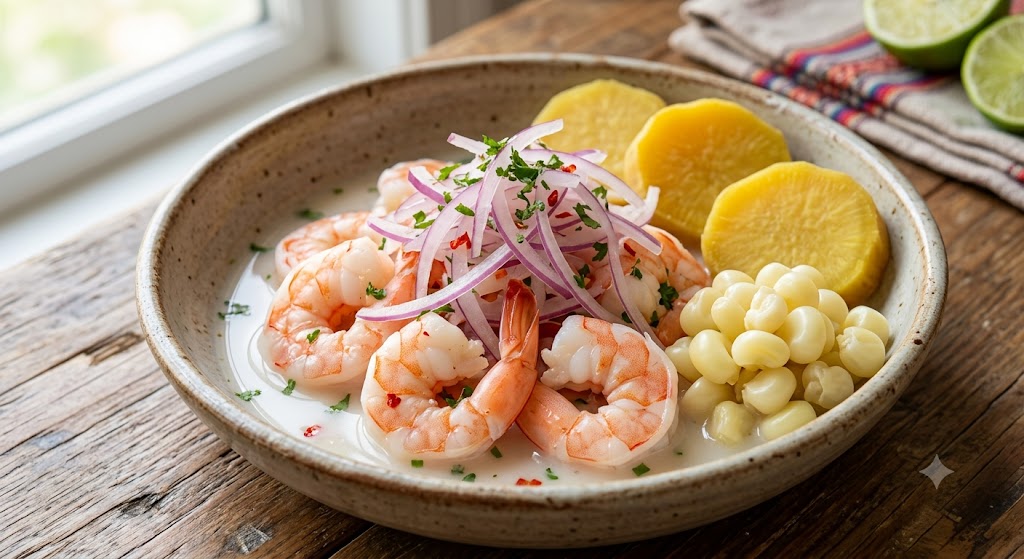
2. Ceviche de Camarones — Shrimp Ceviche
For shrimp ceviche, boil the shrimp in salted water for just 1 minute first. Then marinate them in the leche de tigre the same way you would fish. The shrimp soaks up all that tangy flavor and becomes really delicious.
3. Nikkei Ceviche — Japanese-Peruvian Style
This is a fusion style that came from Japanese immigrants living in Peru. It adds soy sauce and sesame oil into the leche de tigre, giving it a rich, savory flavor that feels totally unique. Top it with some sliced avocado and you’ve got a restaurant-quality dish right at home.
Is Peruvian Ceviche Healthy?
Yes, absolutely! Peruvian ceviche is genuinely one of the healthier dishes out there, and it doesn’t skimp on flavor either.
- Low in calories — around 180 to 220 calories per serving
- High in protein — about 28 grams per serving from the fresh fish
- Very low in fat — under 4 grams per serving
- Rich in Vitamin C — thanks to all that fresh lime juice
- Gluten free — completely gluten free
- Dairy free — great if you’re lactose intolerant
- Full of antioxidants — from the aji amarillo chili and cilantro
Common Questions About Peruvian Ceviche
Is it safe to eat raw fish in ceviche?
Yes, as long as you’re using very fresh fish from a reliable source. Lime juice changes the texture of the fish in a way that’s similar to cooking it with heat. For safety, always use the freshest fish possible, keep it cold, and eat the ceviche right after making it.
How long should the fish sit in the lime juice?
Most people in Peru marinate the fish for just 3 to 5 minutes, which keeps it soft and tender. If you like it more firm and fully cooked through, you can go up to 15 minutes. Just don’t go past 20 minutes, or the texture will become tough.
Can I make ceviche the night before?
No — ceviche should always be made fresh and eaten right away. If you leave it overnight, the lime juice will over-cook the fish and it’ll turn rubbery. You can prep the sauce and chop the vegetables ahead of time, but always add the fish just before serving.
What can I use instead of aji amarillo?
If you can’t find aji amarillo, serrano chili or habanero work as substitutes (use less habanero since it’s much hotter). You can also mix yellow bell pepper with a bit of cayenne pepper to get a similar color and heat level. The easiest option is usually ordering aji amarillo paste online.
What do people usually eat with Peruvian ceviche?
In Peru, ceviche is typically served with boiled sweet potato, cooked corn, and lettuce. Some people also add tostadas (crunchy corn chips) or cancha (toasted corn kernels) on the side for some crunch. A cold glass of chicha morada (purple corn drink) or a Pisco Sour cocktail pairs really well with it too.
Final Thoughts
Making authentic Peruvian ceviche at home is a lot easier than most people expect. All you really need is fresh fish, real limes, some aji amarillo, and a bit of time. What you get in return is a dish that’s fresh, healthy, packed with flavor, and genuinely impressive to serve.
Whether you’re making this for yourself, your family, or guests, it’s a recipe that never disappoints. It’s one of those dishes people always ask you to make again. Give it a try today and bring a taste of Peru right into your own kitchen.
If you loved this recipe, let me know — and next time, I’ll share another Peruvian favorite, like Lomo Saltado or Causa Limeña. Until then, happy cooking!

2 Comments
Pingback: How to Make Shrimp Ceviche Recipe at Home (Easy Step-
Pingback: Authentic Peruvian Ceviche Recipe with Corn | Fresh Lime-