
Sudado de Pescado is a traditional Peruvian fish stew made with tender fish, tomatoes, red onion, garlic, cilantro, and a flavorful broth. The name comes from the Spanish word sudar, meaning “to sweat.” In cooking, it refers to gently steaming ingredients in a covered pot so their juices mingle and create a fragrant sauce. This home-style dish is especially associated with Peru’s coastal cooking, where fresh fish and simple vegetables are turned into a satisfying meal.
Unlike a thick chowder, sudado de pescado has a light broth that lets the fish remain the star. Ají amarillo adds fruity pepper flavor, while lime and cilantro bring freshness at the end. This version uses firm white fish and practical substitutions for ingredients that may be hard to find outside Peru.
Serve it hot with rice, boiled potatoes, or yuca. For more home cooking ideas, browse our [Peruvian food recipes guide](https://peruvianspice.com/peruvian-food-recipes-easy/).
What Is Sudado de Pescado?
Sudado de pescado is a Peruvian fish stew in which fish is gently cooked with onion, tomato, garlic, pepper, herbs, and a small amount of liquid. The result is moist fish surrounded by a savory, aromatic broth. It is different from fried fish because the fish cooks in the sauce rather than in hot oil. It is also different from chupe de pescado, a richer Peruvian fish chowder that often includes milk or evaporated milk, potatoes, vegetables, and cheese.
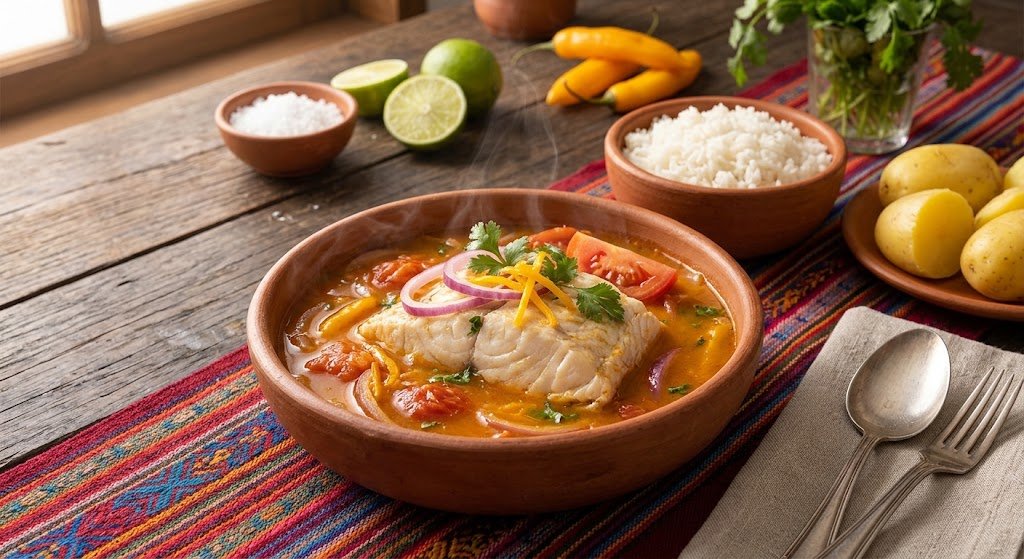
Recipes vary by family and region. Some cooks use a whole fish or bone-in pieces, while others choose boneless fillets. Coastal versions may include chicha de jora, a fermented corn drink, for a traditional tang. Fish stock works well at home. The aim is a light, well-seasoned broth that complements the fish.
Why You’ll Love This Recipe
It is ready in about 35 minutes, making it suitable for a weeknight dinner.
The broth is full of flavor without cream or a heavy sauce.
Firm white fish holds its shape when simmered gently.
The ingredients are flexible: use ají amarillo paste if available and a yellow bell pepper when fresh ají amarillo is hard to find.
It pairs easily with rice, potatoes, yuca, or a crisp onion salad.
The key technique is gentle cooking. A rolling boil can break the fish and make it dry, so keep the broth at a quiet simmer and start checking the fish after about 8 minutes.
Ingredients for Sudado de Pescado
This recipe makes 4 servings. For best results, prepare and measure the ingredients before you start cooking.
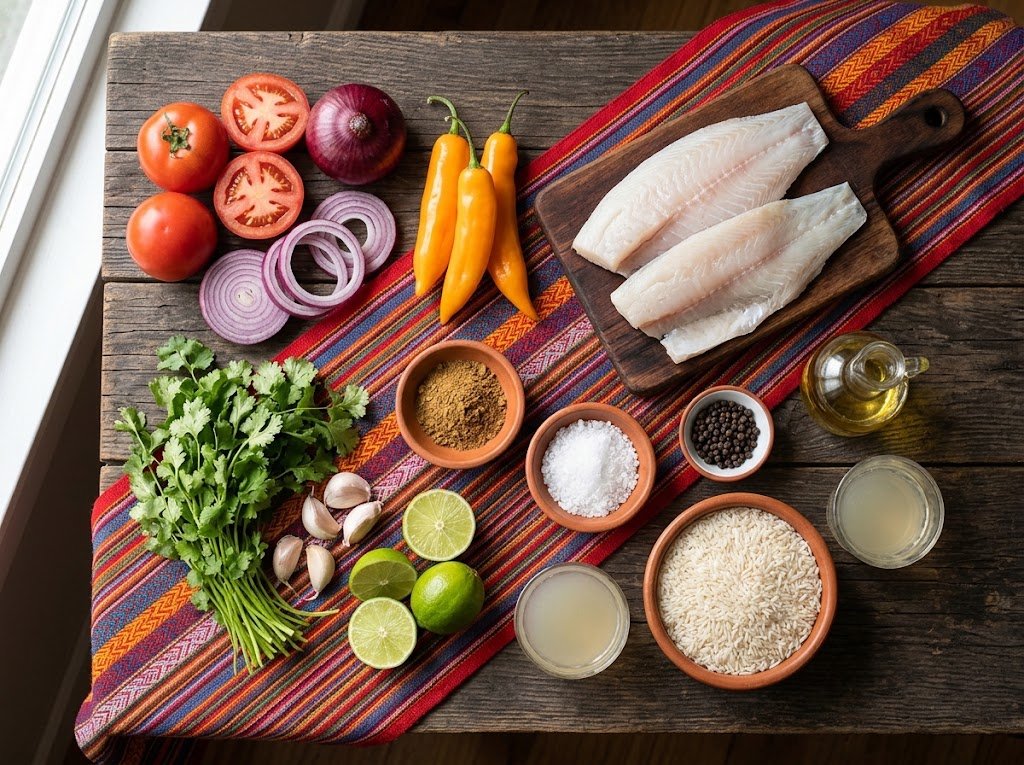
For the aromatic base:
• 1 tablespoon neutral oil
• 1 medium yellow onion, finely chopped (about 1 cup)
• 1 small carrot, finely diced (about ½ cup)
• 2 celery ribs, finely diced (about ½ cup; optional but useful for flavor)
• 3 garlic cloves, finely minced
• 1 tablespoon ají amarillo paste
• 1 tablespoon ají panca paste
• 1 teaspoon ground cumin
• ½ teaspoon dried oregano
• ½ cup (120 ml) chicha de jora or dry white wine; alternatively use extra fish stock
• 2 cups (480 ml) fish stock, preferably low-sodium
• 1 tablespoon tomato paste (optional, for a deeper flavor)
For the stew:
• 1½ pounds (680 g) firm white fish fillets, cut into 4 portions
• 1 medium red onion, cut into thin wedges
• 1 yellow or orange bell pepper, sliced
• 2 medium Roma tomatoes, cut into wedges; remove excess seeds if very watery
• ½ teaspoon salt, plus more to taste
• ¼ teaspoon black pepper
• 2 tablespoons fresh lime juice, or to taste
• ½ cup chopped fresh cilantro
• 1 small lime, cut into wedges, for serving
To serve:
• 2 cups cooked white rice, or more as needed
• Boiled potatoes or yuca, optional
• Salsa criolla, optional
Good options include cod, sea bass, grouper, halibut, barramundi, snapper, or another firm white fish. Choose thick fillets that can hold their shape; delicate fish may fall apart.
Ají amarillo paste gives the dish a fruity, gently hot flavor. Ají panca is usually mild and adds earthy depth. A yellow bell pepper adds color and sweetness but does not fully replace ají amarillo paste.
How to Make Sudado de Pescado
Prepare the fish and vegetables. Pat the fish dry with paper towels. Check for bones, then season both sides with the salt and black pepper. Chop the aromatics, slice the red onion and bell pepper, and cut the tomatoes into wedges. Keeping the vegetables ready before heating the pan makes the cooking process easier.
Build the flavor base. Heat the oil in a wide, heavy pot or deep skillet over medium heat. Add the chopped yellow onion, carrot, and celery. Cook for 5–7 minutes, stirring occasionally, until the onion softens. Do not rush this step; softened vegetables give the broth a sweeter, rounder flavor.
Add the garlic and Peruvian pepper pastes. Stir in the garlic, ají amarillo paste, ají panca paste, cumin, oregano, and tomato paste if using. Cook for 1–2 minutes, stirring so the garlic does not burn. The mixture should smell fragrant rather than toasted or bitter.
Deglaze the pot. Pour in the chicha de jora or dry white wine. Stir and let it bubble for 2–3 minutes so the sharp smell of the liquid softens. If you prefer not to use wine, add ½ cup of fish stock instead. Scrape the bottom of the pot with a wooden spoon to lift any flavorful bits.
Add the stock and simmer. Pour in the fish stock and bring the mixture to a gentle simmer. Cook for 5–8 minutes, or until the carrot is tender. For a smoother, more restaurant-style broth, blend the aromatic base with an immersion blender. Keep the blender head submerged to avoid splashes. You can skip blending if you prefer a rustic stew with visible pieces of vegetables.
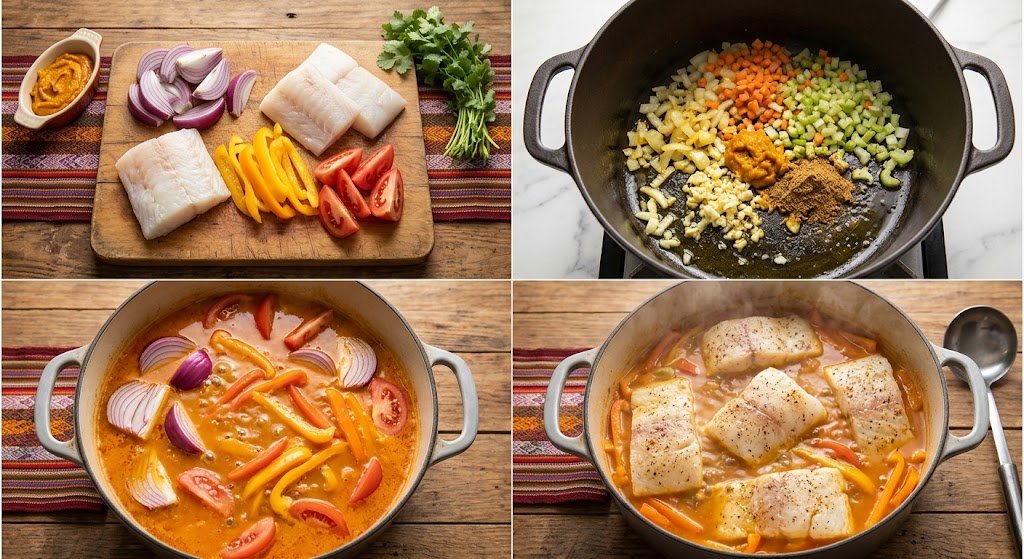
Add the fresh vegetables. Stir in the red onion wedges, bell pepper strips, and tomato wedges. Simmer for about 3 minutes so the vegetables begin to soften but still hold their shape. Taste the broth and adjust the salt if needed. Remember that the fish will release some flavor as it cooks.
Cook the fish gently. Nestle the fish portions into the broth in a single layer. Spoon a little broth over the top, cover the pot, and cook at a low simmer for about 8–10 minutes for fillets around 1 inch thick. Thicker pieces may need a few more minutes; thin pieces cook faster. Avoid stirring vigorously or the fish may break apart. The fish is ready when it turns opaque and flakes easily with a fork. For food safety, the center should reach 145°F (63°C).
Finish with lime and cilantro. Turn off the heat. Add the lime juice and chopped cilantro, then taste the broth once more. Add a little more lime or salt if needed. Let the stew rest for 2 minutes before serving so the flavors settle.
Serve right away while the broth is hot. Ladle the broth and vegetables into shallow bowls and set one fish portion in each. Rice, boiled potatoes, or yuca all work well on the side. For a heartier meal, try Peruvian-style rice and beans, Tacu Tacu, though plain white rice is the classic choice for soaking up every drop of the broth.
Tips for the Best Peruvian Fish Stew
Choose firm fish such as cod, sea bass, snapper, grouper, or halibut. If using frozen fish, thaw it safely in the refrigerator and pat it dry before cooking.
Keep the broth at a gentle simmer. The liquid should bubble lightly, not boil hard. High heat can make fish tough and cause it to break into small pieces.
Cut vegetables evenly so they cook at a similar speed. Thin onion wedges and bell pepper strips soften quickly while still adding texture.
Commercial fish stock may already contain salt. Use low-sodium stock if possible and adjust seasoning near the end.
Add fresh lime juice after cooking to keep its bright flavor.
Do not overcook the fish. Start checking at 8 minutes. The exact time depends on the fish variety and thickness, not just the recipe timer.
You can prepare the aromatic broth a day ahead, cool it promptly, and refrigerate it. Reheat it before adding fresh vegetables and fish.
Substitutions and Variations
No ají amarillo paste? Use a little yellow bell pepper for sweetness and, if you enjoy heat, a small amount of mild chili paste. The flavor will be different, so do not describe the result as identical to the original.
No ají panca paste? Leave it out or add a small pinch of mild smoked paprika for depth. Avoid using too much smoked paprika because it can overpower the fish.
No fish stock? Use water with a small amount of seafood bouillon, following the package directions. Water alone can work, but the broth will taste lighter. Avoid strongly flavored stock that masks the fish.
For a rustic stew, skip blending the base. Chop the vegetables finely and let them soften in the broth.
For extra vegetables, add a small handful of peas or a few thin strips of fennel. Keep additions modest so the fish and Peruvian-style broth remain central.
You can use a cleaned whole fish or bone-in portions, but take care when serving because bones may be present. Cooking time will vary by size and cut.
What to Serve with Sudado de Pescado
Plain white rice is a simple, reliable side because it absorbs the savory broth without competing with the fish. Boiled yellow potatoes, yuca, or sweet potato also work well. For a fresh contrast, serve the stew with salsa criolla, a Peruvian onion relish made with thinly sliced red onion, lime juice, cilantro, and chili.
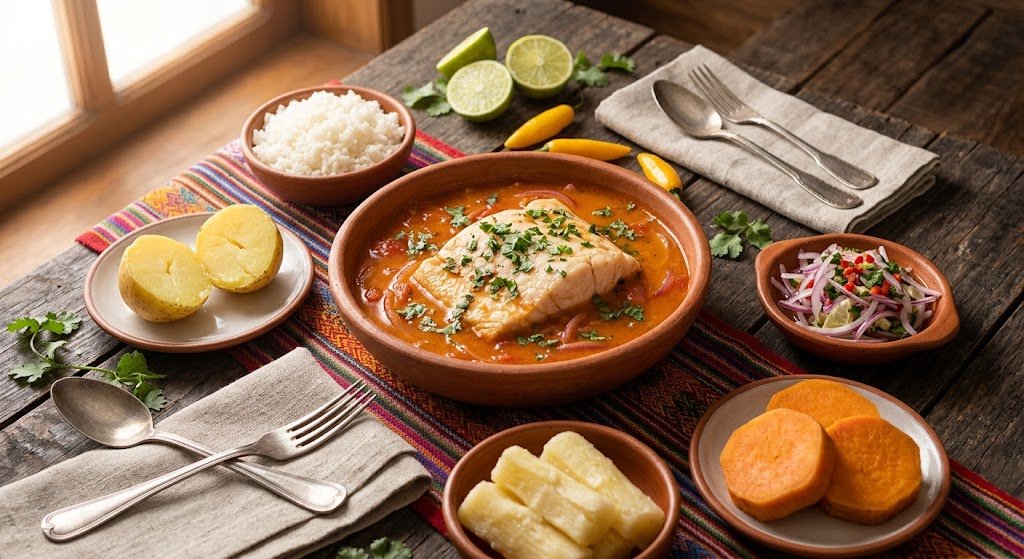
Planning a bigger Peruvian meal? Browse our popular Peruvian meals for more ideas. A glass of chicha morada, the traditional purple corn drink, goes nicely alongside this stew. If you enjoy seafood, you might also like Peruvian ceviche, though it is made with citrus-cured raw fish and is quite different from this hot, simmered dish.
For a lighter meal, serve a modest bowl with vegetables and a little rice. Add potatoes or yuca for a more filling dinner.
How to Store and Reheat Leftovers
Fish stew tastes best freshly made because fish can become firmer and more fragile after cooling and reheating. If you have leftovers, transfer them to a shallow, covered container and refrigerate within 2 hours. Use within 1–2 days for best quality. Reheat gently in a covered saucepan over low heat until steaming hot throughout. Avoid repeated reheating and do not boil the fish vigorously. If possible, store the broth and fish separately so the fish is easier to warm without breaking apart.
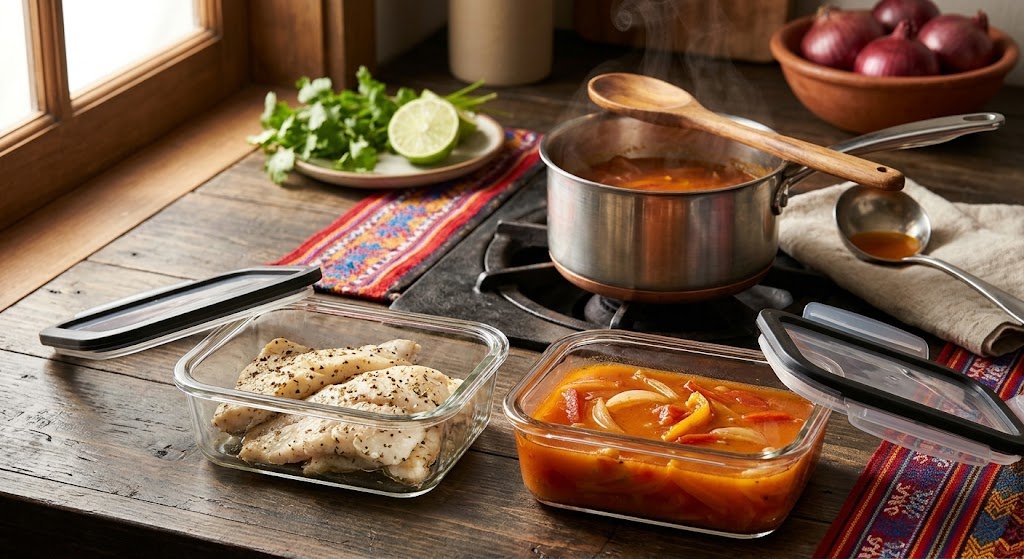
Freezing the finished stew is not ideal because fish and vegetables may change texture. For make-ahead cooking, freeze only the aromatic broth, thaw it in the refrigerator, and cook the fish fresh.
Frequently Asked Questions
How do you pronounce sudado de pescado?
It is pronounced roughly “soo-DAH-doh deh pehs-KAH-doh.” It means “steamed” or “sweated fish” in Spanish, referring to the gentle cooking method.
Is sudado de pescado spicy?
It is usually mildly warm rather than extremely hot. Ají amarillo has a fruity flavor and moderate heat, while ají panca is generally mild. Adjust the amount of paste to suit your taste.
What fish is best for sudado de pescado?
Use a firm white fish such as cod, sea bass, snapper, grouper, halibut, or barramundi. Thick portions are easier to handle because they are less likely to break during cooking.
Can I make sudado de pescado without wine?
Yes. Replace the chicha de jora or wine with the same amount of fish stock. The broth will still be flavorful, though it will have a slightly different taste.
Can I use frozen fish?
Yes. Thaw it fully in the refrigerator, pat it dry, and check for bones before adding it to the stew. Avoid adding frozen fillets directly, because they can cool the broth and release extra water.
How do I know when the fish is cooked?
The flesh should be opaque and separate easily into flakes. For a reliable food-safety check, the thickest part should reach 145°F (63°C).
Is sudado de pescado the same as chupe de pescado?
No. Sudado is a lighter, broth-based fish stew. Chupe de pescado is usually richer and may contain milk or evaporated milk, potatoes, corn, peas, and cheese.
Can I make the broth in advance?
Yes. Make the aromatic base and refrigerate it promptly in a covered container for up to one day. Reheat it, add the vegetables, and cook the fish just before serving for the best texture.
Conclusion
Sudado de Pescado is a comforting way to enjoy the flavors of Peruvian coastal cooking at home. Tender white fish, tomato, red onion, cilantro, and ají pastes create a broth that tastes full and fresh without being heavy. With a few simple techniques—softening the aromatics, simmering gently, and adding the fish near the end—you can make a reliable fish stew in about 35 minutes.
Serve with rice, potatoes, or yuca, then finish with lime and fresh cilantro. Use fresh firm fish and adjust the seasoning to taste. Explore our [easy Peruvian food recipes](https://peruvianspice.com/peruvian-food-recipes-easy/) for more dishes from Peru’s home kitchens.
