
Whenever I want something fresh, light, and full of flavor, Authentic Peruvian ceviche is one of the first dishes I make. I have tried ceviche in different ways, but I always come back to the simple Peruvian style because the fresh fish, lime, red onion, and ají amarillo work so well together. It does not need a long list of ingredients or hours in the kitchen.
The first time I made ceviche at home, I was more careful about the fish and lime than anything else. Once those two things were right, the rest was surprisingly easy. The key is to keep everything cold, cut the fish evenly, and serve it soon after mixing it with the lime and other ingredients.
In this Peruvian ceviche recipe, I will show you how I make it at home, including the ingredients, leche de tigre, serving ideas, common mistakes, and a few variations you can try.
What Is Authentic Peruvian Ceviche?
Peruvian ceviche is traditionally made with fresh white fish, lime juice, red onion, ají amarillo, cilantro, and salt. The fish is cut into small pieces and combined with the citrus-based mixture just before serving.
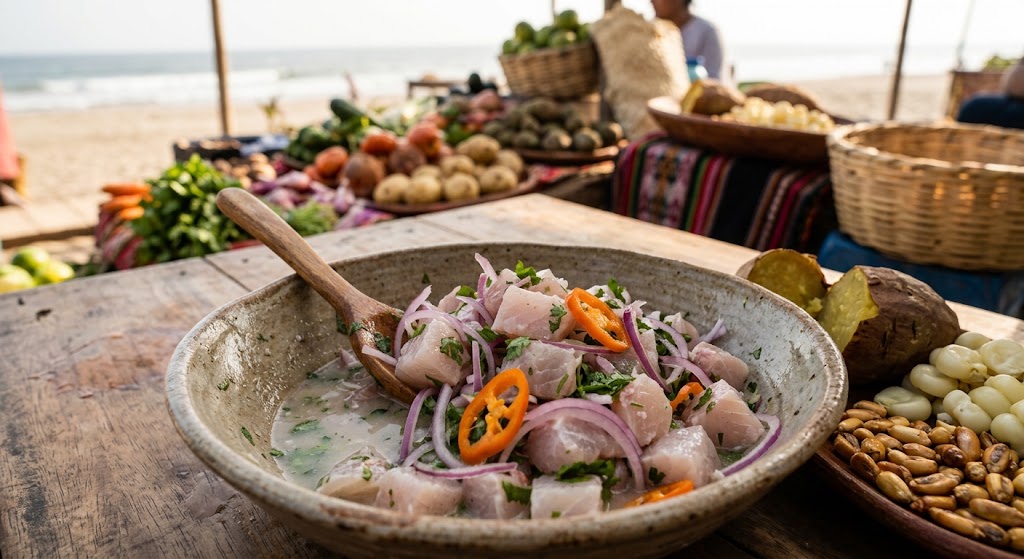
What I love about Peruvian ceviche is the balance. The lime gives it a bright sour taste, the onion adds crunch, ají amarillo brings gentle heat, and the fish keeps everything fresh and clean.
A good ceviche should not feel heavy. It should taste fresh from the first bite.
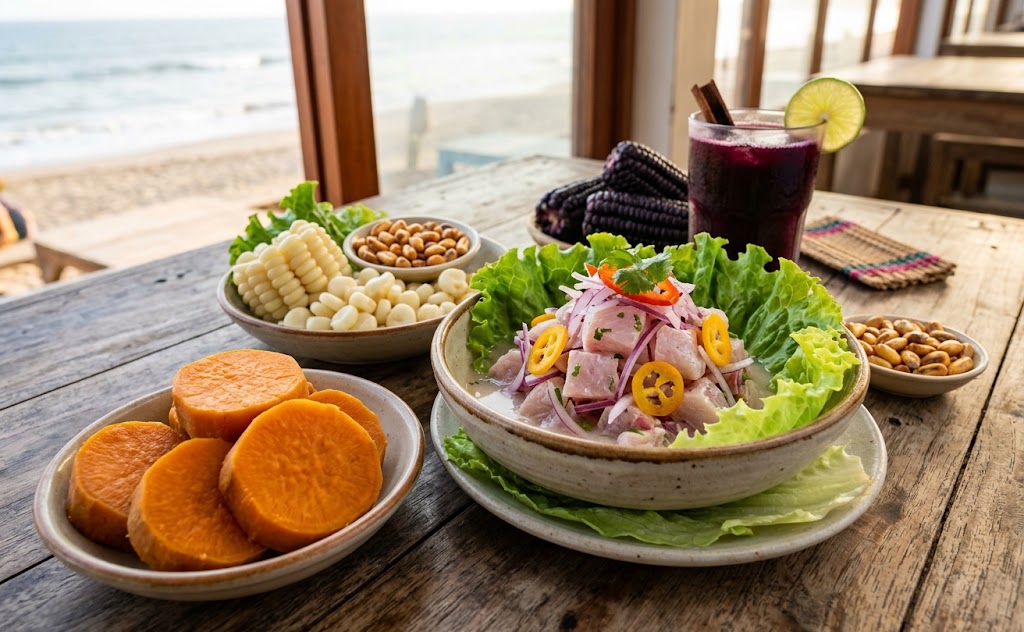
In Peru, ceviche is often served with sweet potato, corn, lettuce, and sometimes cancha, which adds a nice crunch.
Ingredients You Need
This recipe makes about 4 servings.
For the Ceviche
- 500 g fresh white fish, such as sea bass, corvina, sole, or another fish suitable for raw preparation
- 1 cup fresh lime juice
- 1 large red onion, sliced very thin
- 2 ají amarillo chilies, finely sliced, or 1–2 tablespoons ají amarillo paste
- 1 garlic clove, finely chopped
- ½ cup fresh cilantro, roughly chopped
- 1 teaspoon salt
- ½ teaspoon black pepper
- 1 teaspoon fresh ginger, grated
For Serving
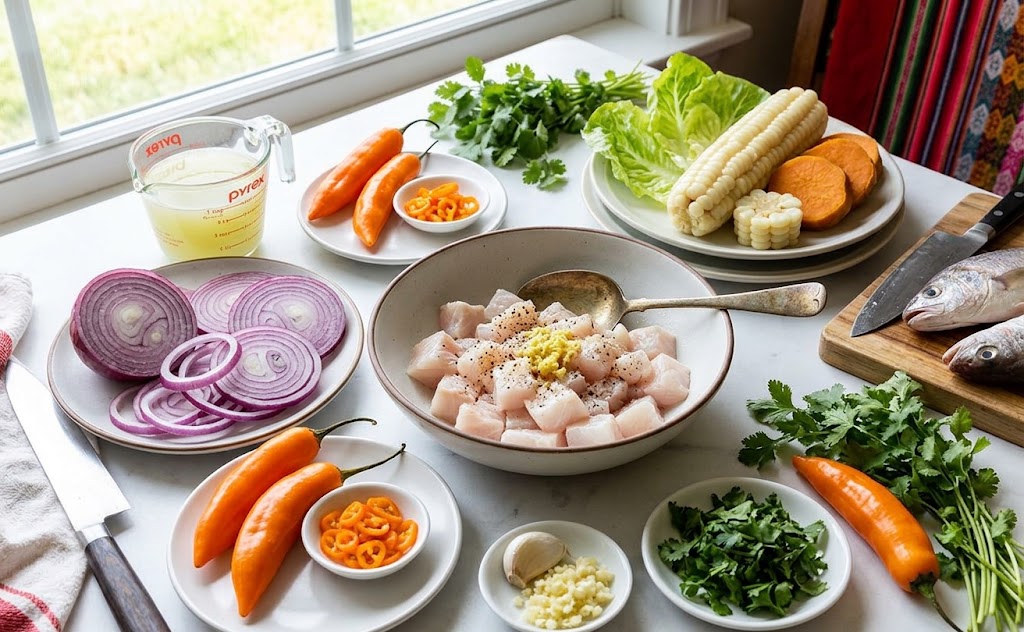
- 1 cup cooked Peruvian choclo or sweet corn
- 2 medium sweet potatoes, boiled and sliced
- Lettuce leaves
- Extra cilantro
- Extra ají amarillo or red chili for garnish
If you enjoy Peruvian food, you may also want to try my Causa Limeña Recipe. It makes a great addition to a Peruvian-style meal.
Choosing the Right Fish
This is the part I pay the most attention to when making ceviche.
Because the fish is not cooked with heat, I always choose fish from a trusted source and follow the seller’s guidance for fish intended to be eaten raw. The fish should look fresh, firm, and clean, without a strong unpleasant smell.
Some good choices include:
- Sea bass or corvina
- Sole
- Halibut
- Flounder
- Other firm white fish suitable for raw consumption
I prefer a firm white fish because it holds its shape well when cut into small cubes.
Avoid fish that looks dull, mushy, or smells strongly unpleasant. Freshness makes a much bigger difference here than adding extra seasoning.
How to Make Peruvian Ceviche
1. Prepare the Fish
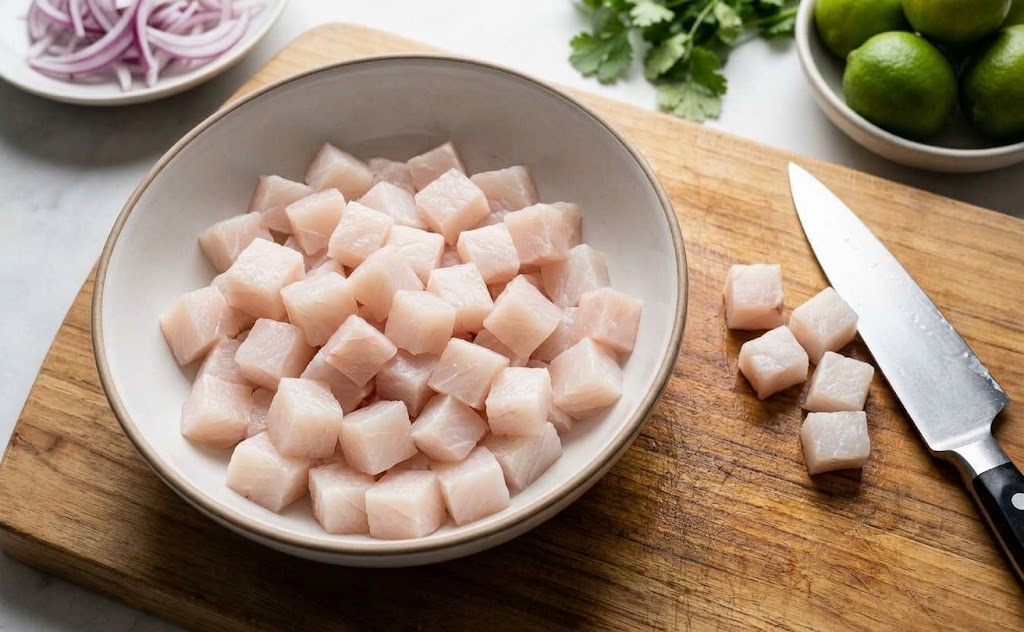
Start by cutting the fish into small, even cubes. I usually aim for pieces around 1–2 cm.
Try to keep the pieces similar in size. If some pieces are very large and others are tiny, they will not have the same texture when mixed with the lime.
Place the cut fish in a clean glass or ceramic bowl and keep it chilled while you prepare the other ingredients.
2. Prepare the Red Onion
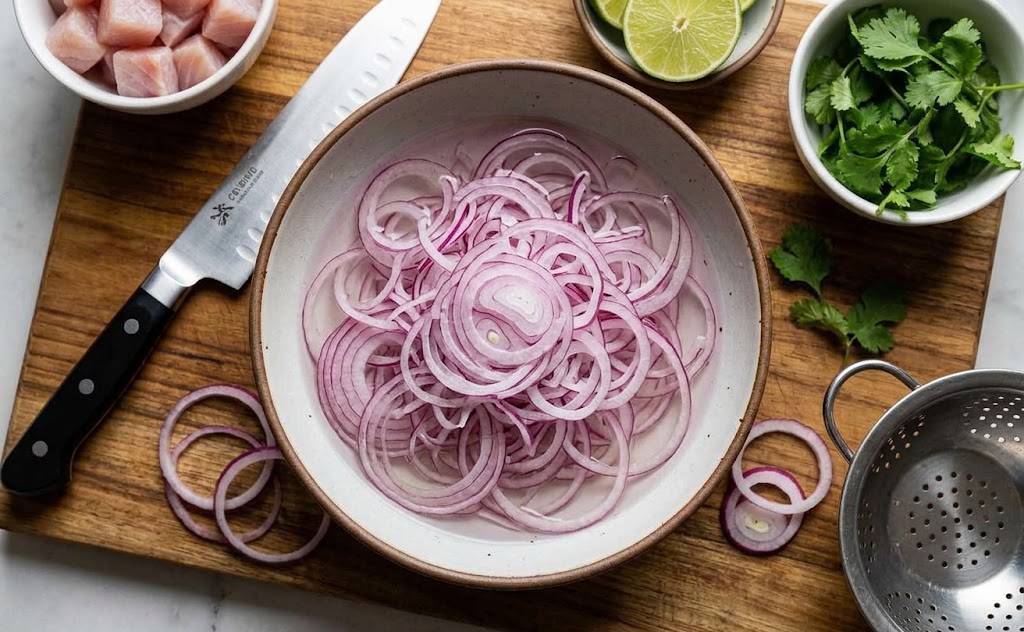
Slice the red onion as thinly as possible.
If you find raw onion too strong, one trick I use is to place the slices in cold water for about 10 minutes. Drain them well before adding them to the ceviche.
This keeps the onion crisp but takes away some of its sharpness.
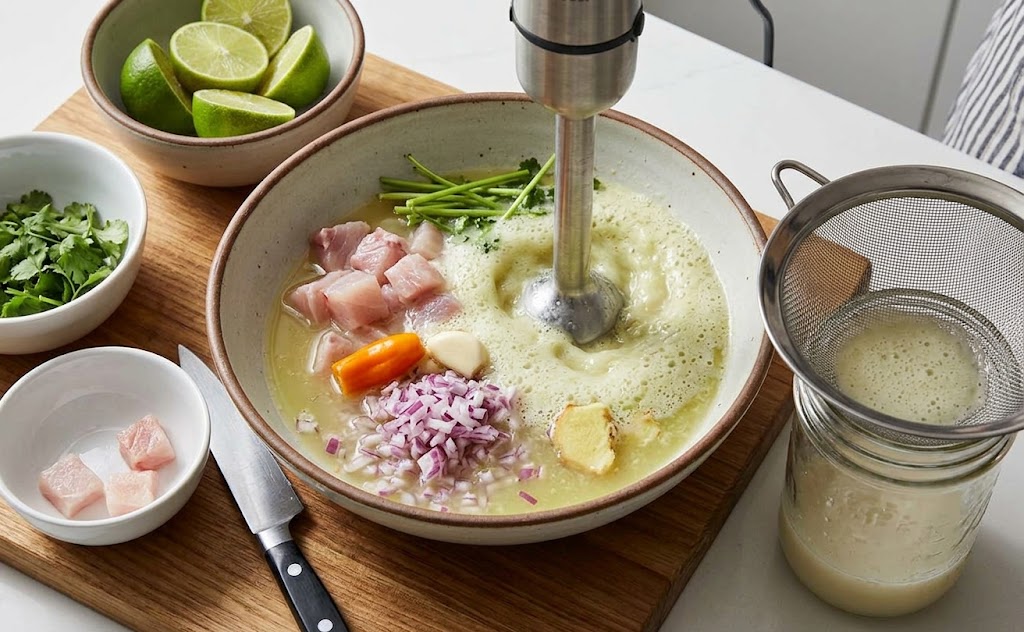
3. Make the Leche de Tigre
Leche de tigre is one of my favorite parts of Peruvian ceviche.
It is a flavorful citrus mixture that brings together lime, fish, onion, ají amarillo, cilantro, garlic, and ginger.
For a simple version, blend:
- ½ cup lime juice
- 1 small piece of the fresh fish
- A small piece of red onion
- 1 small piece of ají amarillo
- 1 garlic clove
- A few cilantro stems
- A small piece of fresh ginger
- A pinch of salt
Blend briefly until combined, then strain the mixture.
Keep the leche de tigre cold until you are ready to use it.
4. Mix the Fish With the Lime
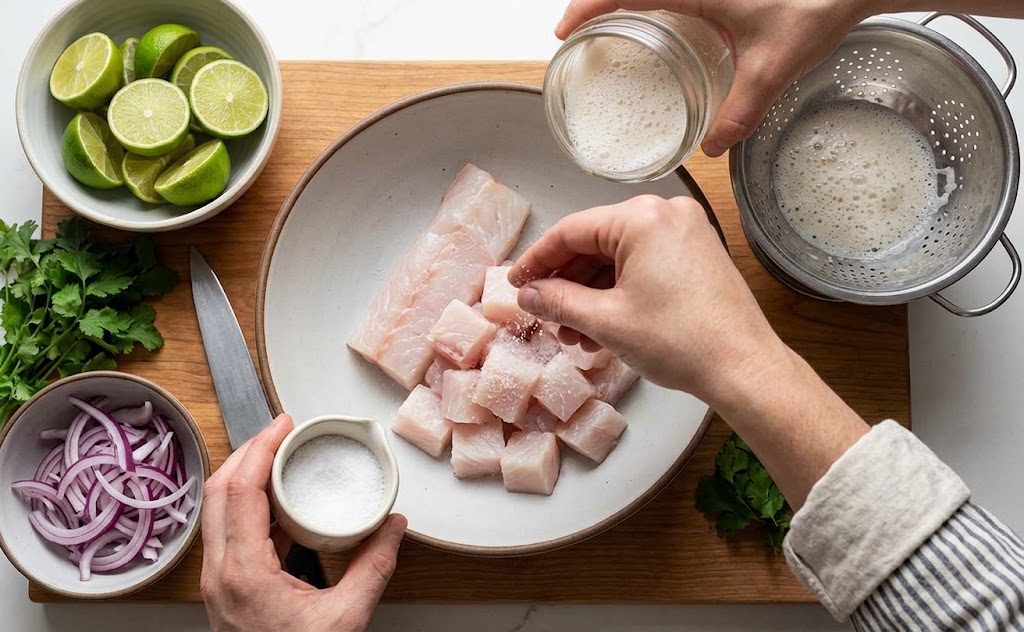
Take the chilled fish and season it lightly with salt.
Add the leche de tigre and gently mix everything together.
Then add the sliced red onion.
At this stage, I do not leave the fish sitting around for a long time. Ceviche is best when it is prepared close to serving time. The lime changes the texture of the fish, so I prefer to mix only what I plan to eat.
5. Add Ají Amarillo and Cilantro
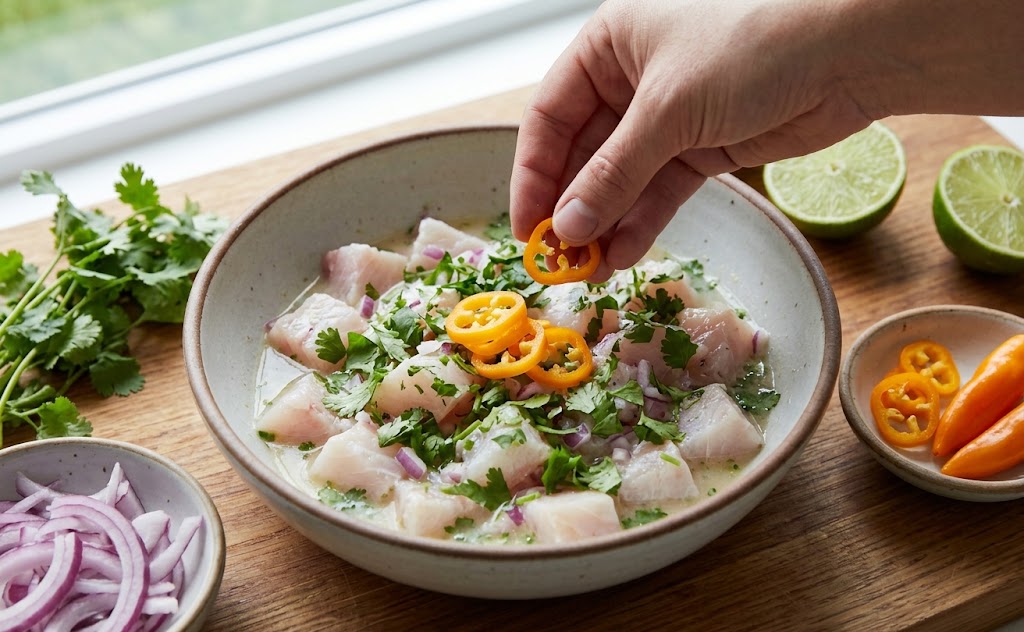
Add your sliced ají amarillo and fresh cilantro.
Taste the mixture and adjust the seasoning if needed.
If you like more heat, add a little more ají amarillo. If the flavor needs more brightness, add a little fresh lime juice.
The goal is not to make one ingredient overpower everything else. I like the fish to remain the main flavor.
6. Serve Immediately
This is one of the most important things I have learned from making ceviche.
I do not prepare it hours before serving.
Instead, I arrange lettuce on the plate, add the ceviche, and place boiled sweet potato and cooked corn alongside it.
Finish with a little fresh cilantro and ají amarillo.
Serve immediately while everything is cold and fresh.
My Tips for Better Ceviche
After making ceviche several times, these are the small things I find make the biggest difference.
Use Fresh Lime
Freshly squeezed lime gives a much better flavor than bottled lime juice.
I usually squeeze the limes shortly before making the ceviche instead of preparing the juice hours in advance.
Keep Everything Cold
Ceviche tastes best when the fish, lime mixture, and serving plate are cold.
I keep the fish refrigerated until I am ready to prepare it and avoid leaving it sitting at room temperature.
Do Not Overdo the Onion
Red onion is important, but too much can hide the delicate taste of the fish.
Thin slices are better than thick pieces.
Use Ají Amarillo
For me, ají amarillo is what gives the ceviche its Peruvian character.
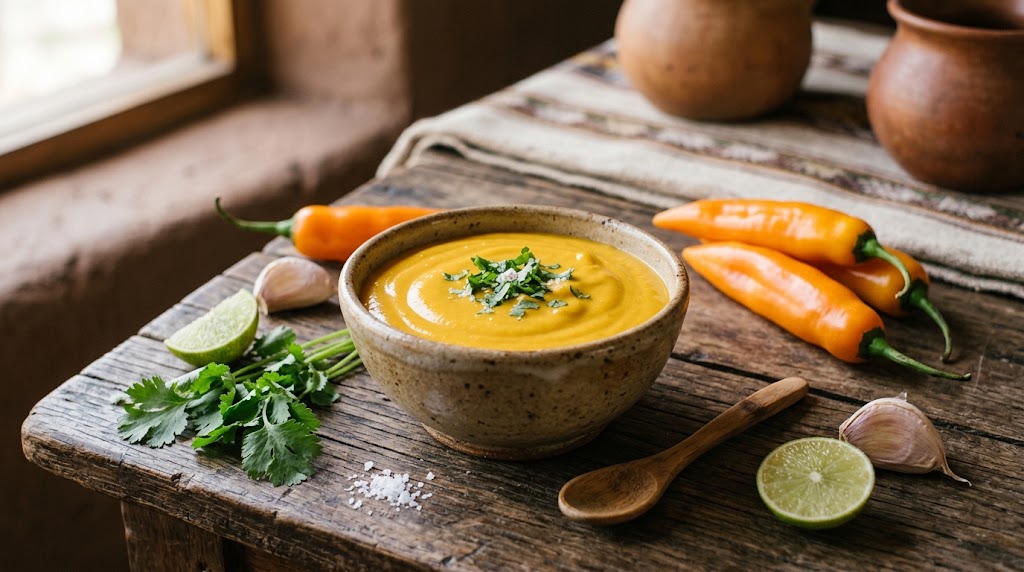
If you cannot find fresh ají amarillo, ají amarillo paste is a practical alternative. You can also learn how to make Ají Amarillo Sauce at home for other Peruvian dishes.
Do Not Let It Sit for Too Long
One mistake I see often is treating ceviche like a dish that can sit in the refrigerator all afternoon.
I prefer to prepare it close to serving time. The longer the fish sits in the acidic mixture, the more its texture changes.
What to Serve With Peruvian Ceviche
A bowl of ceviche is delicious by itself, but the traditional sides make the meal much more interesting.
Sweet Potato
Boiled sweet potato adds a soft and slightly sweet contrast to the sour lime and spicy ají amarillo.
Corn
Peruvian choclo is traditionally served with ceviche. If you cannot find it, regular cooked sweet corn can work as an easy substitute.
Cancha
Cancha is toasted Peruvian corn with a crunchy texture. It gives the meal a completely different bite.
Lettuce
I like using lettuce as a simple base for serving. It also makes the plate look fresh and colorful.
Chicha Morada
For a full Peruvian meal, I like serving ceviche with a cold glass of Chicha Morada. The sweet, fruity drink gives a nice contrast to the tangy ceviche.
3 Ceviche Variations to Try
Once you are comfortable with the basic recipe, there are several versions you can make.
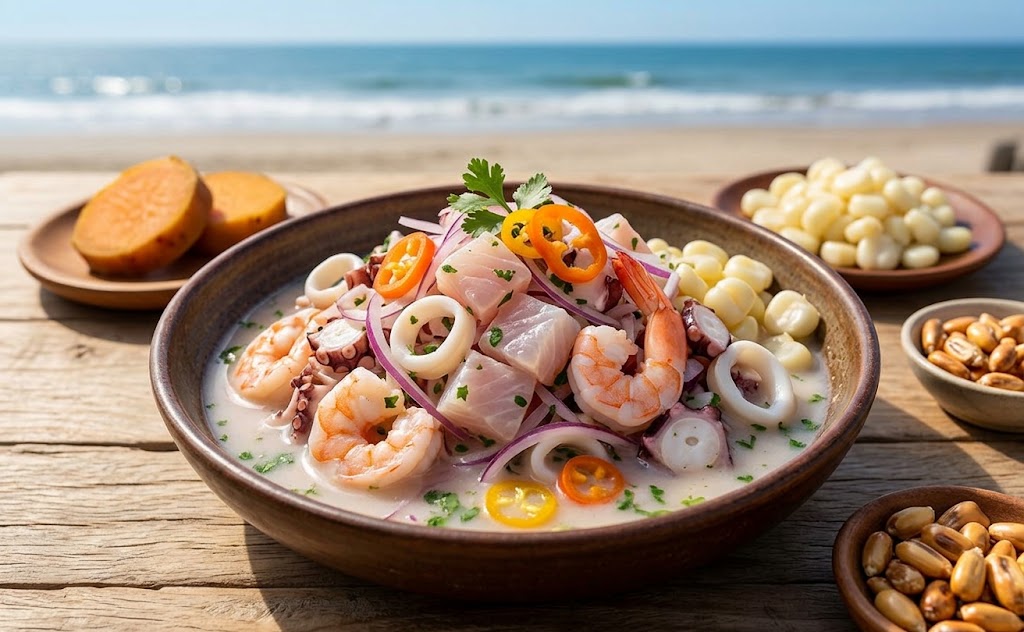
Ceviche Mixto
Ceviche mixto combines fish with seafood such as shrimp, squid, and octopus.
I like this version when I want a more filling seafood dish. The different textures make every bite a little different.
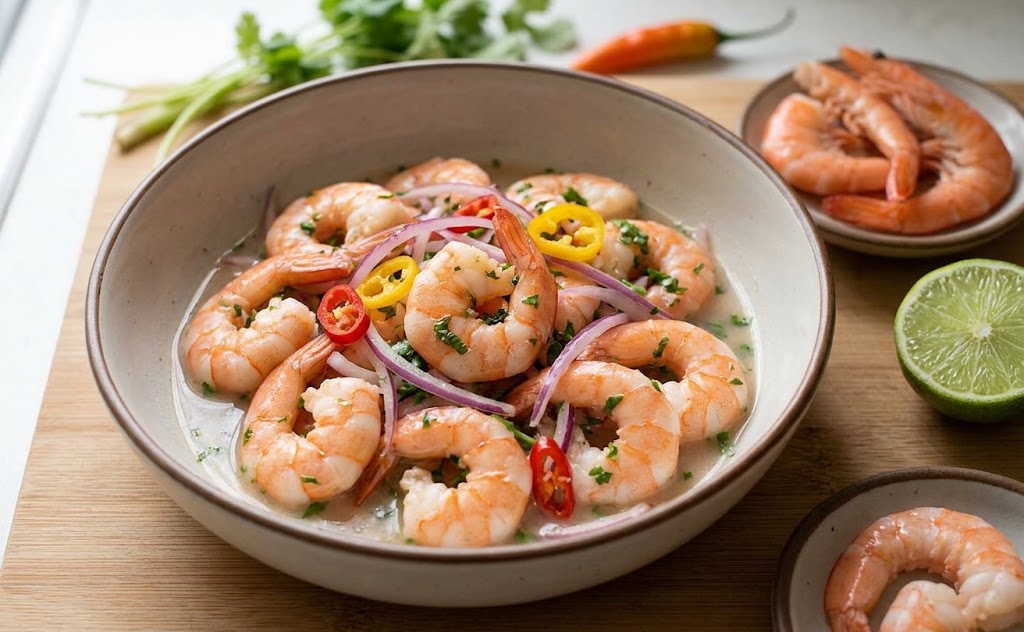
Shrimp Ceviche
For shrimp ceviche, use properly cooked shrimp and allow them to cool before mixing them with the lime-based mixture.
The shrimp absorbs the citrus and ají flavors very well.
Nikkei Ceviche
Nikkei ceviche combines Peruvian and Japanese influences.
It can include ingredients such as soy sauce, sesame oil, and other Japanese flavors. The result is deeper and more savory than traditional Peruvian ceviche.
Common Mistakes to Avoid
Using Old Fish
Freshness should always come first. Do not try to hide poor-quality fish with extra lime or seasoning.
Cutting Uneven Pieces
Very large pieces and very small pieces will develop different textures. Try to keep the cubes similar in size.
Adding Too Much Lime
More lime does not always mean better ceviche. Too much can overpower the fish and make the dish extremely sour.
Adding Too Much Chili
Ají amarillo should add flavor and heat, but it should not completely cover the taste of the fish.
Preparing It Too Early
Ceviche is a fresh dish. I recommend preparing it close to serving time rather than letting it sit for hours.
Frequently Asked Questions
Is Peruvian ceviche difficult to make?
No. Once you have fresh fish and the main ingredients ready, the process is quite simple. The most important part is handling the fish properly and serving the ceviche fresh.
What fish is best for Peruvian ceviche?
Firm white fish such as sea bass or corvina is a traditional choice. Sole, halibut, and other suitable white fish can also work.
Can I use bottled lime juice?
Fresh lime juice is my preference. It gives the ceviche a brighter and fresher taste.
How long should ceviche sit in lime juice?
I prefer to mix the fish with the citrus mixture shortly before serving rather than leaving it for a long time. The longer the fish sits in an acidic mixture, the firmer and more opaque its texture becomes.
Can I make ceviche ahead of time?
I would not recommend fully preparing it several hours ahead. You can prepare the sides and some ingredients beforehand, but mix the fish with the lime mixture close to serving time.
What can I use instead of ají amarillo?
Ají amarillo paste is the easiest substitute when fresh peppers are not available. Another hot pepper can be used, but the flavor will not be exactly the same.
What is leche de tigre?
Leche de tigre is the flavorful citrus-based mixture used with Peruvian ceviche. It commonly includes lime juice, fish, onion, ají amarillo, cilantro, garlic, and other seasonings.
What do Peruvians eat with ceviche?
Ceviche is commonly served with ingredients such as sweet potato, corn, lettuce, and cancha. These sides add sweetness, softness, and crunch to the meal.
Final Thoughts
This Peruvian ceviche recipe is one of those dishes that proves you do not need complicated cooking to make something special.
For me, the secret is keeping things simple. I use fresh fish, fresh lime, good red onion, ají amarillo, and plenty of fresh cilantro. I also make sure the fish stays cold and prepare the ceviche close to the time I want to serve it.
The finished dish should be bright, fresh, slightly spicy, and full of contrast. The soft fish works with the crunchy onion, the sweet potato balances the sour lime, and the ají amarillo brings everything together.
If you are making Peruvian ceviche for the first time, do not worry about making it perfect. Start with good ingredients, follow the basic steps, taste as you go, and serve it fresh.
Once you make it this way, you may find yourself coming back to it whenever you want a quick Peruvian meal at home.

6 Comments
Pingback: Healthy Peruvian Meals for Weight Loss | Low Calorie
Pingback: Popular Peruvian Food: Top 10 Traditional Dishes in Peru
Pingback: 10 Best Peruvian Appetizers You Must Try (Easy Recipes)
Pingback: Victoria’s Peruvian Food – Menu, Signature Dishes & Reviews
Pingback: Ceviche Mixto Recipe | Peruvian Mixed Seafood Cevich
Pingback: Chicha Morada: Peruvian Purple Corn Drink