
If you’ve ever ordered lomo saltado at a Peruvian restaurant, you know how good it is. Juicy beef, soft onions, ripe tomatoes, and a salty, tangy sauce that soaks into everything on the plate. Now picture all of that inside a warm tortilla. That’s what lomo saltado tacos are, and they’re one of the easiest ways to bring Peruvian food into a regular weeknight dinner.
This recipe takes about 35 minutes from start to finish. You don’t need special equipment, and most of the ingredients come from a regular grocery store. I’ll also share how to keep the beef tender, how the sauce works, and a few mistakes that are easy to avoid.
What Are Lomo Saltado Tacos?
Lomo saltado is one of the most loved dishes in Peru. The name roughly means “jumped loin,” and it refers to how the beef is tossed over very high heat in a wok. The dish comes from Chifa, the Chinese-Peruvian style of cooking that grew in Lima more than a hundred years ago. Chinese immigrants brought their stir-fry methods and mixed them with local Peruvian ingredients. That’s why soy sauce sits next to aji peppers in this dish.
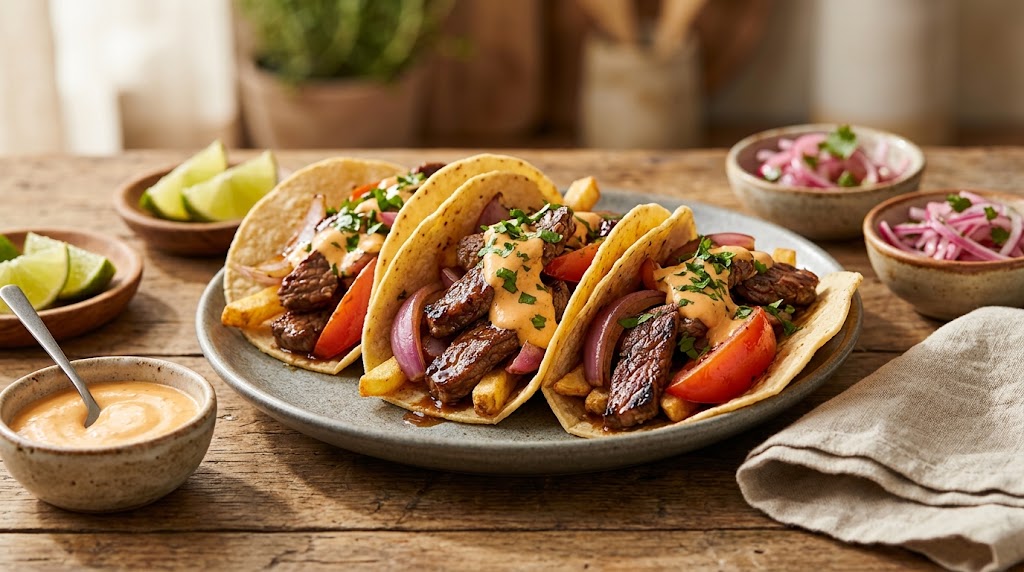
Traditionally, lomo saltado is served on a plate with white rice and french fries. Yes, fries, and they’re often mixed right into the stir-fry. It sounds strange if you’ve never tried it, but it works. The fries soften a little in the sauce while the edges stay crisp. If you’d like to try the plate version first, here’s my classic lomo saltado recipe.
The taco version simply moves everything into a tortilla. You keep the beef, onions, tomatoes, and sauce. The fries can go inside or on the side. Some people add a spoonful of rice, and others skip it. There’s no strict rule. If you want a Peruvian tacos recipe that feels familiar but still different from the usual carne asada, this is a good place to start.
Lomo Saltado Tacos Ingredients
Here’s what you need for about eight tacos, enough for four people.
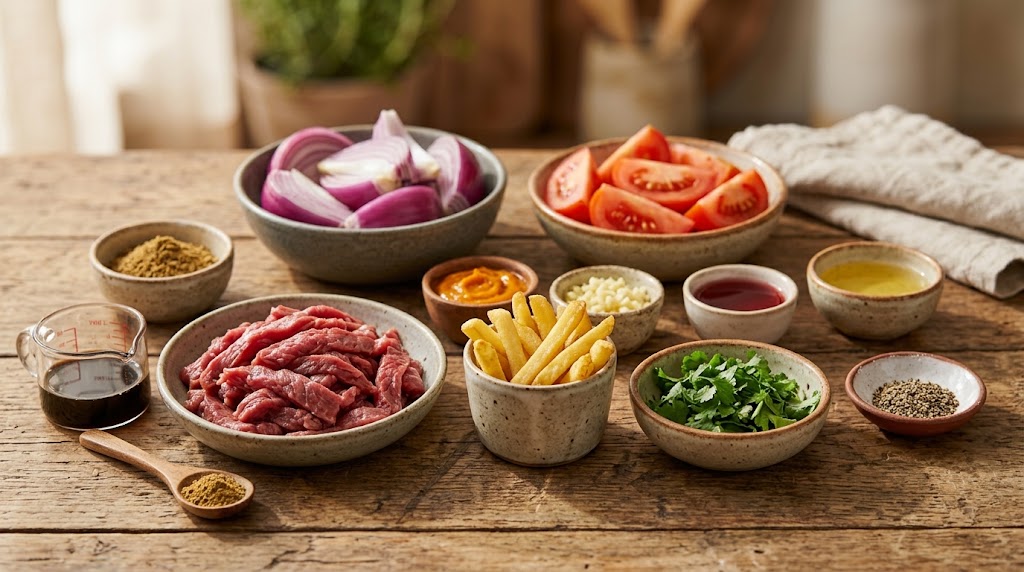
For the beef:
- 1 pound (450 g) beef sirloin or tenderloin, cut into thin strips
- 1 tablespoon soy sauce
- 1 teaspoon ground cumin
- Salt and black pepper
For the stir-fry:
- 3 tablespoons vegetable oil, divided
- 1 large red onion, cut into thick wedges
- 2 medium tomatoes, cut into wedges
- 3 garlic cloves, minced
- 1 tablespoon aji amarillo paste
- 3 tablespoons soy sauce
- 2 tablespoons red wine vinegar
- ¼ cup beef broth (optional)
- 1 cup french fries, baked or fried
- A handful of fresh cilantro, chopped
For serving:
- 8 small corn or flour tortillas
- Lime wedges
- Salsa criolla or quick pickled red onions
- Creamy aji sauce (recipe below)
Aji amarillo paste is the one ingredient that might be hard to find. It comes from a yellow Peruvian chili with a fruity taste and medium heat. Many Latin markets sell it in jars, and you can order it online too. You can also make aji amarillo paste at home if you can find the peppers. If you can’t get either, mix a little mild hot sauce with a pinch of turmeric and a squeeze of lime. It won’t taste the same, but it gets close enough for a busy night.
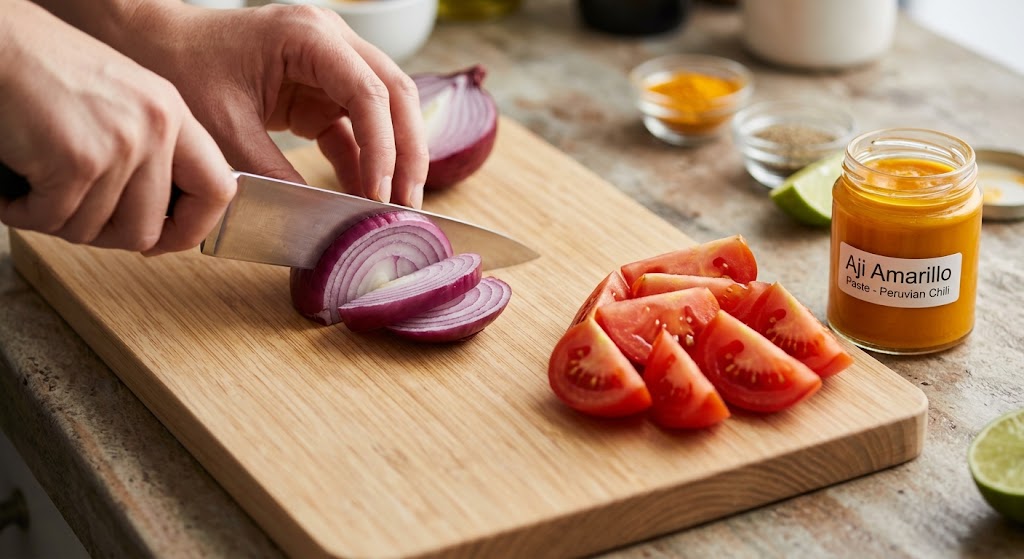
Cut the onions and tomatoes into thick wedges. Thin slices turn to mush in a hot pan, and you want them to keep some bite.
Choosing the Right Beef (Lomo de Res)
In Spanish, lomo de res just means beef loin. In Peru, most cooks use lomo fino, which is tenderloin. It’s soft, lean, and cooks in minutes. It’s also expensive, so plenty of home cooks pick something cheaper.
Sirloin is the cut I’d suggest for most people. It has good flavor, a bit more chew than tenderloin, and costs much less. Ribeye works if you trim off the extra fat. Flank and skirt steak are fine too, but you have to slice them against the grain or they’ll turn tough.
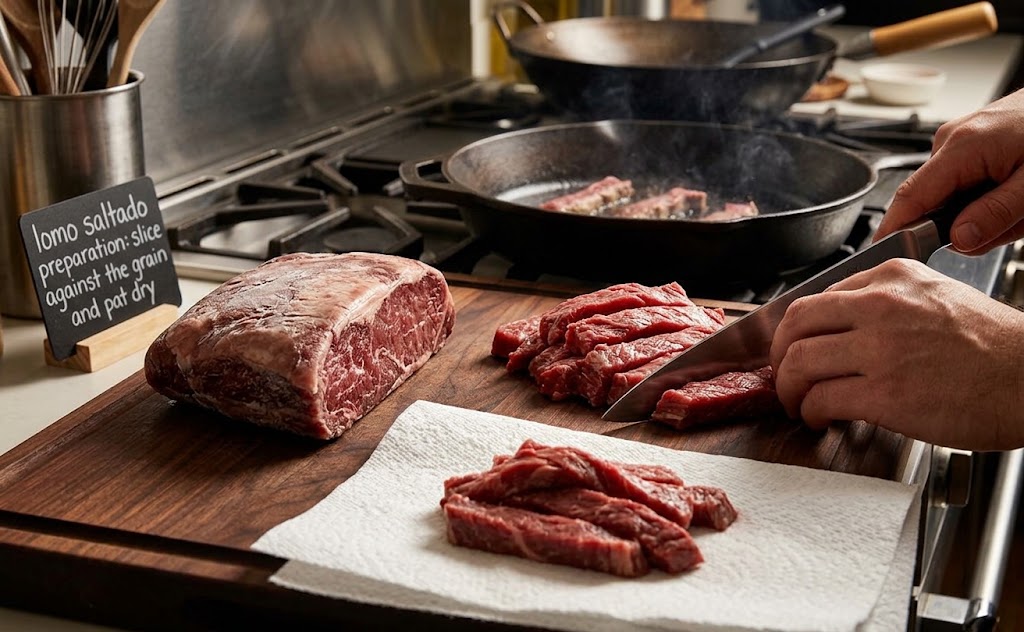
Whichever cut you buy, how you slice it matters more than you’d think. Aim for strips about half an inch wide and two inches long. If they’re too thick, they won’t sear well. If they’re too thin, they overcook before they brown. One trick that helps: put the steak in the freezer for 20 minutes before cutting. It firms up, and the knife glides through cleanly.
Also, pat the strips dry with a paper towel before they hit the pan. Wet meat steams instead of browning, and browning is where most of the flavor comes from.
The Sauce: Soy, Vinegar, and Aji Amarillo
The sauce is what makes this dish taste like lomo saltado instead of a plain beef stir-fry. It’s simple, though. Soy sauce brings salt and depth. Vinegar adds a sharp tang that cuts through the richness of the meat. Aji amarillo gives gentle heat and a slightly fruity taste. Garlic and cumin fill in the rest.
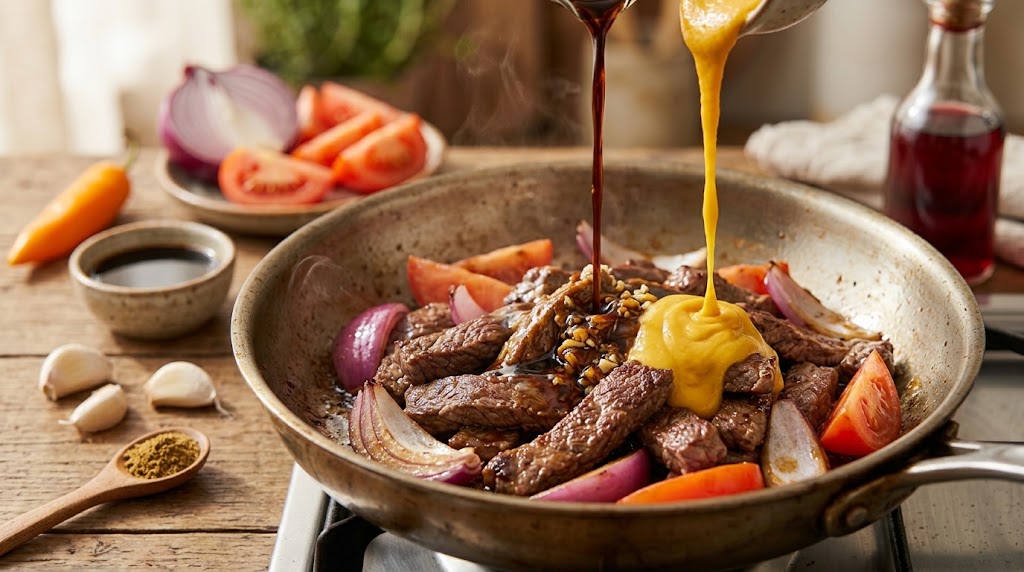
You add these straight to the pan near the end, and they turn into a light glaze that clings to the beef. If it looks too thick, a splash of broth or water loosens it up. If it tastes too salty, a little more vinegar or a squeeze of lime usually fixes it.
Creamy aji sauce for topping
Many people like a cool sauce on top to balance the tangy filling. It takes two minutes:
- ⅓ cup mayonnaise or Greek yogurt
- 1 tablespoon aji amarillo paste
- 1 tablespoon lime juice
- A small pinch of salt
Stir everything together and taste it. Add more aji if you want more heat. Keep it in the fridge until you’re ready to serve. It’s good on the fries too.
How to Make Lomo Saltado Tacos Step by Step
1. Prep everything first. Stir-frying moves fast, and you won’t have time to chop once the pan is hot. Slice the beef, cut the onion and tomatoes, mince the garlic, and measure your sauce. Mix the 3 tablespoons of soy sauce, vinegar, and broth in a small bowl. Get your fries cooked and keep them warm.
2. Season the beef. Toss the strips with 1 tablespoon of soy sauce, the cumin, and a pinch of salt and pepper. Let them sit for 10 minutes while the pan heats up.
3. Sear the beef in batches. Set a large skillet or wok over high heat and add 1 tablespoon of oil. When it shimmers, add half the beef in a single layer. Leave it alone for one minute so it gets a good crust, then toss for another minute. The outside should be brown and the inside slightly pink. Move it to a plate and repeat with the second half.
4. Cook the onions. In the same pan, add the last tablespoon of oil. Add the onion wedges and cook for about two minutes. You want some charred edges while the onion is still crisp. Add the garlic and aji paste, and stir for 30 seconds.
5. Add the tomatoes and sauce. Toss in the tomatoes and pour in the soy and vinegar mix. Cook for one to two minutes, just until the tomatoes begin to soften.
6. Bring the beef back. Return the beef and any juices from the plate. Toss everything together for about a minute, then turn off the heat. Stir in the fries and cilantro right at the end so the fries don’t go soggy.
7. Warm the tortillas. Heat them in a dry pan for 20 to 30 seconds per side, or hold them briefly over a gas flame. Wrap them in a clean towel to keep them soft.
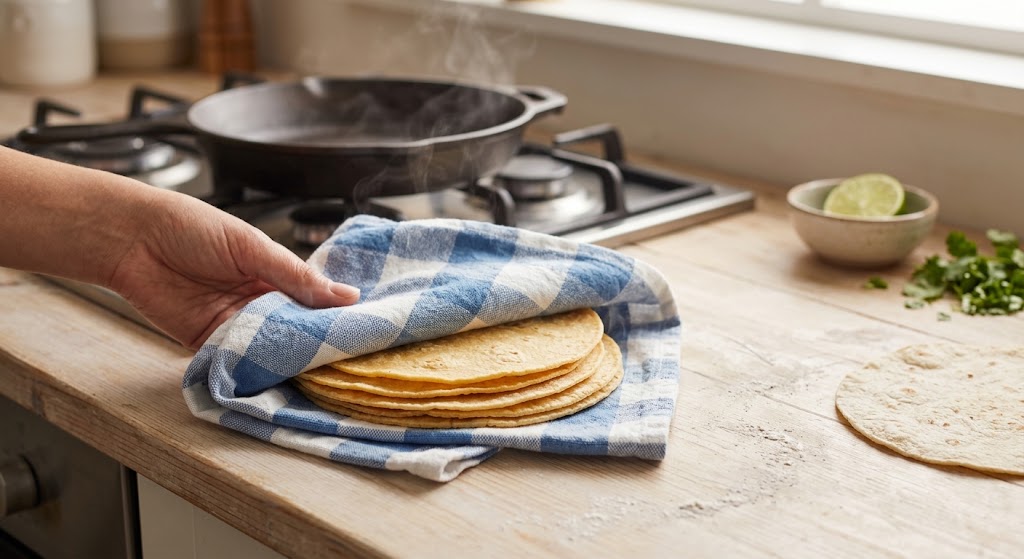
8. Assemble. Spoon the filling into each tortilla, drizzle with creamy aji sauce, add some onions, and finish with a squeeze of lime.
Prep time: 20 minutes | Cook time: 15 minutes | Serves: 4 (8 tacos)
Tips for Better Tacos
Get the pan very hot. Real lomo saltado has a slightly smoky taste that comes from high heat. If your stove is weak, cook the beef in smaller batches so the pan stays hot.
Don’t crowd the pan. This is the most common mistake. Too much meat at once drops the temperature, and the beef ends up gray and watery instead of browned. Two batches take an extra two minutes and make a big difference.
Add the fries last. If you toss them in early, they turn soft and limp. Baking frozen fries until they’re really crisp gives them a better chance of surviving the sauce. Or keep them on the side and let people add their own.
Go easy on the salt. Soy sauce is already salty. Taste the filling before adding any extra salt at the end.
Serve right away. This dish is best in the first ten minutes. The tortillas are soft, the fries still have some crunch, and the beef is juicy. If you’re feeding a crowd, cook the filling and let people build their own tacos at the table.
Lomo Saltado Tacos vs. Cecina Tacos
Cecina tacos often come up in searches near this recipe, so here’s a quick comparison. Cecina is beef that has been sliced thin, salted, and dried, then usually grilled or fried. It’s chewy, salty, and rich. You’ll find it in Mexican cooking, and a similar dried meat is eaten in parts of Peru.
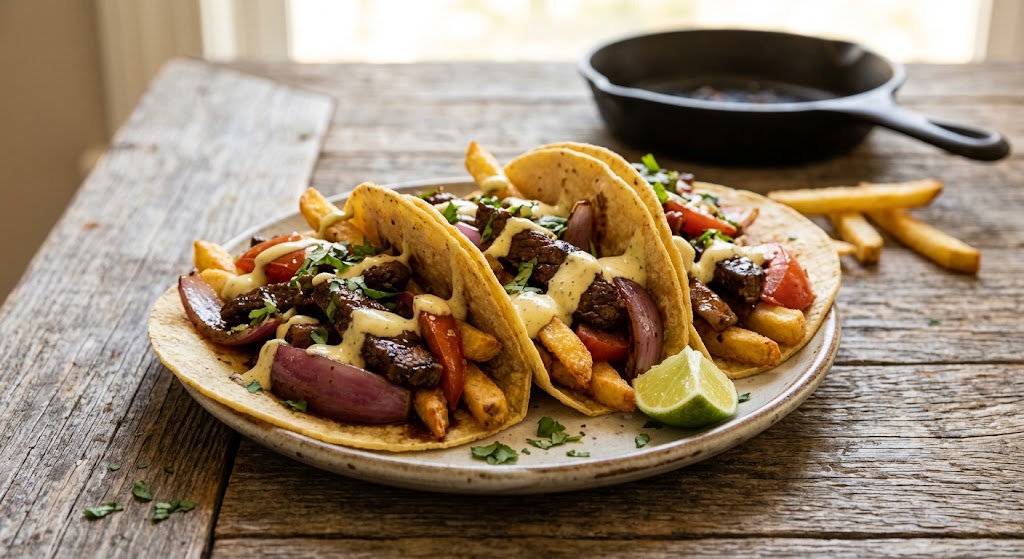
Lomo saltado is different. The beef is fresh and cooked fast with vegetables and a tangy sauce, so it comes out tender and juicy. Cecina tacos are more about the meat itself, often served with just onion, cilantro, and salsa. Lomo saltado tacos are saucier and a little messier, with more going on in each bite.
If you like simple, salty, and bold, go with cecina. If you want something saucy with vegetables and a bit of tang, lomo saltado is the better pick.
Ways to Change It Up
Once you’ve made the basic version, it’s easy to adjust. Here are a few ideas that work well:
- Chicken: Swap the beef for chicken breast or thigh. In Peru, this version is called pollo saltado, and it’s just as popular. I have a full pollo saltado recipe if you want to see how it’s done.
- Mushrooms: Portobello or king oyster mushrooms make a good vegetarian option. Slice them thick and sear them the same way as the beef.
- Tofu: Use extra-firm tofu, pressed and cubed, and brown it well before adding the sauce.
- No fries: If you want something lighter, leave them out. The tacos are still great.
- Rice bowl: Serve the same filling over white rice instead of tortillas. This is closer to the classic plate.
For drinks, chicha morada is a good match. It’s a sweet Peruvian drink made from purple corn, and you can find bottled versions in many Latin markets. Inca Kola is another popular choice, and a cold lager works well too. On the side, sliced avocado or a simple cabbage and lime salad keeps things fresh.
Storing and Reheating
Leftovers keep in an airtight container in the fridge for up to three days. Store the filling, tortillas, and sauce separately so nothing gets soggy.
To reheat, use a hot skillet for two to three minutes rather than the microwave. The pan brings back some of the sear. Fries lose their crunch after a day, so if you want them crisp again, put them in the oven or air fryer for a few minutes.
You can freeze the beef and onion mix for up to two months, but leave out the fries. The tomatoes will be softer after thawing, which is fine for tacos.
FAQs
Are lomo saltado tacos spicy?
Not very. Aji amarillo has more flavor than heat. If you want it hotter, add extra aji paste or a few slices of fresh chili.
What’s the best cut of beef?
Sirloin is the best balance of taste, tenderness, and price. Tenderloin is softer but costs more.
Can I make it ahead?
Partly. You can slice the beef, chop the vegetables, and mix the sauce a day early. Cook everything right before serving so the texture stays good.
Should I use corn or flour tortillas?
Either one works. Corn tortillas have more flavor and feel closer to traditional Latin cooking. Flour tortillas are softer and easier to fold around a full filling.
Do I need a wok?
No. A large, heavy skillet works fine. Cast iron is especially good because it holds heat well.
Make It Tonight
These tacos take a dish Peruvians have loved for generations and make it easier to eat with your hands. The recipe doesn’t ask for much: a very hot pan, beef cooked in batches, and fries added at the last minute. Once you’ve made it a couple of times, you’ll probably start changing things to suit your own taste, and that’s part of the fun.
If you try it, tell me in the comments how it went. And if you know someone who’s always looking for a new taco night idea, send this their way.
