
The first pot of arroz con mariscos I ever made looked beautiful and tasted like salty water. The rice was mushy, the shrimp were rubbery, and the mussels never opened. I stood in my kitchen wondering how something so simple could go so wrong. A few attempts later, I finally understood the rhythm of this dish, and now it is the recipe my family asks for whenever there is a reason to celebrate.
Arroz con mariscos is a golden, fragrant seafood rice cooked in a rich broth, packed with shrimp, squid, mussels, and scallops. The Peruvian version adds aji amarillo for fruity warmth and a fresh cilantro finish. In this guide I will share my tested recipe, the seafood I recommend, the mistakes to avoid, and a few ways to adapt it to your table.
What Is Arroz con Mariscos?
The name simply means rice with seafood. You will see it written in many ways, including mariscos y arroz, which is how some menus and home cooks describe the same idea: shellfish and fish paired with rice. The dish is loved across Spain and Latin America, and every country adds its own twist.
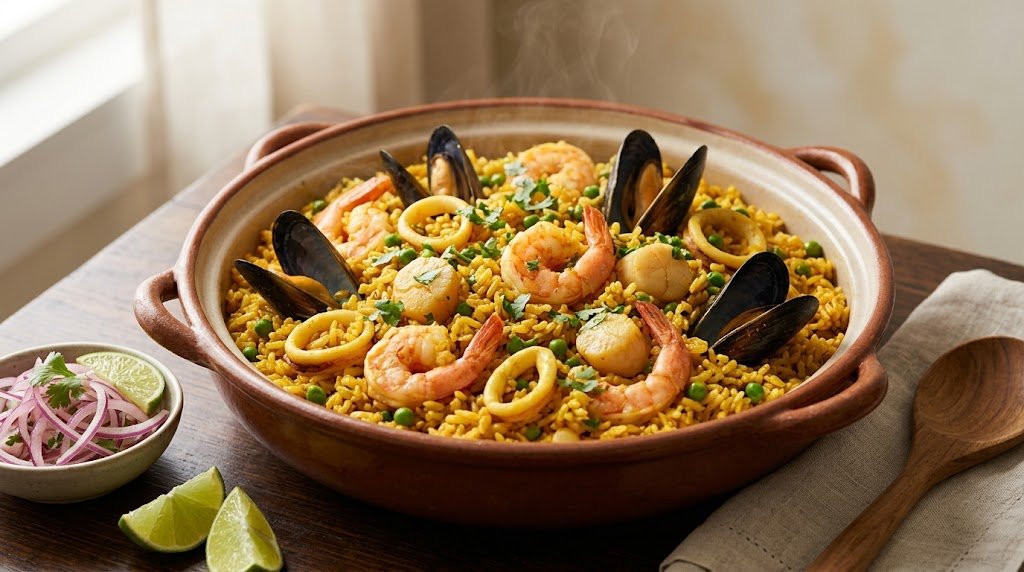
The common thread is that the rice cooks in a flavorful stock and absorbs everything around it. The seafood is added so that it stays tender, and the whole pot comes to the table steaming. It is a one-pot meal that feels special without being complicated.
What Makes Arroz con Mariscos Peruano Different?
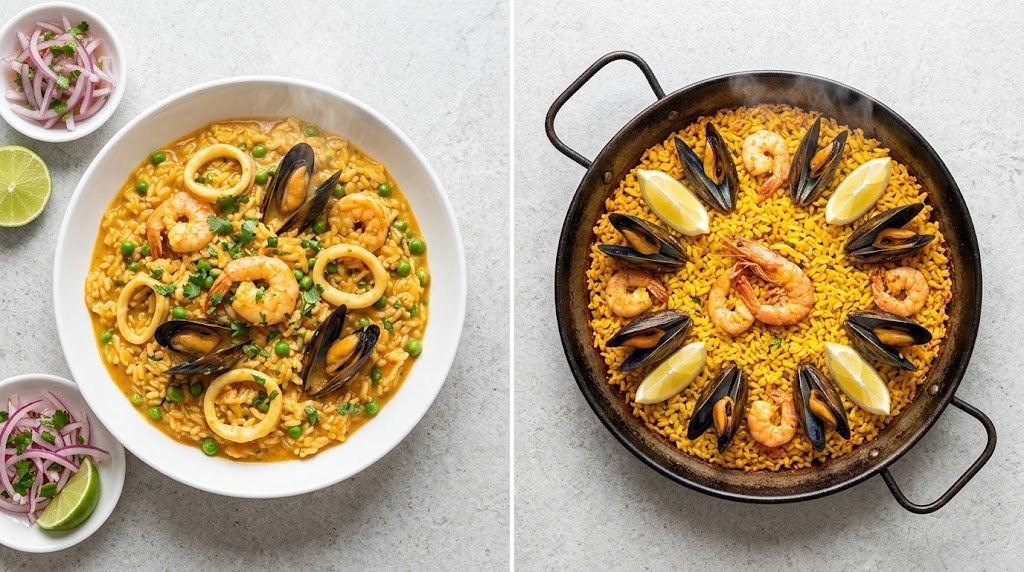
If you search for arroz con mariscos peruano, you are looking for the Peruvian style, which has its own personality. People often compare it to Spanish paella, but the two are not the same.
- Moisture. Peruvian seafood rice is softer and juicier, closer to a loose, saucy risotto than a dry, crusty paella.
- Aji amarillo. This golden Peruvian chili gives the rice its color and a gentle, fruity heat. It is the star ingredient.
- Sofrito base. Red onion, garlic, and a touch of tomato form a deep flavor base that coats every grain.
- Fresh finish. Cilantro, peas, and a squeeze of lime brighten the final plate.
- Salsa criolla. A tangy red onion relish served on top, which cuts through the richness.
Peruvian cooks also love the sea, as you can see in dishes like Peruvian ceviche and ceviche mixto, so it makes sense that rice and seafood became a staple.
Rice is an everyday staple in Peru, and it appears in many forms. If you want to explore more, try my arroz con pollo Peruvian style with fluffy green cilantro rice, or my authentic arroz chaufa, Peru’s famous fried rice.
Why I Love This Recipe
This dish taught me patience. You cannot rush the sofrito, you cannot overcook the seafood, and you cannot lift the lid every two minutes. But once you learn those three rules, it is nearly foolproof.
It is also flexible. You can use whatever good seafood is available, make the stock from shrimp shells you would normally throw away, and prepare most of it ahead of time. If you enjoy exploring more traditional dishes, you will find plenty in the Recipes section of my site.
Ingredients for Arroz con Mariscos
This recipe serves 4 to 6 people.
Seafood
- 1 lb (450 g) large shrimp, peeled and deveined, shells saved
- 1/2 lb (225 g) squid, cleaned and cut into rings
- 1/2 lb (225 g) mussels, scrubbed and debearded
- 1/2 lb (225 g) bay scallops or firm white fish cut into cubes
Rice and broth
- 2 cups long-grain white rice
- 4 cups hot seafood or fish stock
- 1/2 cup dry white wine (or extra stock)
Flavor base
- 1/4 cup neutral oil
- 1 large red onion, finely chopped
- 4 cloves garlic, minced
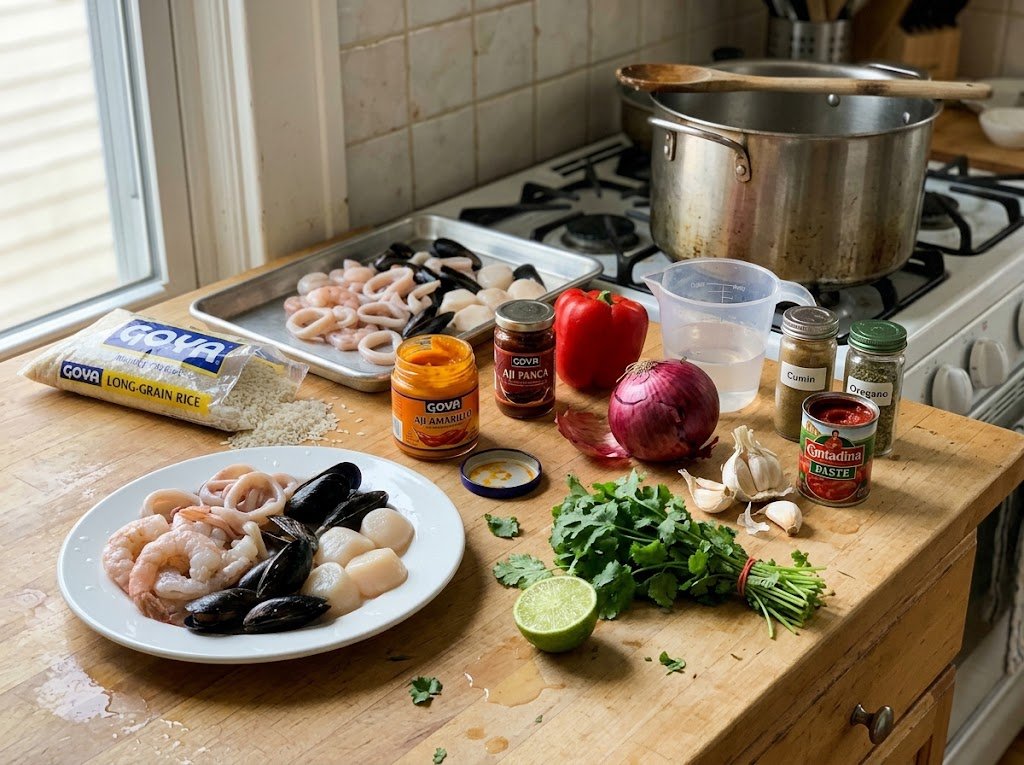
- 3 tablespoons aji amarillo paste
- 1 tablespoon aji panca paste (optional, for depth)
- 1 red bell pepper, diced
- 2 tablespoons tomato paste
- 1 teaspoon ground cumin
- 1 teaspoon dried oregano
- 1/2 cup frozen peas
- 1/2 cup chopped fresh cilantro
- Salt and pepper to taste
- Lime wedges, to serve
Aji Amarillo and Aji Panca
Aji amarillo is what makes this recipe taste Peruvian. If you cannot find the paste, you can make it yourself with my aji amarillo sauce recipe. For a smoky, deeper note, add a spoonful of aji panca paste.
How to Choose the Best Seafood
The quality of your seafood decides how the dish tastes, so it is worth a little extra care at the market.
Shrimp. Buy large, firm shrimp with shells on if you can. The shells make a fast, flavorful stock, which I explain below.
Squid. It should look clean and smell like the ocean. Squid is very tender if cooked briefly and tough if cooked too long, so it goes in near the end.
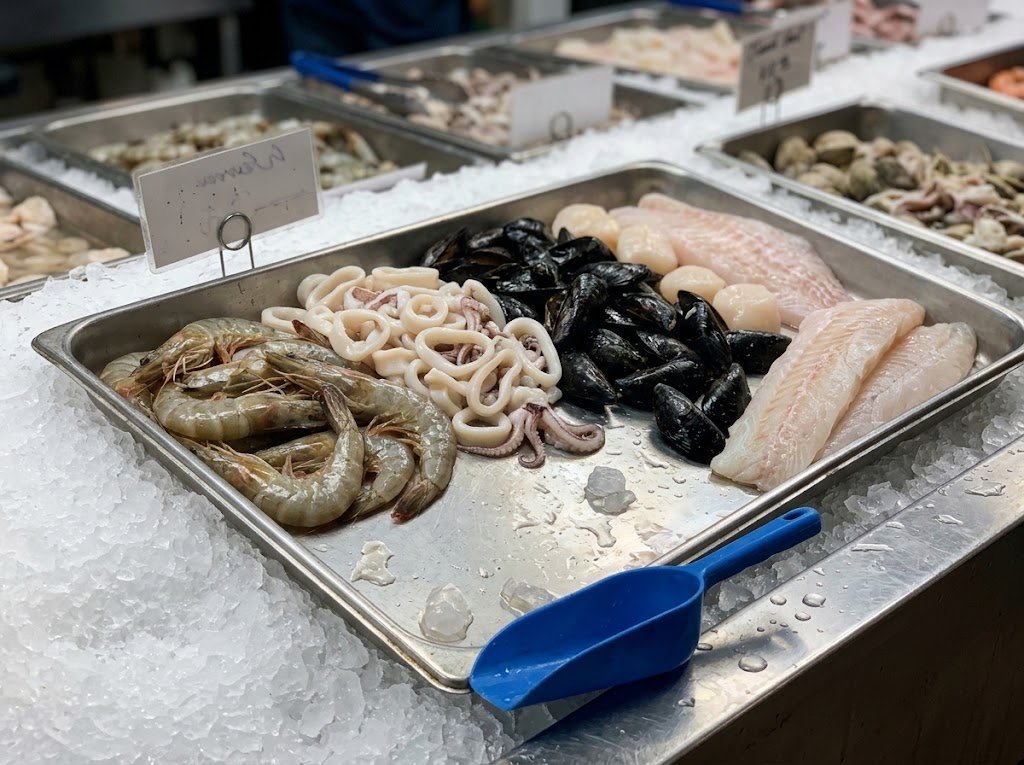
Mussels. Pick shells that are closed or that close when tapped. Throw away any with cracked shells or ones that stay open.
Scallops or white fish. Both add sweetness and texture. Firm fish like sea bass, snapper, or cod holds its shape better than flaky varieties.
Frozen seafood works well too. Thaw it in the fridge overnight and pat it very dry before cooking.
How to Make Arroz con Mariscos: Step by Step
Step 1: Make a Quick Shrimp Stock
Place the shrimp shells in a pot with 5 cups of water and a pinch of salt. Simmer for 15 minutes, then strain. This gives you extra flavor for almost no cost. Keep the stock hot.
Step 2: Sear the Seafood
Heat 2 tablespoons of oil in a wide, heavy pot over high heat. Season the shrimp, squid, and scallops with salt and pepper. Sear them for about 1 minute per side, just until they start to turn opaque. Move them to a plate. They will finish cooking later, so do not cook them fully now.
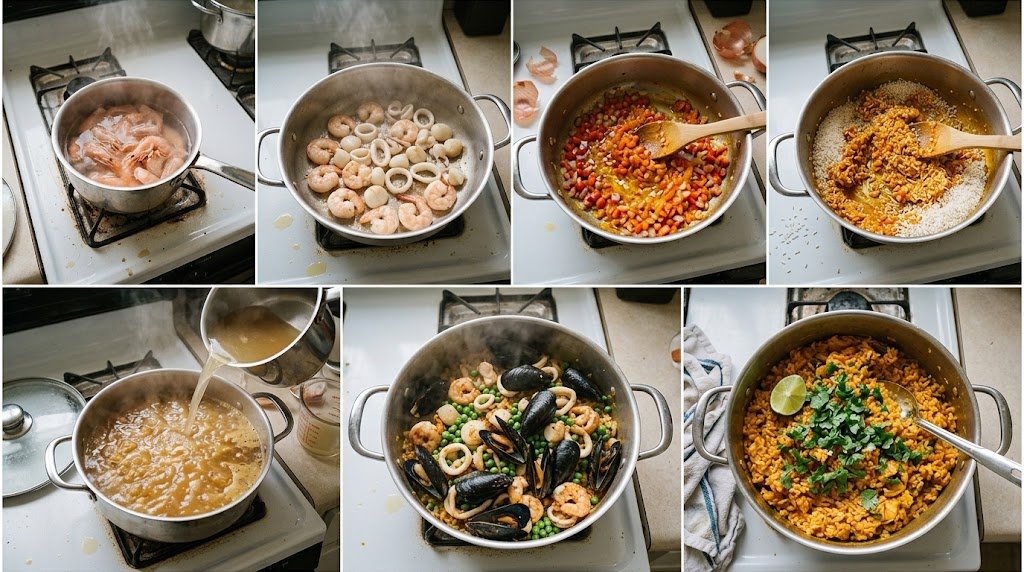
Step 3: Build the Sofrito
Lower the heat to medium and add the remaining oil. Cook the onion and bell pepper for 6 to 8 minutes until soft. Add the garlic, aji amarillo, aji panca, tomato paste, cumin, and oregano. Stir for 2 minutes until the mixture darkens slightly and smells fragrant.
Step 4: Toast the Rice
Add the rice and stir for 1 to 2 minutes so every grain gets coated in the sofrito. This helps the rice stay separate instead of turning sticky.
Step 5: Add the Liquid
Pour in the wine and let it bubble for 30 seconds. Add 4 cups of the hot stock, season with salt, and stir once. Bring to a boil, then reduce the heat to low, cover, and cook for 12 minutes without lifting the lid.
Step 6: Add the Seafood
Uncover the pot. Gently fold in the seared seafood and peas. Place the mussels on top, hinge side down. Cover again and cook for 6 to 8 minutes, until the rice is tender and the mussels have opened. If the rice looks dry, add a splash of hot stock.
Step 7: Rest and Finish
Turn off the heat and let the pot rest, covered, for 5 minutes. Discard any mussels that stayed closed. Stir in the cilantro, squeeze over some lime, and serve right away.
My Biggest Mistakes (So You Can Avoid Them)
- Overcooking the seafood. My first batch had rubbery shrimp because I cooked them with the rice from the start. Sear briefly, set aside, and fold them back in at the end.
- Using too much liquid. Soggy rice is the most common problem. Stick to roughly two parts liquid to one part rice, plus the wine.
- Stirring constantly. Too much stirring releases starch and makes the rice gluey. Stir once, then leave it alone.
- Skipping the toasting step. Toasting the rice in the sofrito adds flavor and keeps the grains distinct.
- Using weak stock. Plain water makes flat-tasting rice. Even a quick shell stock makes a huge difference.
Pro Tips for Perfect Arroz con Mariscos
- Use a wide pot. A wide pot cooks the rice evenly and gives the seafood space.
- Keep the stock hot. Cold liquid stops the cooking and affects the texture.
- Season the stock well. Rice absorbs salt, so taste the stock before you add it.
- Do not skip the rest. Five minutes off the heat lets the rice settle and the flavors blend.
- Add lime at the end. Acid brightens the whole dish and balances the richness.
Arroz con Mariscos Variations
Arroz con mariscos verde. Blend 1 cup of cilantro with 1/2 cup of stock and stir it into the rice at the end for a green, herby version.
Beer instead of wine. Many Peruvian cooks use a light beer. It adds a mild malty note.
Spicy version. Add a sliced fresh chili or a pinch of cayenne to the sofrito.
Budget version. Use shrimp and white fish only, and skip the mussels and scallops. If you want an even simpler shrimp-only dish, try my Peruvian shrimp and yellow rice.
Fish only. If you do not eat shellfish, use cubes of firm white fish and a good fish stock. If you love seafood broth, you will also enjoy my Peruvian fish soup recipe.
What to Serve With Arroz con Mariscos
The dish is a complete meal, but a few sides make it even better.
- Salsa criolla. Thinly sliced red onion tossed with lime juice, salt, and cilantro. It adds crunch and acidity.
- Causa. A cool, creamy potato dish that pairs well with warm rice. Try my causa rellena.
- Chicha morada. A refreshing purple corn drink. Here is my guide to making chicha morada.
- A simple green salad with lime dressing.
If you enjoy bold, casual Peruvian flavors, you might also like my guide to Peruvian street food. For another seafood favorite, try my Peruvian escabeche de pescado recipe, and for something sweet afterwards, see these Peruvian desserts.
Eating Arroz con Mariscos at a Restaurant
Sometimes you want the dish without the cooking. If you search for names like mariscos la costa west town or mariscos jimenez, you are probably looking for a local seafood restaurant rather than a recipe. Menus change, so check each restaurant’s current menu and reviews, or call ahead to ask what rice dishes they serve. For more dining ideas, browse my Restaurant Guide.
When you order arroz con mariscos or mariscos y arroz out, here is what I look for:
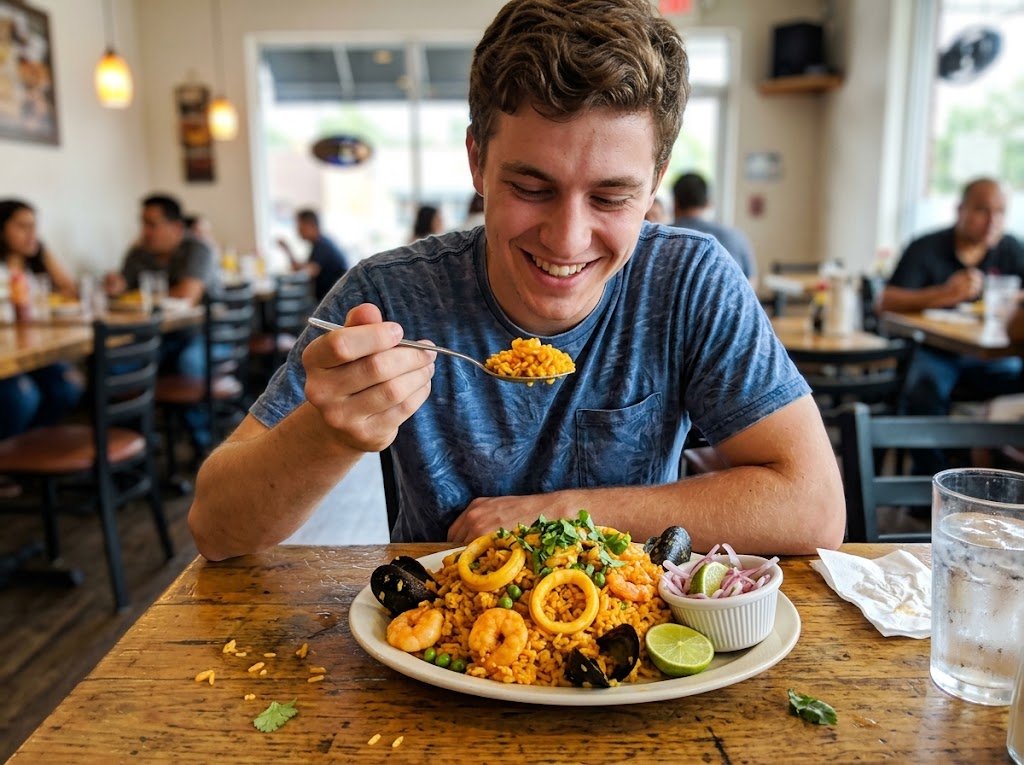
- Fresh-tasting seafood with no strong fishy smell.
- Rice that is moist but not mushy, with separate grains.
- Seafood that is tender, not rubbery.
- Fresh garnishes like lime, cilantro, and a tangy onion topping.
Cooking it at home also lets you control the quality and the price, and a pot of arroz con mariscos easily feeds a family for the cost of a single restaurant plate.
How to Store and Reheat
- Refrigerator: Store in an airtight container for up to 2 days. Seafood is delicate, so do not keep it longer.
- Reheating: Add a splash of water or stock and warm gently over low heat or in the microwave in short bursts. High heat makes the seafood tough.
- Freezing: I do not recommend it, because the texture of the squid and shrimp suffers.
- Make ahead: Prepare the stock and sofrito earlier in the day. Cook the rice and add the seafood just before serving.
Is Arroz con Mariscos Healthy?
It can be a balanced meal. Seafood gives you lean protein, and the peas, peppers, and onions add fiber and vitamins. The main sources of richness are the oil and the rice, so use a moderate amount of oil and serve it with a fresh salad to keep it light.
Frequently Asked Questions
What is arroz con mariscos?
It is a Latin American seafood rice dish where rice is cooked in broth with shrimp, squid, mussels, and other shellfish or fish. The Peruvian version uses aji amarillo and fresh cilantro.
Is arroz con mariscos the same as paella?
No. Paella is drier, cooked in a wide shallow pan, and often has a crispy bottom layer. Peruvian arroz con mariscos is softer, juicier, and more saucy.
What does arroz con mariscos peruano taste like?
It tastes savory and slightly sweet from the seafood, with mild fruity heat from aji amarillo and a fresh finish from cilantro and lime.
Can I use frozen seafood?
Yes. Thaw it fully in the fridge and pat it dry before searing. Frozen seafood is a great option when fresh is not available.
Can I make it without wine?
Yes. Replace the wine with extra stock and add a teaspoon of lime juice at the end for brightness.
Why are my mussels not opening?
They may have been dead before cooking, or the pot may not have been hot or covered enough. Discard any mussels that stay closed after cooking.
What rice is best?
Long-grain white rice is the traditional choice. It stays separate and absorbs the broth well. Medium-grain rice also works but turns creamier.
Final Thoughts
Arroz con mariscos is one of those dishes that looks impressive but is built on simple steps: make a good stock, build a flavorful sofrito, cook the rice gently, and add the seafood at the right moment. Once you understand the timing, you can make it your own with different seafood, more heat, or a green cilantro twist.
If you try this recipe, I would love to hear how it turned out. Leave a comment below, and for more traditional dishes and food stories, explore the Peruvian Spice Food Culture section or learn more about me and this site. New to Peruvian cooking? Start with my authentic Peruvian cuisine guide.
