
The first time I made Saltado peruvian Noodles: A Simple Saltado peruvian Noodles Recipe for Home Cooks noodles, I was trying to use up leftover steak and a bag of spaghetti. I had no plan, only a hot pan, some soy sauce, and a tomato that needed to be eaten. Ten minutes later I was standing at the stove eating straight from the pan. Since then, this dish has become one of my regular weeknight meals.
If you have never tried it, think of lomo saltado, the famous Peruvian beef stir fry, but with noodles in place of rice. It is fast, filling, and easy to change to your taste. In this article, I’ll explain where the dish comes from, share my saltado noodles recipe, and pass on a few things I learned the hard way.
What Are Saltado peruvian Noodles?
Peruvian Chinese noodles are stir-fried noodles made with meat, onions, tomatoes, garlic, and soy sauce. The dish is based on lomo saltado, which is usually served with rice and french fries. When you swap the rice for noodles, you get what many people call saltado noodles.
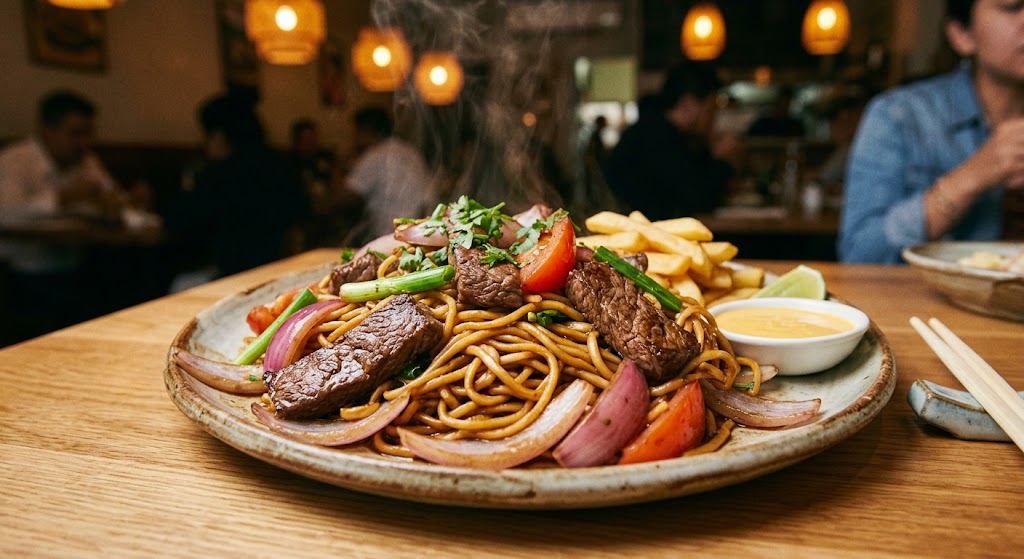
What I like most is how the flavors work together. The soy sauce brings salt and depth. The vinegar adds a little sourness. The onions and tomatoes stay juicy, and the meat gets a bit of char from the hot pan. Nothing about it is fancy, but it tastes like you worked much harder than you did.
You may also see it called Peruvian stir fry noodles or Peruvian noodle stir fry. The names change from place to place, but the idea is the same: cook everything quickly over high heat and toss it with a savory sauce.
Where This Dish Comes From
To understand this dish, you need to know a little about Chifa. Chifa is the name for Chinese-Peruvian cooking. It started when Chinese workers moved to Peru in the 1800s. They brought their cooking methods with them, like using a wok, cooking fast over strong heat, and using soy sauce. Over time, they mixed these methods with local foods like tomatoes, red onions, and chili peppers.
The result was a whole style of food that is neither fully Chinese nor fully Peruvian. Lomo saltado is probably the best-known dish from this mix. Today, Chifa restaurants are common all over Peru, and many families cook Chifa-style food at home.
The noodle version is newer and a bit more casual. I think of it as a home cook’s twist. Nobody is breaking any rules. It uses the same flavors you would find in the original, just in a different form.
Ingredients for the Saltado peruvian Noodles Recipe
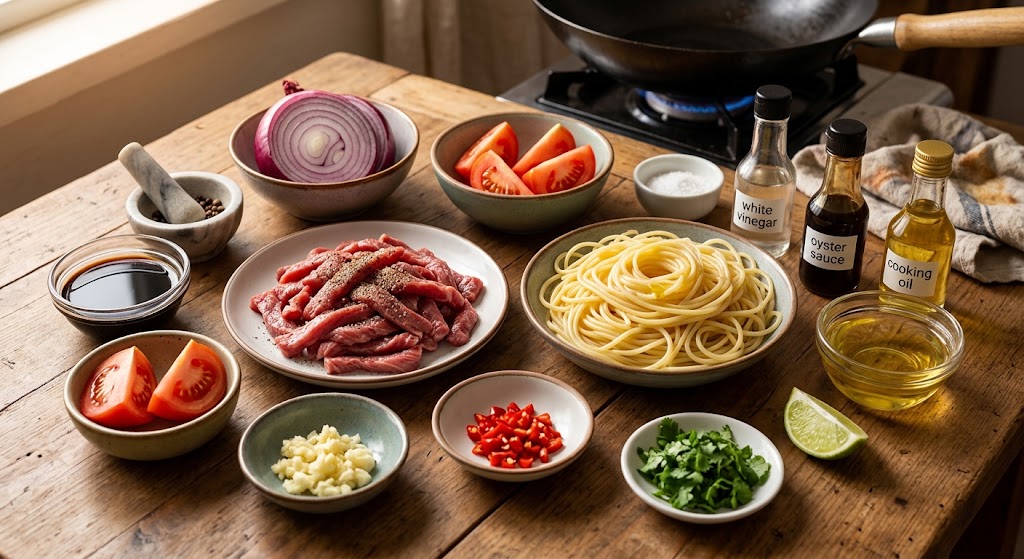
You don’t need anything hard to find. Most of this is probably already in your kitchen. This recipe serves two to three people.
Protein
- 300 grams of beef strips (sirloin or any tender cut) or chicken breast strips
Noodles
- 200 grams of egg noodles, spaghetti, or any stir-fry noodles you like
Vegetables
- 1 large red onion, cut into thick slices
- 2 medium tomatoes, cut into wedges
- 3 cloves of garlic, minced
- 1 small red or green chili (optional)
- 3 tablespoons of soy sauce
- 1 tablespoon of vinegar (white or red wine vinegar works)
- 1 tablespoon of oyster sauce (optional)
- Black pepper and a pinch of salt
- 3 tablespoons of cooking oil
To finish
- Fresh cilantro, chopped
- A wedge of lime
About the noodles: I have tried several kinds, and they all work. Spaghetti is great if that is what you have at home. Egg noodles give a slightly softer bite. Just pick something that won’t fall apart when you toss it in a hot pan.
Step-by-Step Peruvian Stir Fry Noodles
The most important thing here is to have everything ready before you turn on the stove. Once the pan is hot, the cooking goes fast, and you won’t have time to chop onions.
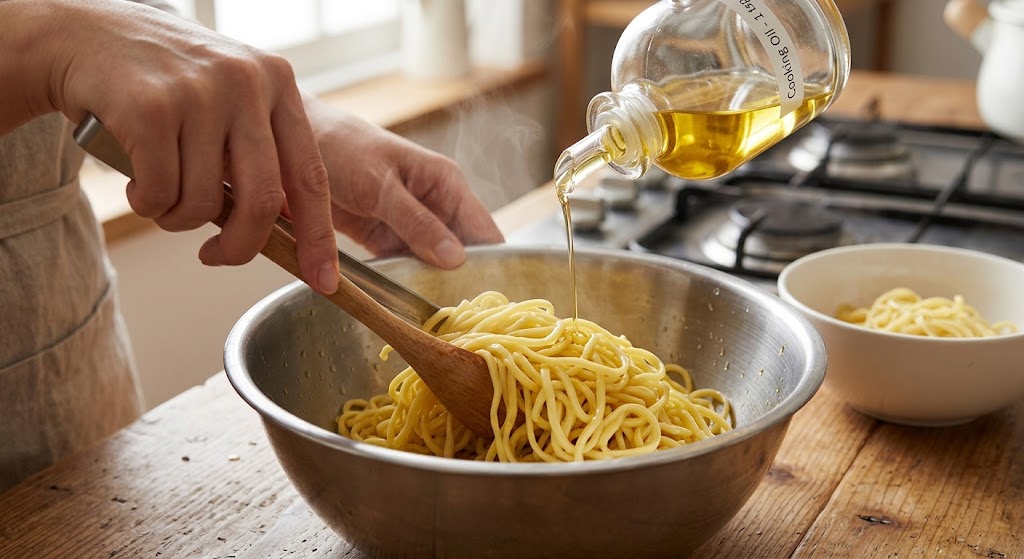
Step 1: Cook the noodles. Boil the noodles by the packet directions, but take them out about a minute early. They will cook a little more in the pan. Drain them, and toss them with a teaspoon of oil so they don’t clump.
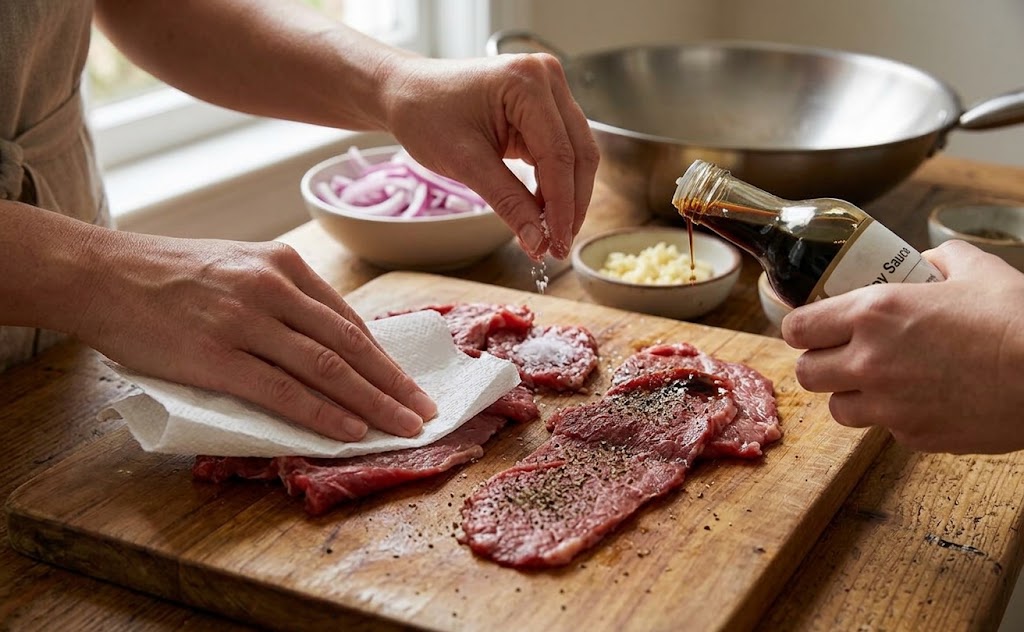
Step 2: Season the meat. Pat the meat dry with a paper towel. This helps it brown instead of steam. Add a pinch of salt, some black pepper, and a splash of soy sauce.
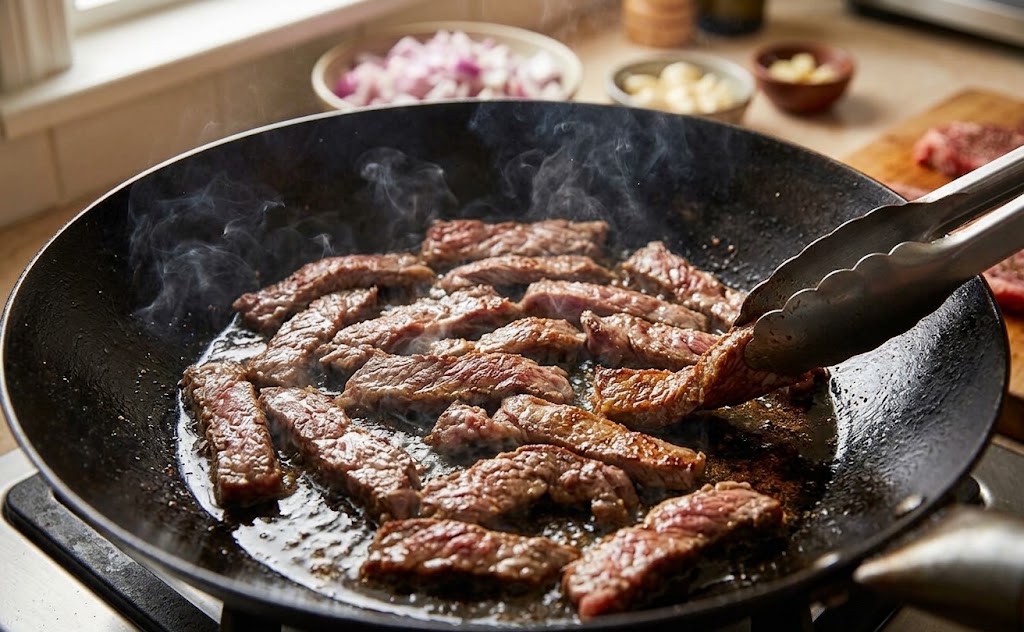
Step 3: Sear the meat. Heat a wok or a large frying pan over high heat until it is very hot. Add 2 tablespoons of oil. Add the meat in a single layer. If your pan is small, cook it in two batches. Let it sit for a minute before you move it so it gets some color. Cook until browned, about 2 to 3 minutes, then take it out and set it aside.
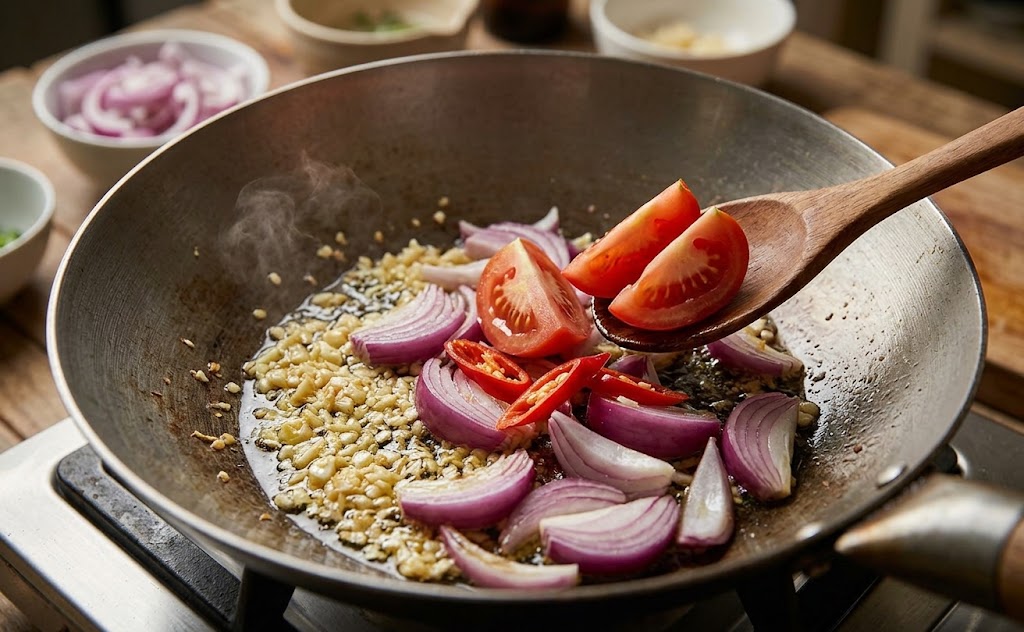
Step 4: Cook the vegetables. In the same pan, add the rest of the oil. Add the garlic and onions and stir for about a minute. Then add the tomatoes and chili. Cook for only another minute or so. You want the onions to still have some crunch, and the tomatoes to hold their shape.
Step 5: Add the sauce. Pour in the soy sauce, vinegar, and oyster sauce if you are using it. Let it bubble for a few seconds. You will smell the vinegar right away, and that smell is a good sign.
Step 6: Bring it all together. Put the meat back in, then add the noodles. Toss everything quickly with tongs for one or two minutes until the noodles are coated and hot. Taste it and add a bit more soy sauce or pepper if you need to.
Step 7: Finish. Turn off the heat. Add the cilantro and squeeze a little lime over the top. Serve right away.
The whole thing takes about 25 minutes, and most of that is chopping.
Beef, Chicken, or Vegetarian?
One reason I keep making this dish is that it works with almost any protein.
Beef. This is the closest to the original lomo saltado. Beef gives a deep, rich flavor, and the pan juices turn into a nice sauce for the noodles. Cut the strips against the grain so they stay tender. I usually slice them about as thick as a finger.
Chicken. Chicken makes the dish a bit lighter. It also cooks fast, so it is a good choice when you are in a hurry. Chicken can dry out, so don’t leave it in the pan too long. Two to three minutes is enough for thin strips.
Vegetarian. I have made this with mushrooms, bell peppers, carrots, and broccoli, and it works well. Mushrooms are my favorite, because they soak up the soy sauce and get a meaty texture. Cook the harder vegetables, like carrots, first so everything finishes at the same time.
Other small changes. A little fresh ginger with the garlic adds a nice kick. Sliced chili gives heat. Some people also add a spoon of aji amarillo paste, a Peruvian yellow pepper, if they can find it. I have only used it a few times, but it gives a fruity warmth that is hard to copy.
Tips I Learned From Making It Many Times
My first few attempts were not great. Here is what I wish someone had told me.
Use a very hot pan. This is the biggest one. My first batch was soggy because the pan was not hot enough. The meat gave off water and ended up boiled instead of seared. Let the pan heat up for a good minute or two before adding anything.
Don’t crowd the pan. Too much food at once drops the temperature. If you see a lot of liquid at the bottom, the pan is too full or too cool. Cook in batches. It takes a little longer, but the result is much better.
Don’t cook the vegetables for too long. The tomatoes should be soft on the outside but still hold together. If they turn into mush, you went too far. This part takes only a minute or two.
Go easy on the soy sauce at first. It is easy to add more but impossible to take it out. Start with the amount in the recipe, then taste. Soy sauces vary a lot in saltiness, so what worked for me may be a little different for you.
Keep the noodles a bit firm. Soft noodles turn mushy when you toss them. Pulling them out a minute early solves this.
Have your sauce ready. I sometimes mix the soy sauce, vinegar, and oyster sauce in a small bowl before I start. Then I can pour it in all at once instead of reaching for three bottles while things burn.
How to Serve peruvian saltado noodles
This dish is best straight from the pan. The peruvian saltado noodles absorb the sauce as they sit, so they get softer and the vegetables lose their crunch. If you can, get everyone to the table before you start the final toss.
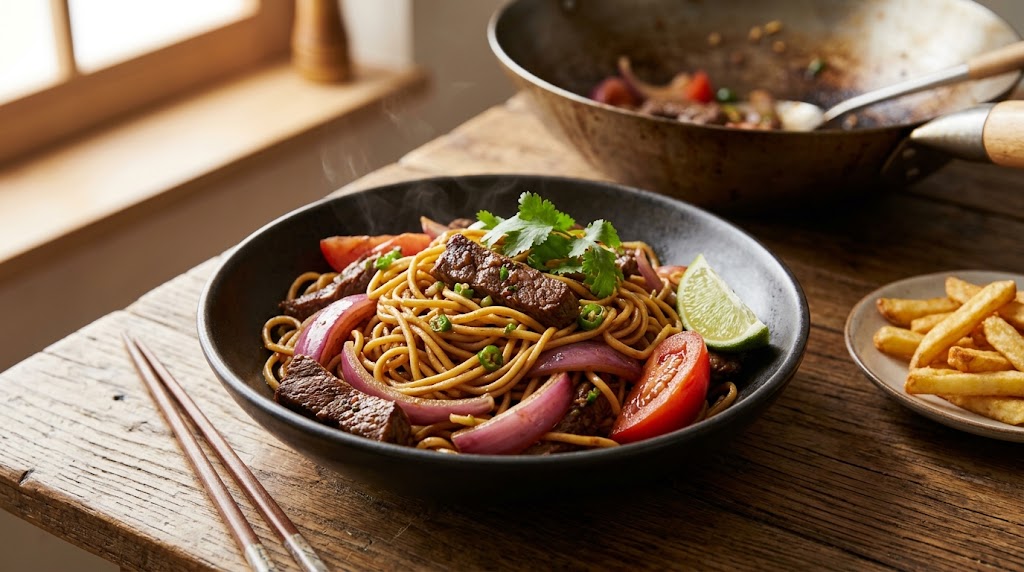
In Peru, lomo saltado often comes with french fries on the side, or even mixed right in. I have tried it both ways. The fries are good if you have time, but with noodles it can be a lot of starch. When I do add them, I use a handful of frozen fries baked in the oven, and I put them on top at the end so they stay crisp.
A squeeze of lime and a handful of cilantro make a big difference. They give the dish a fresh taste that balances the salty sauce. If you like heat, put some sliced chili or hot sauce on the table.
For drinks, I like something cold and a bit sweet or sour drink. Fresh lime juice or pineapple juice goes well with it. A cold glass of iced tea works too.
Leftovers are fine for a day in the fridge. Reheat them in a hot pan with a splash of water, not in the microwave, which tends to make the noodles rubbery.
Why People Love This Dish
I think there are a few reasons this dish has so many fans.
It is quick. You can go from an empty counter to a full plate in under half an hour, which is a real help on busy days.
It is also flexible. You can change the meat, the noodles, the vegetables, and the spice level, and it still tastes like itself. I have made it with whatever was in the fridge and never had a bad result.
And it has an interesting story. Food that mixes two cultures often has a flavor you can’t get any other way. The Chinese cooking method and the Peruvian ingredients each bring something, and together they make something new. Every time I make it, I like knowing there is a long history behind a plate of noodles that took me 25 minutes.
Frequently Asked Questions
What are Peruvian Chinese noodles?
They are stir-fried noodles made with beef or chicken, onions, tomatoes, garlic, and soy sauce. The dish comes from Chifa cooking, the Chinese-Peruvian food style, and is based on lomo saltado with noodles used instead of rice.
Is this the same as lomo saltado?
Not exactly. Lomo saltado is usually served with rice and french fries. The noodle version uses the same flavors and the same high-heat method, but noodles take the place of rice.
What kind of noodles work best?
Egg noodles, spaghetti, or any stir-fry noodles will work. Choose something that stays firm when tossed in a hot pan, and take it out of the boiling water a minute early.
Can I make it with chicken instead of beef?
Yes. Chicken gives a lighter taste and cooks fast. Cook thin strips for only two to three minutes so they don’t dry out.
Can I make a vegetarian version?
Yes. Mushrooms, bell peppers, carrots, and broccoli all work well. Mushrooms soak up the soy sauce and give a meaty texture. Cook harder vegetables like carrots first.
Why did my noodles turn out soggy?
Usually the pan was not hot enough, or it was too full. Heat the pan for a minute or two before cooking, and cook in batches if needed. Also avoid overcooking the noodles before they go in the pan.
How do I stop the dish from getting too salty?
Start with the soy sauce amount in the recipe, then taste. Different brands vary in saltiness, so add more a little at a time.
What can I use instead of aji amarillo paste?
It is optional. If you can’t find it, a small amount of fresh chili adds heat. You will miss the fruity warmth, but the dish still tastes good.
Do I have to serve it with french fries?
No. Fries are a traditional touch in Peru, but they are not needed. If you add them, put them on top at the end so they stay crisp.
How long does it take to cook?
About 25 minutes in total, and most of that time is chopping.
Can I store and reheat leftovers?
Yes, they keep for a day in the fridge. Reheat them in a hot pan with a splash of water. The microwave can make the noodles rubbery.
How many people does this recipe serve?
The recipe above serves two to three people.
Final Thoughts
Peruvian Chinese noodles are one of those dishes that look harder than they are. You need a hot pan, a few simple ingredients, and a little attention while you cook. The method is quick, the flavors are bold, and the dish is easy to adjust for whoever is eating.
If you want to try it, start with the basic version. Use beef or chicken, keep the vegetables simple, and focus on getting the pan hot. After you have made it once or twice, you can start changing things to match your own taste. That is how this dish became a regular in my kitchen, and I hope it does the same in yours.

1 Comment
Pingback: How to Make Authentic Besos de Moza at Home – Classic