
I still remember the first time I tried making a Peruvian sauce at home. I’d just come back from a trip where a street vendor in Lima handed me a plate of grilled chicken drowned in this bright green sauce, and honestly, I didn’t eat anything else the whole trip that impressed me more. I spent months trying to recreate it once I got home — burned garlic, over-salted batches, one attempt that tasted like straight-up grass. Eventually I got it right, and now making easy Peruvian sauces is one of those kitchen rituals I actually look forward to on a Sunday.
That’s really what this guide is about. Not a textbook version of Peruvian cooking, but the version that actually works in a regular kitchen with regular ingredients, written by someone who burned through a lot of cilantro figuring it out.
Peruvian food gets a lot of its personality from sauces. The proteins — chicken, beef, fish — are often simple, sometimes just grilled or fried plain. It’s the sauce on top that turns it into something you remember. And the good news, which took me embarrassingly long to realize, is that you don’t need a trip to Lima or a specialty grocery store to make them. A blender and a handful of ingredients from any regular supermarket will get you most of the way there.
Why Peruvian Sauces Are Special
What I love about easy Peruvian sauces is that they’re not trying to be subtle. They’re either creamy and comforting or sharp and spicy, and there’s rarely an in-between. The flavor comes from fresh herbs, chilies, and a bit of acid from lime, and that combination just works in a way that’s hard to explain until you taste it.
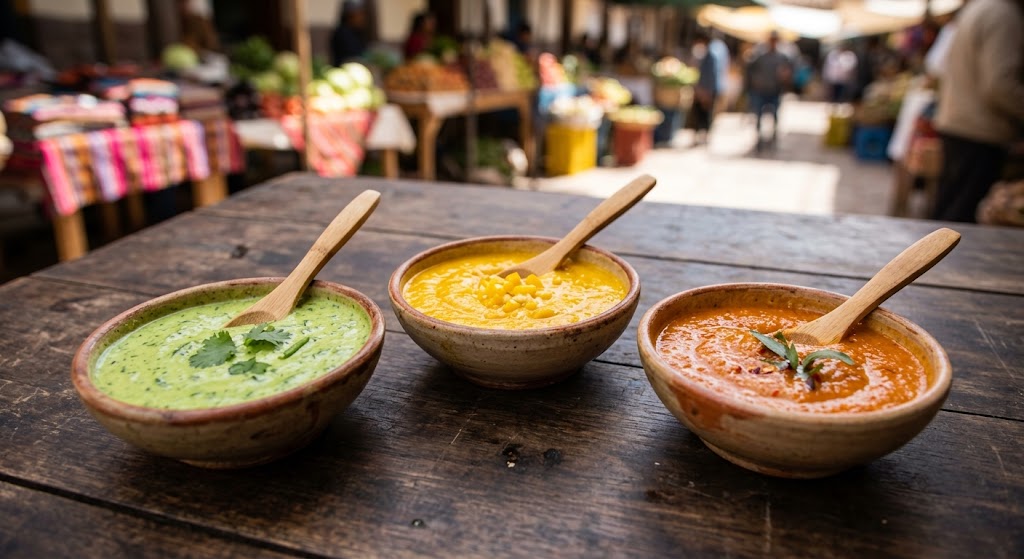
Aji amarillo is really the backbone of most of these sauces — it’s a Peruvian yellow chili that brings a fruity kind of heat, not the sharp burn you get from something like a habanero. If you can’t find it fresh (which, depending on where you live, is likely), the jarred paste version works fine and is actually what I use most of the time now anyway.
The other thing I noticed after making these a few dozen times: Peruvian sauces aren’t just for one dish. The same green sauce that goes on grilled chicken works just as well smeared inside a sandwich or as a dip for fries. That versatility is probably why I make a batch almost every week now instead of it being some special-occasion thing.
What You Actually Need in Your Kitchen
Before getting into the recipes, here’s what tends to show up in almost every version of easy Peruvian sauces:
- Aji amarillo paste or fresh peppers – this is the flavor base for most of them
- Fresh cilantro – a full bunch, not just a garnish amount
- Garlic – usually two to three cloves, more if you like it punchy
- Lime juice – freshly squeezed makes a noticeable difference over bottled
- Mayonnaise or a mild yogurt – for the creamy sauces
- A neutral oil – for the thinner, more oil-based sauces
- Salt – more than you’d think, honestly
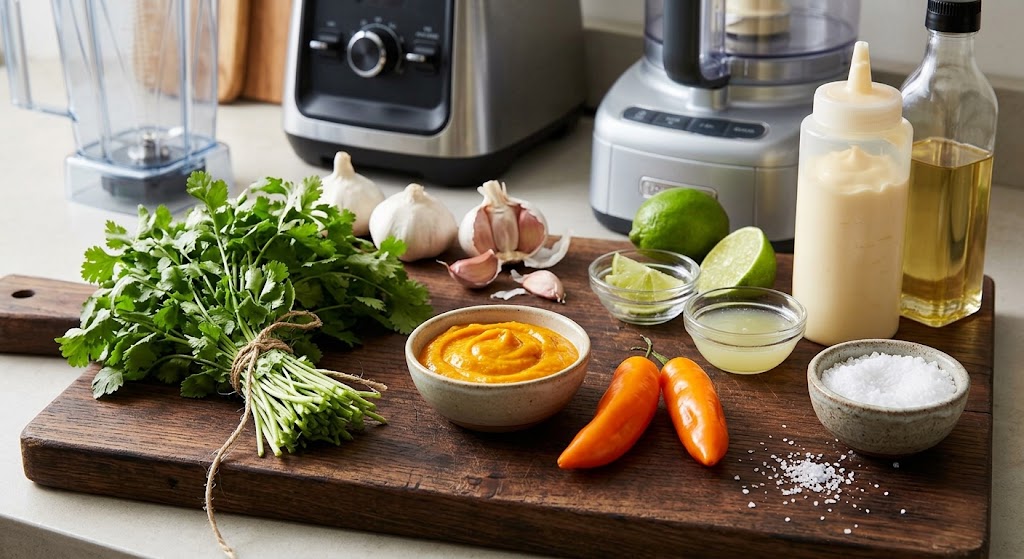
If aji amarillo isn’t available where you shop, I’ve substituted a mix of jalapeño and a pinch of smoked paprika before, and while it’s not identical, it gets close enough that nobody at the table complained.
The Recipes
1. Peruvian Green Sauce (Aji Verde)
This is the one that started it all for me, and it’s still the sauce I make most often. It’s the classic pairing for grilled chicken, but I’ve put it on eggs, rice bowls, and honestly once just ate it with a spoon straight from the blender jar.
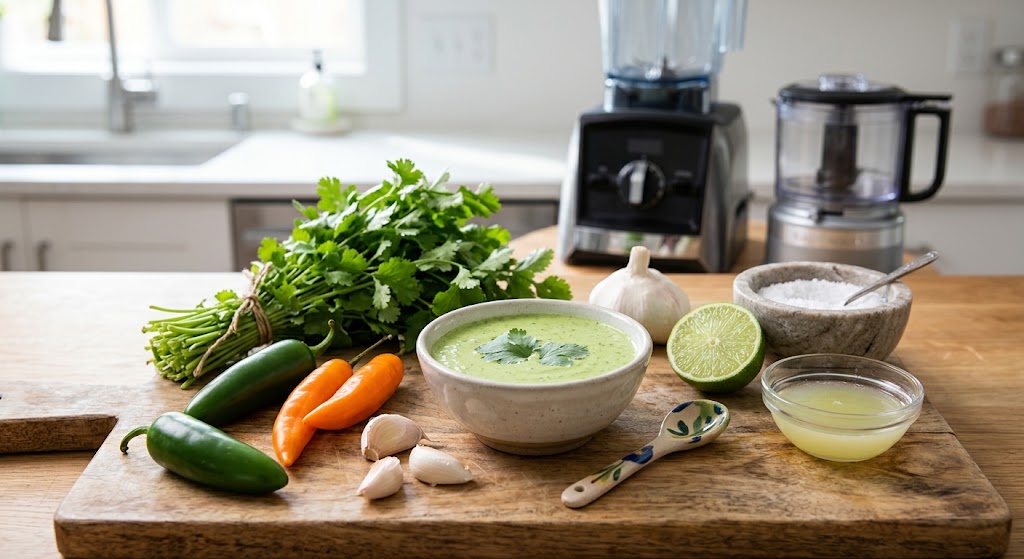
Ingredients:
- 1 cup fresh cilantro (stems and all — don’t bother picking leaves off one by one, it’s not necessary)
- 1–2 jalapeños or aji amarillo peppers
- 2 garlic cloves
- 1/2 cup mayonnaise
- 1/4 cup lime juice
- Salt to taste
Instructions:
Toss everything into a food processor or blender and blend until smooth. Taste it — this is the step people skip, and it matters. If it’s too sharp, add a touch more mayo. If it’s flat, more lime or salt usually fixes it. It should be pourable but still coat a spoon.
2. Peruvian Aji Sauce
This one’s thinner and spicier, closer to a hot sauce than a dressing. I use it whenever I want heat without the sauce taking over the whole dish.
Ingredients:
- 3 aji amarillo peppers (or substitute yellow chili)
- 2 garlic cloves
- 1/4 cup vegetable oil
- 2 tablespoons lime juice
- Salt to taste
Instructions:
Remove the seeds from the peppers first — this controls the heat more than anything else in the recipe. Blend with the garlic, oil, and lime juice until smooth. Salt to taste. Drizzle it over grilled meats or roasted vegetables rather than pouring it on thick; a little goes a long way here.
3. Peruvian Chili Sauce (Aji Amarillo Sauce)
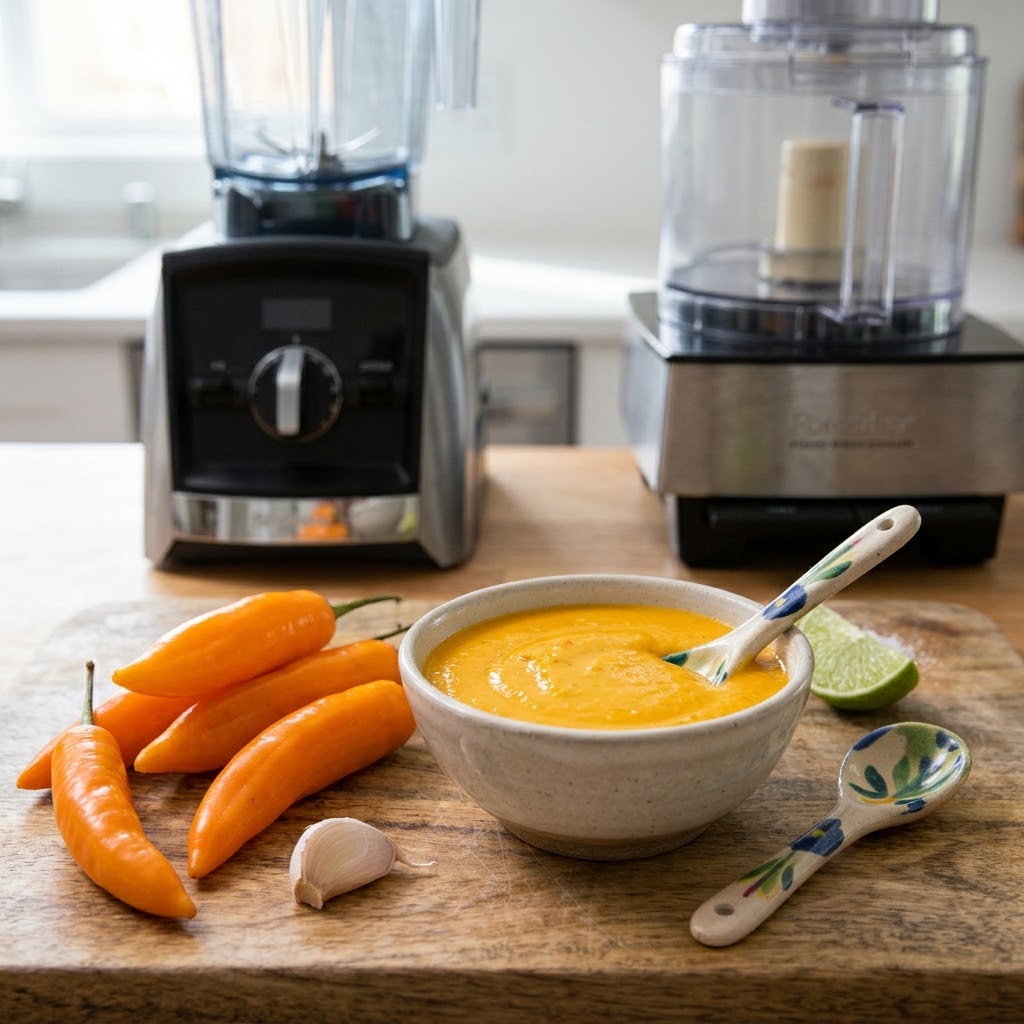
Somewhere between the green sauce and the aji sauce — creamy, but with real heat behind it. This is the one I bring out when I want to impress someone without much extra effort.
Ingredients:
- 4 aji amarillo peppers
- 1/2 cup mayonnaise or yogurt
- 1 garlic clove
- 1 tablespoon lime juice
- Salt to taste
Instructions:
Blend everything until creamy. If it’s too spicy for your taste, take the seeds out of one or two peppers before blending — that adjustment alone changes the heat level a lot without losing the flavor.
All three of these easy Peruvian sauce recipes take under ten minutes once you have the ingredients out, which honestly is the main reason I keep making them instead of buying store-bought versions.
A Few Things I Learned the Hard Way
- Taste before you salt heavily. Mayonnaise and yogurt already carry some salt, so it’s easy to overdo it if you’re not careful.
- Fresh lime juice matters more than you’d expect. I tried bottled once out of laziness and could taste the difference immediately — it was flatter, less bright.
- If your sauce is too thick, don’t panic. A tablespoon of water or a splash more oil loosens it right up without watering down the flavor.
- Let it sit for ten minutes before serving. The flavors settle and blend a bit more than right off the blender.
- Sauces keep for 3–5 days in the fridge, sealed properly. I’ve never had one last past day five in my house, though, because we usually finish it before then.
How I Actually Use These Sauces
Once you’ve got a batch of easy Peruvian sauces made, they end up going on more than you’d expect:
- Grilled or roasted chicken — the classic pairing, and honestly hard to beat
- Sandwiches and burgers — a spoonful instead of regular mayo changes the whole sandwich
- As a dip — fries, plantain chips, or just raw vegetables
- With seafood — a drizzle over ceviche or grilled fish works especially well
- With red meats — steak, pork, even lamb chops take well to the aji sauce especially
The point isn’t to follow a strict rulebook on what goes with what. Once you make a batch, you’ll find yourself putting it on things I never would have guessed either.
FAQ
Can I make Peruvian sauces without a blender?
You can use a food processor, an immersion blender, or even a mortar and pestle if you’re patient, though the texture won’t be quite as smooth. A blender just makes it faster and more consistent.
What can I use if I can’t find aji amarillo?
Jalapeño mixed with a small amount of smoked paprika or a mild yellow chili works as a decent substitute. It won’t be identical, but it gets close enough for most people to not notice.
How spicy are these sauces really?
It depends on the peppers and whether you keep the seeds in. Removing the seeds cuts the heat significantly, so you can adjust it to your own tolerance pretty easily.
How long do homemade Peruvian sauces last in the fridge?
Typically 3 to 5 days if stored in a sealed container. I wouldn’t push much past that, especially with the mayonnaise-based ones.
Can I freeze Peruvian sauces?
The oil-based aji sauce freezes reasonably well. The creamy, mayo-based ones tend to separate after thawing, so I’d recommend making those fresh instead.
Is Peruvian green sauce the same as guacamole or chimichurri?
No — it’s a different flavor profile entirely. Peruvian green sauce leans creamy and herbaceous with a chili kick, while chimichurri is oil-based and more herb-forward, and guacamole is avocado-based. They just happen to be green.
Final Thoughts
Making easy Peruvian sauces at home turned out to be one of those small kitchen skills that changed how I cook more broadly. Once you have one of these in the fridge, plain grilled chicken or a basic sandwich stops feeling plain. It’s a ten-minute effort with a blender that pays off for days.
If you’re trying this for the first time, start with the green sauce — it’s the most forgiving of the three and the easiest to fall in love with. Once you’ve got that down, the aji sauce and the chili sauce are easy additions to your rotation.
Grab some peppers, a bunch of cilantro, and a lime, and give it a try this weekend.

2 Comments
Pingback: Peruvian Chicken with Green Sauce: Authentic Pollo a la Bras
Pingback: Aji Amarillo Sauce Recipe – Authentic Peruvian Spicy Sauce