
Peruvian food culture is the result of thousands of years of farming, trading, migration, and sharing meals. A plate of ceviche or a bowl of lomo saltado may look simple, but each one carries pieces of Andean farming, Spanish cooking, African skill, and Asian technique. To understand why Peruvian cooking tastes the way it does, you have to look at the people who shaped it over time.
This article follows that story in order. We start with the first farmers in the Andes, move through the Inca era and Spanish rule, look at the waves of immigrants who arrived later, and finish with how Peru’s food became known around the world.
Ancient Roots of Peruvian Food Culture
The story starts long before the Incas. People in the Andes were farming thousands of years ago, and the potato is the best-known example. Early farmers near Lake Titicaca began growing wild potatoes around 8,000 years ago. Over the centuries they bred many kinds, and Peru still grows thousands of native varieties in different colors, shapes, and sizes. Some are purple inside, some are bright yellow, and some are small and knobbly with a taste you will not find in a regular supermarket potato.
Growing food in the mountains is hard. Nights are cold, the soil is thin, and the weather can change fast. Andean farmers solved this with smart methods. They built stone terraces on steep slopes to hold soil and water. They planted crops at different heights so that if one field failed, another might still give a harvest. At the Inca site of Moray, round terraces sink into the ground like a giant bowl, and some researchers think they were used to test how crops grew in different temperatures.
Keeping food was just as important as growing it. The Andean people made chuño by leaving potatoes outside to freeze at night and dry in the strong sun by day. The result could be stored for years. They also dried meat into charki, which is where the English word “jerky” comes from. Storehouses along Inca roads kept food ready for travelers, soldiers, and villages hit by a bad harvest.
Other staples included maize, quinoa, beans, squash, and a small grain called kiwicha. Maize was also used to make chicha de jora, a fermented drink served at festivals and offered to the gods. Chili peppers, called ají, added heat and color to almost every meal, and they still do. On the coast, people ate fish, shellfish, and seaweed from the cold Pacific. In the Amazon, they lived on river fish, fruit, and plants from the forest.
One cooking method from this time is still alive today. Pachamanca means “earth pot” in Quechua. A hole is dug, stones are heated in a fire, and meat, potatoes, and corn are layered inside and covered with earth and leaves. After a few hours, everything is cooked slowly in its own steam. Families in the highlands still make it for big gatherings.
What the Spanish Brought to the Table
Francisco Pizarro and his men reached Peru in 1532, and within a few years the Inca Empire had fallen. Lima became the capital of the Spanish viceroyalty, and the way people ate began to change.
The Spanish brought wheat, rice, onions, garlic, sugarcane, olive oil, grapes, limes, and oranges. They also brought cattle, pigs, sheep, and chickens. Before this, Andean cooks had few animals to raise for meat besides llamas, alpacas, and guinea pigs. Now beef, pork, and chicken became everyday ingredients.
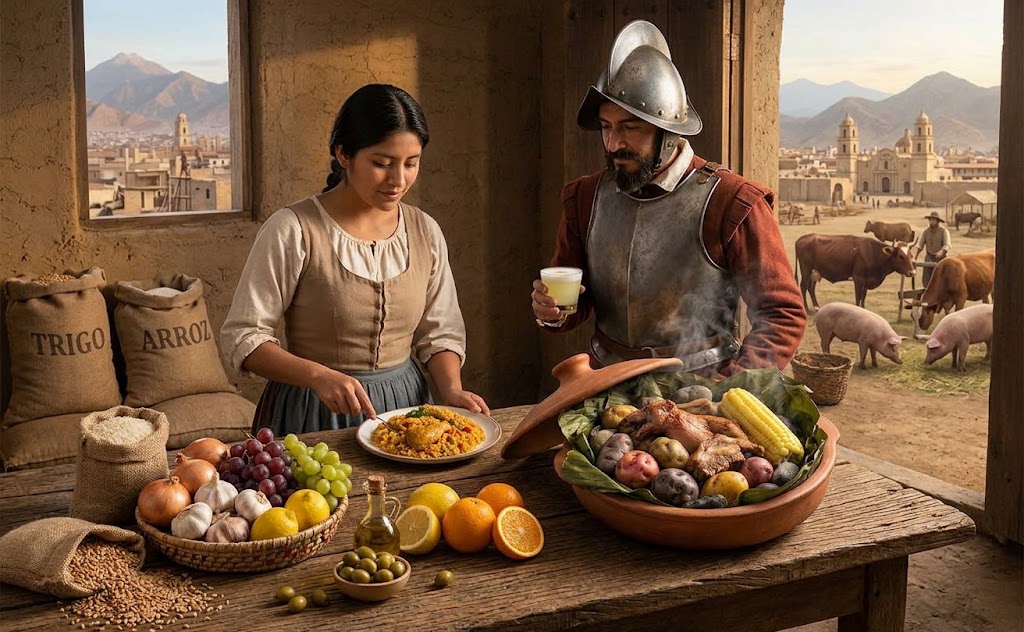
The mixing was not always smooth. Settlers wanted the food they knew from home, and many looked down on native crops. But over time the two sides met in the kitchen. Indigenous cooks used their own skills on the new foods, and Andean ingredients like potatoes, corn, and chili peppers slipped into Spanish-style recipes. Potatoes and corn also traveled the other way, across the ocean to Europe, where they changed how millions of people ate.
The grapes the Spanish planted led to wine and later to pisco, a clear brandy made in southern Peru. Pisco is now the base of the country’s national cocktail, the pisco sour, which was created in Lima in the early twentieth century. Convent kitchens in colonial Lima were also known for sweets made with sugar, eggs, and milk, and many Peruvian desserts still follow those early recipes.
How Immigrants Shaped Peruvian Food Culture
Spain was only the beginning. Several groups arrived over the next few centuries, and each one left a clear mark on the national menu.
African influence. Enslaved Africans were brought to Peru during the colonial period, mostly to work on coastal farms and in Lima’s households. They often received cuts of meat that others did not want, and they turned them into some of the tastiest food in the country. Anticuchos, grilled skewers of marinated beef heart, are the best-known example. Tacu tacu, a crispy cake of rice and beans, and picarones, sweet doughnuts made with squash and sweet potato and served with syrup, are other Afro-Peruvian dishes that people still love.
Chinese influence. In 1849, the first Chinese laborers arrived to work on sugar farms and build railways. Many stayed, opened small restaurants, and adapted their cooking to local ingredients. This food became known as chifa, a word that comes from Cantonese words for “eat rice.” Lomo saltado, strips of beef stir-fried with onions, tomatoes, and soy sauce and served with rice and fries, is a perfect blend of both worlds. Arroz chaufa, the Peruvian take on fried rice, is just as popular. Chifa restaurants can be found in almost every Peruvian city.
Japanese influence. Japanese migrants began arriving in 1899. Their influence shows most in how fish is handled. Nikkei cooking mixes Japanese care and precision with Peruvian ingredients like ají and lime. Some food historians also say that Japanese cooks helped shorten the time fish sits in citrus for ceviche, so it stays fresh and firm instead of being soaked for hours.
Italian influence. Italian settlers in the 1800s brought pasta and sauces. Peruvians made them their own. Tallarines verdes, spaghetti in a green sauce of basil, spinach, and cheese, is often served with a thin steak and is a common home meal today.
This is a big reason why Peruvian cooking feels so different from other Latin American food. It was not built from one tradition. It grew from many people cooking together in the same cities, markets, and neighborhoods.
Classic Dishes and the Stories Behind Them
Some dishes show this history better than any book. Here are a few worth knowing.
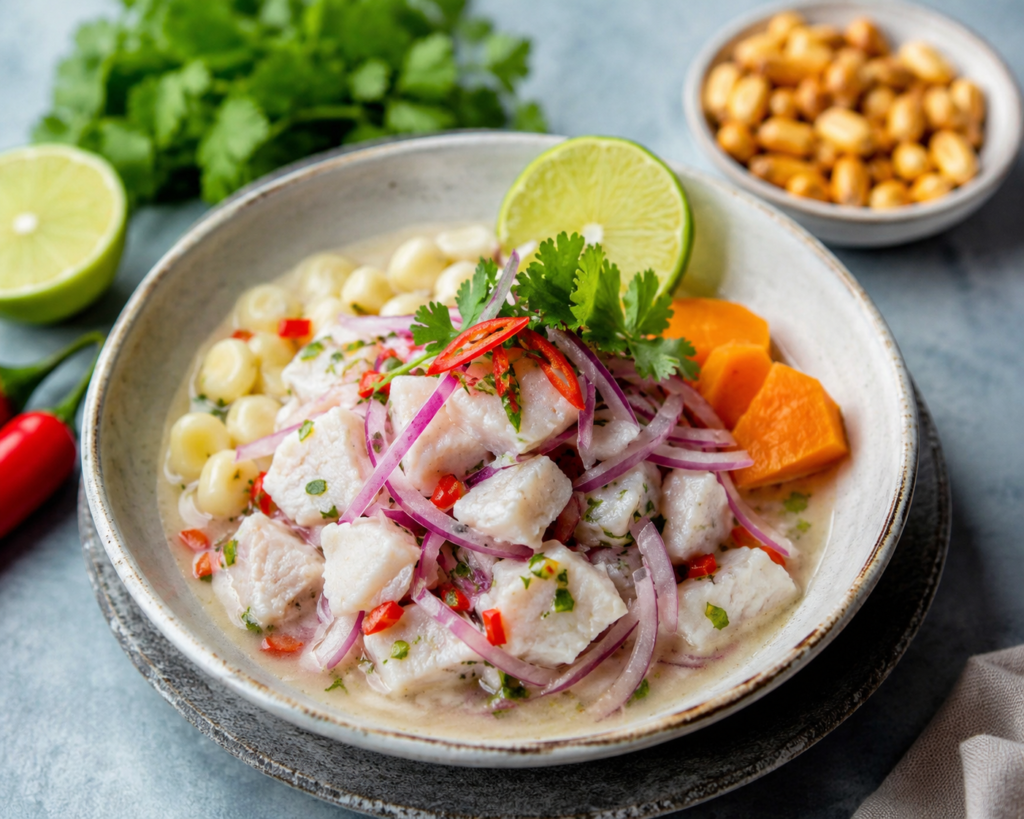
Ceviche. Fresh raw fish is mixed with lime juice, onion, chili, and salt. People on the Peruvian coast have eaten raw fish for a very long time, but limes came with the Spanish, and the quick style we know today developed later. For Peruvians, ceviche is more than lunch. It has its own national day on June 28, and in 2023 UNESCO added it to its list of the world’s intangible cultural heritage.
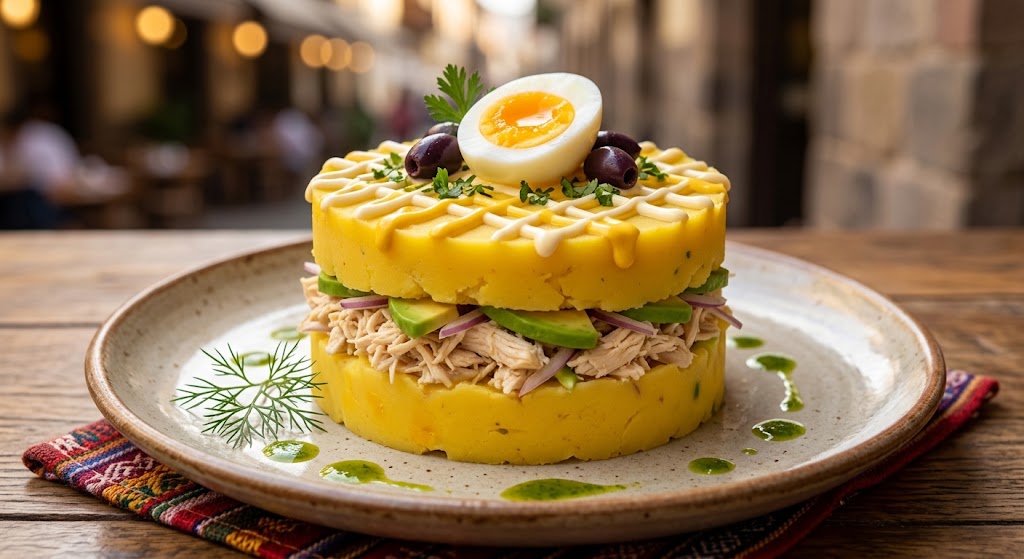
Causa. This is a cold layered dish made with mashed yellow potato, lime, and ají amarillo, filled with chicken, tuna, or avocado. Its name is debated. Some say it comes from the Quechua word kausay, which means “life,” and the use of potato, the oldest Andean crop, fits that idea well.
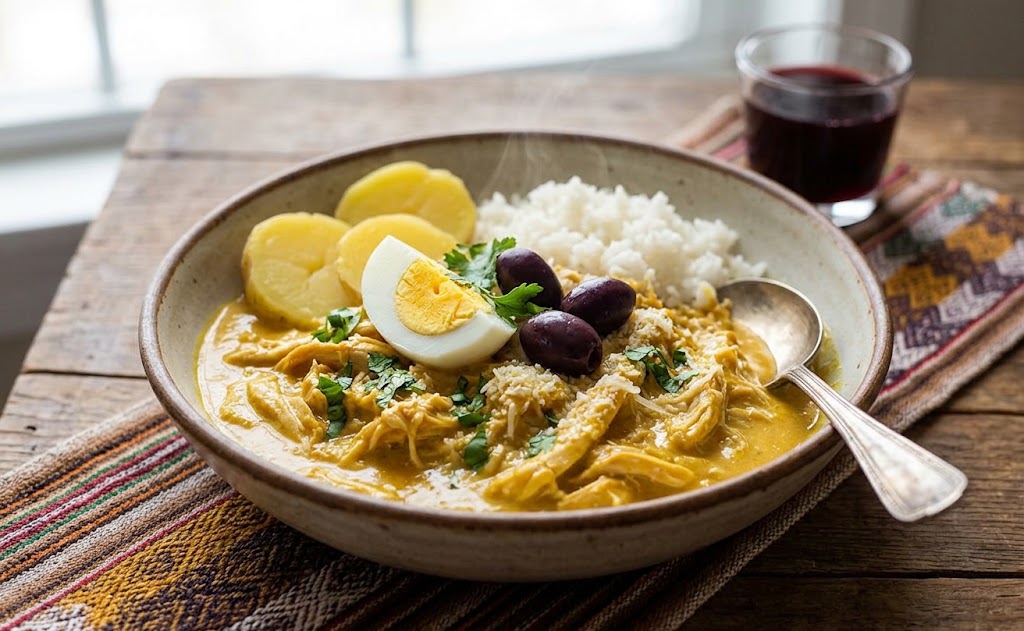
Ají de gallina. Shredded chicken is cooked in a creamy yellow sauce made from ají amarillo, bread, milk, cheese, and nuts, then served over potatoes and rice with olives and a boiled egg. Its roots lie in a Spanish dish of milk, bread, and almonds, which Peruvian cooks changed by adding their own chili pepper. It is a good example of the colonial mix on one plate.
Anticuchos. These grilled skewers began in Afro-Peruvian kitchens and are now sold by street vendors across the country, usually with boiled potato and a spicy sauce.
Cuy. Guinea pig has been eaten in the Andes for thousands of years. It is still a special-occasion meal in the highlands, usually roasted or fried and served at weddings, festivals, and family celebrations. Visitors are sometimes surprised, but for many Andean families it is a respected and traditional food.
Three Regions, Three Ways of Eating
Peru can be split into three main areas, and the food changes a lot between them.
The coast is known for seafood. Because the Pacific is cold and rich in nutrients, fish and shellfish are plentiful. Besides ceviche, you will find tiradito, which is thin-sliced raw fish in a spicy sauce, and rice dishes with seafood. The northern coast also has hearty meals like seco de cabrito, a slow-cooked goat stew with cilantro.
The Andes rely on crops that grow at height. Potatoes, corn, quinoa, and beans make up much of the diet. Soups are common because they warm people up in cold weather, and a thick soup called chupe is a favorite. Meat, when eaten, is often lamb, alpaca, or cuy, and pachamanca is still prepared for big events.
The Amazon has a very different style. People cook with river fish like paiche, wrap rice and chicken in large bijao leaves to make juane, and enjoy fruits you will not find elsewhere, such as camu camu and cocona. Cooking here often uses banana leaves, smoke, and fresh herbs from the forest.
Despite all these differences, one thing is shared. Peruvians care a lot about the quality of their ingredients and the way a dish is made.
Festivals, Family, and Food Traditions
Food is tied closely to the calendar in Peru. The country even has a National Potato Day on May 30. During Inti Raymi, the old Inca festival of the sun that is still celebrated in Cusco each June, food and drink are part of the ceremony.
At Christmas, many families eat roast turkey or pork, with panetón and hot chocolate. In early November, bakeries sell tanta wawas, sweet bread shaped like small babies, for the days around All Saints. And on any Sunday you will see families gathered over pollo a la brasa, roast chicken cooked over charcoal and served with fries and salad, which became a national favorite in the 1950s.
These habits might seem small, but they keep old customs alive. Cooking the same dish every year, in the same way, with the same people, is how a food tradition survives.
Peruvian Cuisine Today
For a long time, Peruvian food was mostly known inside Peru. That began to change in the 1990s and 2000s, when a new group of chefs started looking at their own country’s ingredients with fresh eyes. Gastón Acurio is probably the best-known of them. He and others worked with farmers, fishers, and small producers, and they put native potatoes, Amazon fruits, and Andean grains on fine-dining menus.
In 2008, the food festival Mistura started in Lima, and it grew into one of the biggest in Latin America. Street food sellers and top chefs shared the same space, which showed that everyday food and fine dining both belong to the same culture. In 2023, Virgilio Martínez’s restaurant Central in Lima was named the best restaurant in the world by The World’s 50 Best Restaurants list.
Outside Peru, Peruvian restaurants have opened in cities across Europe, North America, and Asia. Quinoa became a popular health food in many countries, and ají amarillo, once hard to find, now appears in specialty stores abroad.
There are challenges too. When quinoa became popular overseas, prices rose, and in some places local families found it harder to afford it. Peru’s farmers and chefs are still working on how to share the benefits of this attention fairly.
Final Thoughts
The history of Peruvian food is really the history of Peru itself. It begins with Andean farmers who bred thousands of potatoes and dried food to survive harsh winters. It continues through Spanish rule, the arrival of African, Chinese, Japanese, and Italian communities, and the work of modern chefs who looked back at old ingredients with new respect.
If you want to experience this history yourself, you do not need to travel to Lima. Try cooking a simple ceviche, a plate of lomo saltado, or a potato causa at home. Each dish tells a small part of the story, and each one shows how people who came from very different places ended up sharing one table.
