
Peruvian meatloaf, also known as pastel de carne, is a comforting baked beef dish that is simple to prepare and full of homemade flavor. It is made with ground beef, breadcrumbs, eggs, onion, garlic, and a few seasonings, then baked until tender and easy to slice.
I like this Peruvian meatloaf recipe because it does not require complicated ingredients or special cooking skills. The mixture comes together quickly, and the oven does most of the work. A little ají amarillo can also be added for a gentle Peruvian touch without making the dish too spicy.
If you enjoy Peruvian food and want to try something different from ceviche, lomo saltado, or other well-known dishes, this pastel de carne is a simple recipe to make at home.
What Is Peruvian Meatloaf?
Peruvian meatloaf, or pastel de carne peruano, is a baked ground beef dish prepared with ingredients that help create a soft and flavorful loaf.
Ground beef forms the base, while eggs and breadcrumbs help hold everything together. Onion and garlic add flavor, and seasonings such as cumin, black pepper, and oregano give the meat mixture a savory taste.
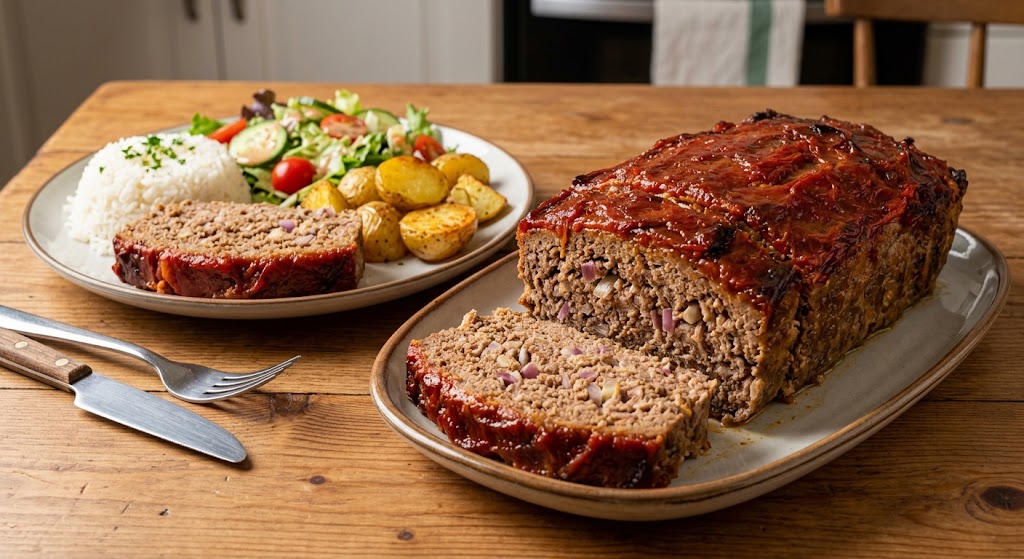
The mixture is shaped into a loaf and baked until the center is fully cooked. It can be served in slices with rice, potatoes, salad, or other sides.
There are different ways to prepare pastel de carne, so you may find variations with vegetables, cheese, boiled eggs, or other fillings. This version keeps things simple and focuses on a tender beef mixture with a flavorful tomato topping.
Is Pastel de Carne a Traditional Peruvian Dish?
Pastel de carne is associated with Peruvian home cooking, but it is not usually placed in the same category as Peru’s most internationally recognized dishes, such as ceviche or lomo saltado.
That distinction is worth making because Peruvian cuisine is very diverse. Along with famous restaurant dishes, there are many simple baked and family-style meals that people can prepare at home.
I would describe this recipe as a Peruvian-style meatloaf rather than claiming that it is one of Peru’s most famous national dishes.
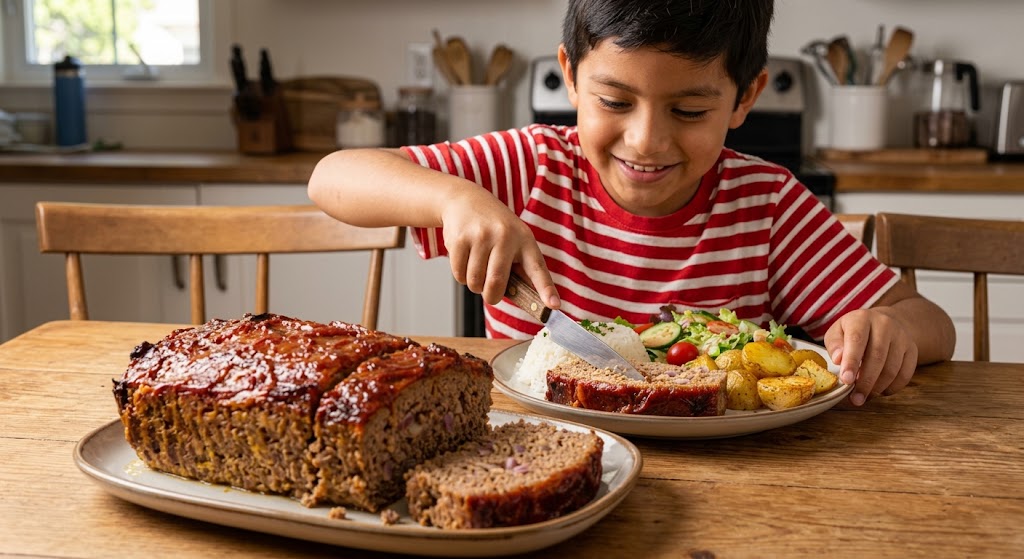
What makes it interesting for a Peruvian food site is the way familiar meatloaf ingredients can be combined with flavors such as ají amarillo, cumin, garlic, and oregano.
Why I Like This Peruvian Meatloaf
The first thing I like about this dish is how easy it is.
You do not need to spend hours preparing the ingredients. Once the beef mixture is ready, you simply shape it, add the topping, and place it in the oven.
The texture is another reason I enjoy it. When the beef is mixed gently and the loaf is not overbaked, the inside stays tender while the outside develops a flavorful baked crust.
It is also a practical family meal. One loaf gives you several servings, and the leftovers can be stored for another meal.
For me, this is the kind of recipe that works especially well when I want something warm and filling without making a complicated dinner.
Ingredients for Peruvian Meatloaf
You only need a few basic ingredients to make this homemade beef recipe.
For the Meatloaf
- 1 ½ pounds ground beef
- ¾ cup breadcrumbs
- ½ cup milk
- 2 large eggs
- 1 small red onion, finely chopped
- 2 garlic cloves, minced
- 2 tablespoons fresh parsley, chopped
- 1 teaspoon salt
- ½ teaspoon black pepper
- ½ teaspoon ground cumin
- ½ teaspoon dried oregano
- 1 tablespoon tomato paste
- 1 tablespoon ají amarillo paste, optional
- 1 tablespoon vegetable oil
For the Topping
- ½ cup tomato sauce or ketchup
- 1 tablespoon tomato paste
- 1 teaspoon mustard
- 1 teaspoon brown sugar
The ají amarillo is optional. If you want a more noticeable Peruvian flavor, you can include it. If you prefer a mild meatloaf, simply leave it out.
Why These Ingredients Matter
Each ingredient has a purpose in the recipe.
Ground beef gives the meatloaf its main flavor and structure. I prefer beef that is not extremely lean because a little fat helps produce a more tender result.
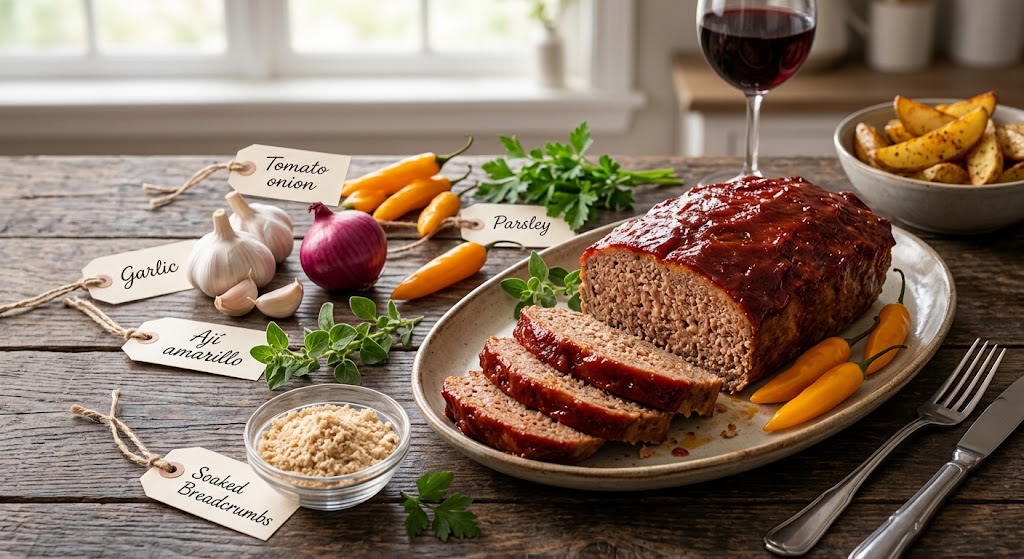
Breadcrumbs absorb moisture and help keep the loaf together.
Milk softens the breadcrumbs and contributes to a moist texture.
Eggs act as a binder, helping the ingredients hold their shape during baking.
Onion and garlic provide the savory base of the dish.
Cumin and oregano add warmth and depth without overpowering the beef.
Ají amarillo is optional, but it can give the recipe a subtle Peruvian character.
The tomato topping adds sweetness, tang, and a little moisture to the surface while the meatloaf bakes.
How to Make Peruvian Meatloaf
Step 1: Prepare the Breadcrumbs
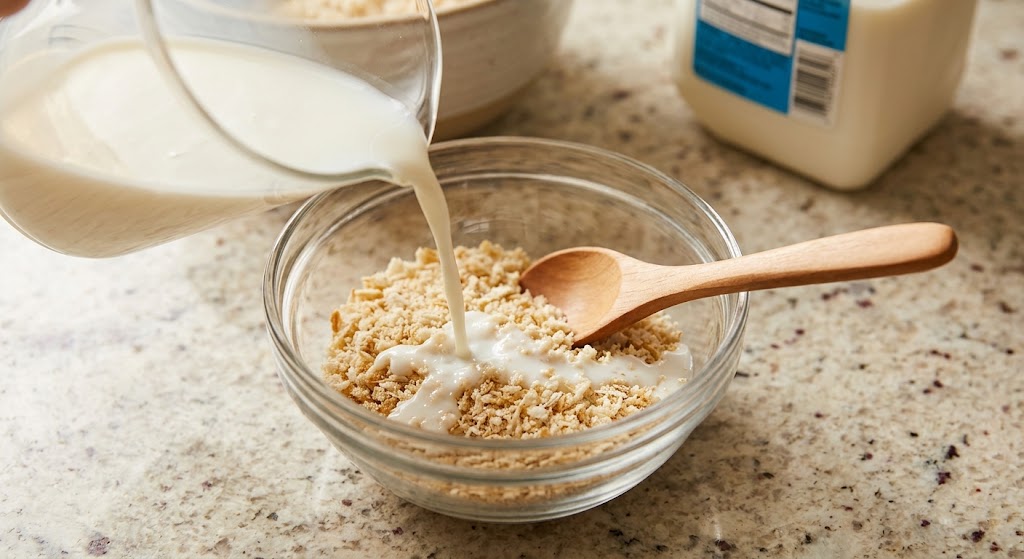
Place the breadcrumbs in a small bowl and pour in the milk.
Let them sit for about 3 to 5 minutes.
This is a simple step, but it helps prevent the finished meatloaf from becoming dry. The breadcrumbs absorb the milk and distribute that moisture through the beef mixture.
Do not worry if the breadcrumbs look very soft. That is exactly what you want.
Step 2: Prepare the Onion and Garlic
Finely chop the red onion and mince the garlic.
You can add them directly to the meat mixture, but if you prefer a softer onion flavor, lightly cook the onion in a little vegetable oil for a few minutes.
Let it cool slightly before adding it to the beef.
I usually prefer finely chopped onion because it blends into the meat more evenly and gives flavor without creating large pieces in each slice.
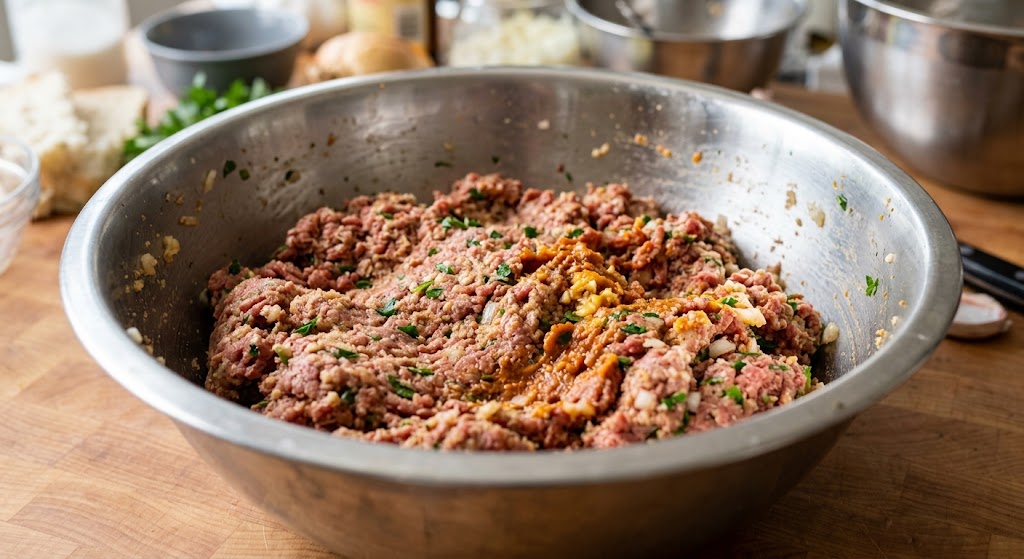
Step 3: Mix the Beef Mixture
Place the ground beef in a large bowl.
Add the soaked breadcrumbs, eggs, onion, garlic, parsley, salt, black pepper, cumin, oregano, and tomato paste.
Add the ají amarillo paste if you are using it.
Mix everything gently until the ingredients are evenly combined.
This is one of the most important parts of making a juicy meatloaf.
Do not keep mixing after everything has come together. Overworking the beef can make the finished loaf dense and firm.
You want the mixture to hold together but still feel soft.
Step 4: Shape the Meatloaf
Preheat your oven to 375°F (190°C).
Lightly grease a loaf pan or baking dish.
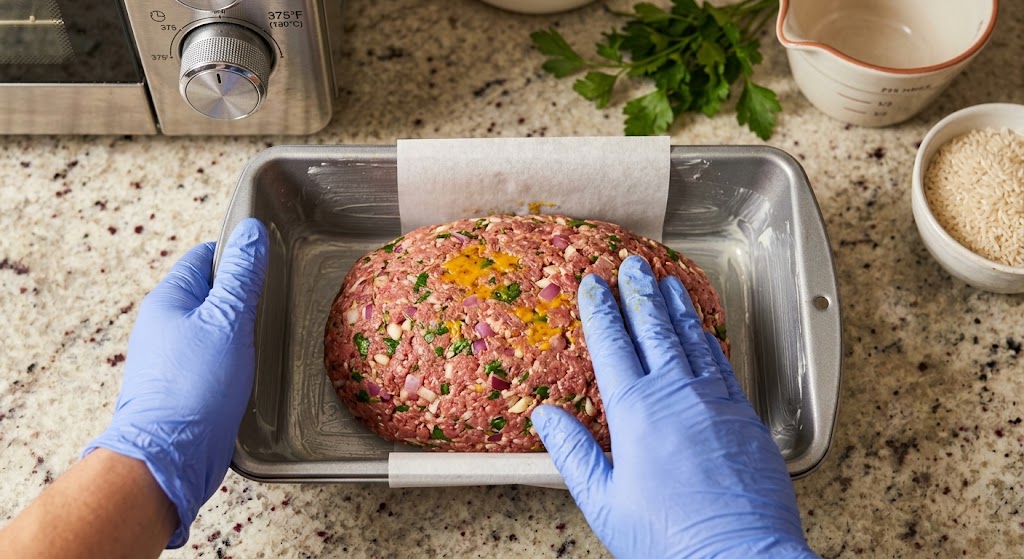
Transfer the meat mixture into the pan and gently shape it into an even loaf.
Do not press the mixture down too firmly. A tightly packed loaf can become heavier and denser after baking.
If you do not have a loaf pan, you can shape the beef mixture by hand and place it on a parchment-lined baking tray.
Try to keep the thickness reasonably even so the meatloaf cooks at the same rate.
Step 5: Prepare the Topping
Add the tomato sauce or ketchup, tomato paste, mustard, and brown sugar to a small bowl.
Mix until smooth.
The topping should taste slightly sweet and tangy. If you prefer a less sweet meatloaf, reduce the brown sugar.
Spread about half of the topping over the shaped meatloaf.
Keep the rest for serving.
Step 6: Bake the Meatloaf
Place the meatloaf in the preheated oven.
Bake for approximately 50 to 60 minutes.
The exact cooking time can vary depending on the size and shape of your loaf, so I recommend checking the center with a food thermometer rather than relying only on the clock.
The center should reach 160°F (71°C).
If the top begins to brown too quickly, loosely cover the loaf with aluminum foil and continue baking.
Avoid overcooking it because too much time in the oven can take moisture away from the beef.
Step 7: Let It Rest
Once the meatloaf is fully cooked, remove it from the oven.
Let it rest for about 10 minutes before slicing.
This is a small step that makes a noticeable difference.
If you cut the loaf immediately, some of the juices can run onto the cutting board. Resting gives the meatloaf time to settle and makes it easier to cut into clean slices.
Step 8: Slice and Serve
Use a sharp knife to cut the meatloaf into slices.
Serve it warm with the remaining tomato topping or your favorite sauce.
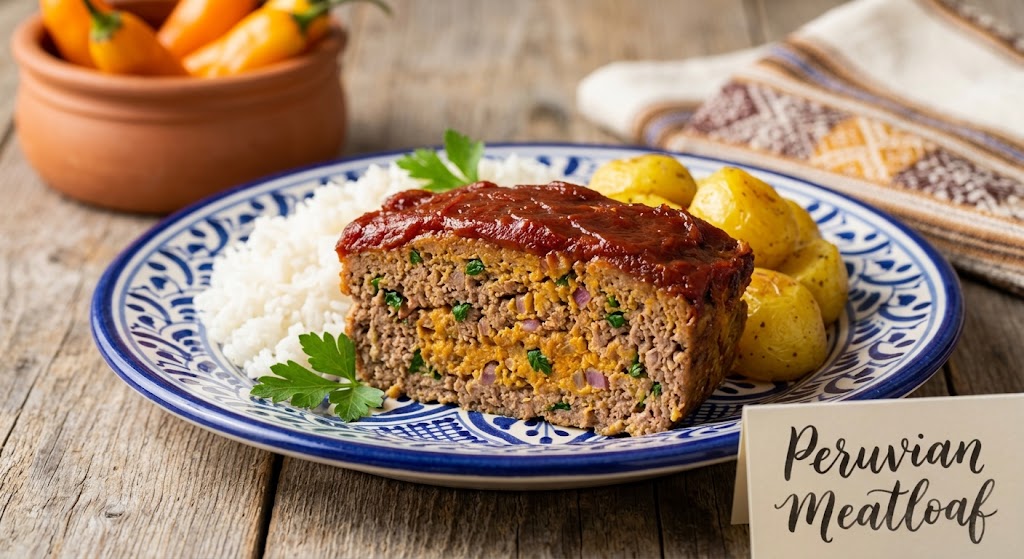
For a complete meal, add rice, potatoes, salad, or avocado.
Peruvian Meatloaf Recipe at a Glance
Prep time: 20 minutes
Cook time: 50–60 minutes
Resting time: 10 minutes
Total time: About 1 hour 20 minutes
Servings: 6
Cuisine: Peruvian-inspired
Main ingredient: Ground beef
Cooking method: Oven-baked
How to Make a Juicy Peruvian Meatloaf
The key to a tender meatloaf is not adding dozens of ingredients. It is mostly about how you handle the mixture and how long you cook it.
First, avoid using extremely lean ground beef. Some fat helps keep the beef moist during baking.
Second, do not skip the milk and breadcrumbs. They work together to create a softer texture.
Third, mix gently. Once everything is combined, stop.
Finally, do not overbake the loaf. Use a food thermometer when possible so you know when the center is ready.
I have found that these simple details matter much more than adding extra ingredients.
Can I Add Ají Amarillo?
Yes. Ají amarillo is a good optional ingredient if you want to give the meatloaf a more noticeable Peruvian flavor.
It has a fruity, slightly spicy taste that works nicely with beef.
For this recipe, one tablespoon is enough to start with. If you enjoy more heat, you can adjust the amount according to your taste.
If you are serving the meatloaf to children or anyone who does not like spicy food, you can leave it out completely.
The recipe will still taste good without it.
What Does Peruvian Meatloaf Taste Like?
This Peruvian-style meatloaf has a savory beef flavor with garlic, onion, cumin, and oregano.
The tomato topping adds a slightly sweet and tangy finish.
If ají amarillo is included, you get a mild fruity heat in the background.
The texture should be tender enough to cut easily but firm enough for the slices to hold their shape.
It is a comforting flavor combination rather than an extremely spicy dish.
What to Serve With Peruvian Meatloaf
You can serve pastel de carne with many simple sides.
White Rice
Plain white rice is an easy choice and works especially well with the tomato topping.
Roasted Potatoes
Roasted potatoes make the meal more filling. Season them with salt, black pepper, garlic, and a little oregano.
Fresh Salad
A simple salad with lettuce, tomato, cucumber, and red onion adds freshness to the plate.
Avocado
Creamy avocado pairs nicely with the savory beef.
Papa a la Huancaína
If you want to add another recognizable Peruvian flavor to the meal, Papa a la Huancaína can be served as a side.
Its creamy sauce and ají amarillo flavor create a nice contrast with the baked beef.
Can I Add Vegetables?
Yes, but keep the amount moderate.
Finely chopped carrots, bell peppers, celery, or mushrooms can be added to the meat mixture.
If you use vegetables with a lot of moisture, it is better to cook them first and allow them to cool before adding them.
Too much moisture can make the meat mixture difficult to shape.
I prefer keeping the vegetables simple because the beef, onion, garlic, and seasonings already provide plenty of flavor.
Can I Add a Boiled Egg?
Yes.
A boiled egg can be placed in the center of the meatloaf before baking.
To do this, place part of the beef mixture in the loaf pan, arrange peeled boiled eggs in the center, and cover them completely with the remaining meat mixture.
When you slice the finished loaf, the egg creates a different look and adds another texture.
This is optional, so you can easily skip it if you prefer a simple meatloaf.
Common Mistakes to Avoid
Overmixing the Beef
Mixing the meat for too long can make the loaf dense.
Once everything is combined, stop.
Using Very Lean Beef
Extremely lean ground beef can produce a drier result.
A moderate amount of fat helps the meat remain tender.
Adding Too Many Breadcrumbs
Breadcrumbs help bind the mixture, but too many can make the texture heavy.
Measure them rather than adding large amounts by eye.
Baking Too Long
Cooking the meatloaf far beyond the time it needs can dry it out.
Use the internal temperature as your main guide.
Cutting It Immediately
Let the meatloaf rest for around 10 minutes before slicing.
Packing the Loaf Too Tightly
Shape the meat gently instead of pressing it firmly into the pan.
How to Store Peruvian Meatloaf
If you have leftovers, allow them to cool and place them in an airtight container.
Keep the meatloaf refrigerated and use it within 3 to 4 days.
For longer storage, individual slices can be wrapped well and frozen.
When reheating, cover the slices so they do not dry out.
A little tomato sauce added before reheating can also help keep the meat moist.
Can I Prepare It Ahead of Time?
Yes.
You can prepare the meat mixture and shape the loaf ahead of time.
Keep it covered in the refrigerator until you are ready to bake it.
This can be helpful when preparing a family lunch or dinner because most of the preparation can be completed earlier.
Keep raw ground beef refrigerated and do not leave the prepared mixture sitting at room temperature for an extended period.
Frequently Asked Questions
What is Peruvian meatloaf called?
Peruvian meatloaf is commonly referred to as pastel de carne or pastel de carne peruano. It is a baked meat dish made with ground meat and ingredients that help bind and flavor the mixture.
Is Peruvian meatloaf the same as American meatloaf?
The basic idea is similar because both use ground meat, binding ingredients, seasonings, and oven baking. The difference comes mainly from the seasonings and preparation style. This version uses ingredients such as cumin, oregano, garlic, and optional ají amarillo for a Peruvian-inspired flavor.
What is the best meat for Peruvian meatloaf?
Ground beef is a good choice because it provides a rich flavor and works well with the other ingredients. A moderately fatty ground beef generally produces a more tender result than very lean beef.
How do you keep meatloaf moist?
Use enough moisture from ingredients such as milk, eggs, breadcrumbs, and onion. Avoid overmixing and overbaking the beef. Letting the loaf rest before slicing also helps.
What temperature should meatloaf be cooked to?
Ground beef meatloaf should reach 160°F (71°C) in the center. A food thermometer is the easiest way to check it.
How long does Peruvian meatloaf take to bake?
A loaf of this size usually takes around 50 to 60 minutes at 375°F (190°C), although the actual time can vary depending on its thickness and shape.
Can I make Peruvian meatloaf without ají amarillo?
Yes. Ají amarillo is optional in this recipe. The beef, garlic, onion, cumin, and oregano still give the meatloaf plenty of flavor.
What can I serve with pastel de carne?
White rice, roasted potatoes, fresh salad, avocado, or Papa a la Huancaína are all good options.
Why does my meatloaf fall apart?
The mixture may not have enough binding ingredients, or the loaf may have been cut before it had time to rest. Eggs and breadcrumbs help the meatloaf hold together.
Final Thoughts
I really like this Peruvian meatloaf because it is the kind of food that feels homemade without requiring a lot of work.
The ground beef gives it a rich base, while onion, garlic, cumin, and oregano build the flavor. Adding a little ají amarillo gives the recipe a subtle Peruvian touch, and the simple tomato topping brings everything together.
It is not necessary to call pastel de carne one of Peru’s most famous national dishes. Instead, I think its value is in showing another side of Peruvian home cooking—simple, filling food that can be prepared for the family and adapted to personal taste.
If you are looking for an easy Peruvian meatloaf recipe, give this version a try. Serve it with warm rice, potatoes, salad, or avocado, let the loaf rest before slicing, and you will have a comforting homemade meal that is easy to enjoy.

2 Comments
Pingback: How to Cook Hot Dogs: Easy Methods, Tips, and Delicious Styl
Pingback: Peru Food for Christmas: 12 Traditional Peruvian Dishes