
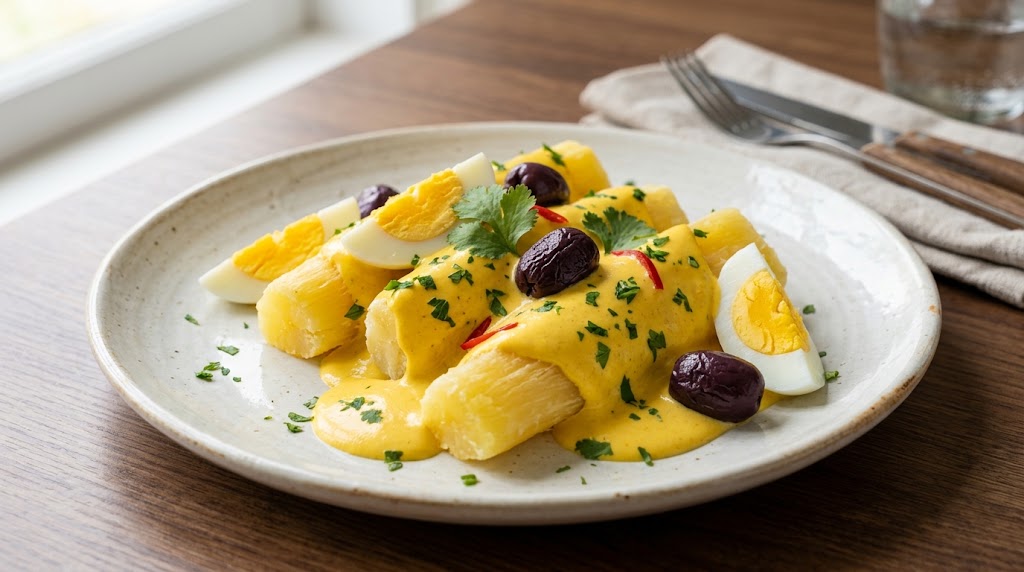
Prep Time: 15 minutes | Cook Time: 40 minutes | Total Time: 55 minutes | Servings: 4
I first had yuca a la huancaína recipe at a small Peruvian place near my old apartment, and honestly I almost didn’t order it because I assumed it would just taste like a heavier version of papa a la huancaína. It doesn’t. Yuca has this dense, slightly nutty bite that holds up better under the sauce than potato does, and once you try it you might end up making it more often than the original.
The sauce — huancaína sauce — comes from Huancayo, up in the central highlands. It’s built around ají amarillo, Peru’s yellow chili, blended with cheese and milk until it’s smooth and a little tangy. Traditionally it goes over sliced boiled potatoes, but yuca is a common swap, especially in households closer to the coast or the jungle where cassava is easier to find than good potatoes.
Where This Dish Actually Comes From
Most Peruvian cookbooks trace huancaína sauce back to workers building the railway near Huancayo in the 1800s, who were supposedly sold potatoes covered in a cheese-and-chili sauce by local women as a quick, cheap lunch. Whether that story is exactly true or has been polished over the years, it’s the version most Peruvian home cooks grew up hearing, and it explains why the dish still feels like something built for feeding people well without much fuss.
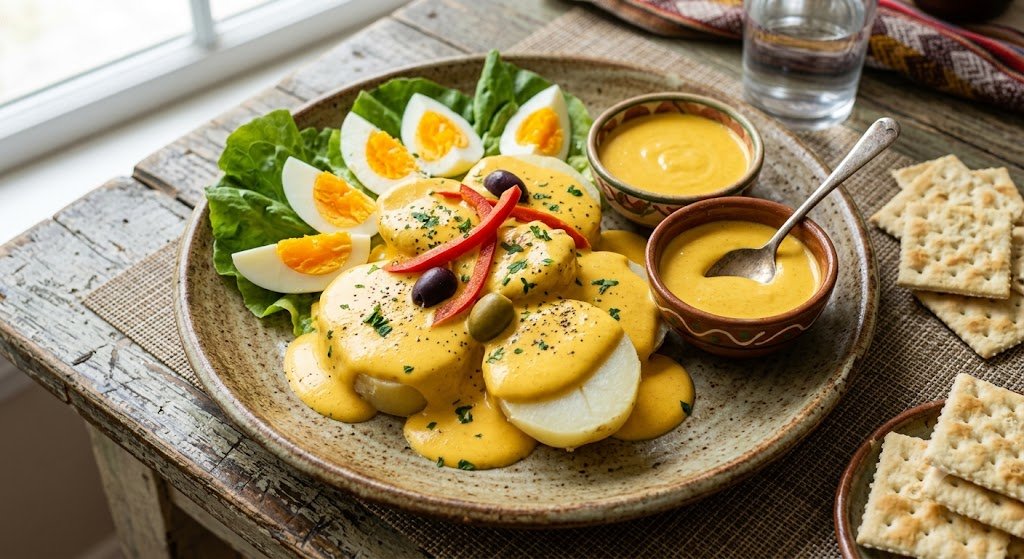
Swapping in yuca isn’t some modern twist — it’s just what happens naturally in regions where cassava grows more easily than potatoes. Coastal and Amazonian households have been doing this for a long time. If you ask around, you’ll find plenty of Peruvian families where yuca a la huancaína is the version they grew up eating, not papa.
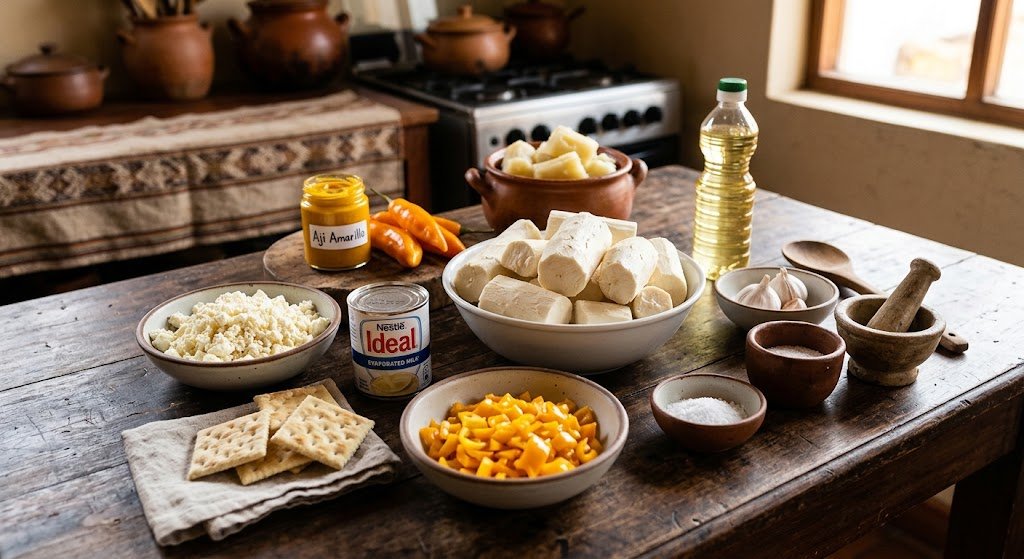
Yuca a la Huancaína recipe Ingredients
Yuca:
- 1 kg (2.2 lbs) yuca, fresh or frozen, peeled and cut into 3-inch chunks
- 6 cups water
- 1 tbsp salt
Huancaína Sauce:
- 3 tbsp vegetable oil, divided
- 2 ají amarillo peppers, seeded and chopped (or 3 tbsp ají amarillo paste — this is what I use most of the time)
- 2 garlic cloves
- 1½ cups (roughly 200g) queso fresco, crumbled
- ½ cup evaporated milk
- 4–5 saltine crackers, only if the sauce needs thickening
- Salt, to taste
To Serve:
- 2 hard-boiled eggs, sliced
- 8–10 black olives, botija if you can find them
- A few lettuce leaves
- Chopped parsley or cilantro (optional)
Quick note on substitutions: queso fresco isn’t always easy to find outside Latin American grocery stores, so ricotta or a mild farmer’s cheese will get you close enough. Ají amarillo paste keeps in the fridge for weeks, so if you cook Peruvian food even occasionally, it’s worth having a jar around instead of hunting for fresh peppers every time.
How to Make It
Cook the yuca first.
Peel it — the skin is thicker and tougher than a potato’s, so cut a shallow line down the length and work the peeler under it rather than trying to shave it off directly. Chop into 3-inch pieces, cover with the water in a large pot, add the salt, and bring to a boil. Drop it to a simmer and let it go for 30 to 35 minutes. Test with a fork around the 30-minute mark; some pieces cook faster than others depending on thickness.
Once it’s tender, drain it and let it sit for five minutes before touching it — it’s easier to work with once it’s cooled slightly. Check each piece for a thin, fibrous core running through the middle. Not every piece has one, but when it’s there, it needs to come out with a knife, because it stays tough no matter how long you boil it.
Make the sauce while the yuca cooks.
Heat a tablespoon of oil in a small pan and cook the ají amarillo and garlic for two or three minutes, just until it softens and smells less raw. Let it cool a bit, then dump it into a blender with the queso fresco, evaporated milk, remaining oil, and a small pinch of salt. Blend until smooth — about a minute.
Check the texture. If it’s too loose to coat a spoon, add a couple of crackers and blend again; they thicken it up without really changing the flavor. If it’s too thick, splash in more milk a little at a time. Taste it before adding extra salt — queso fresco is salty on its own and it’s easy to overdo it.
Put it together.
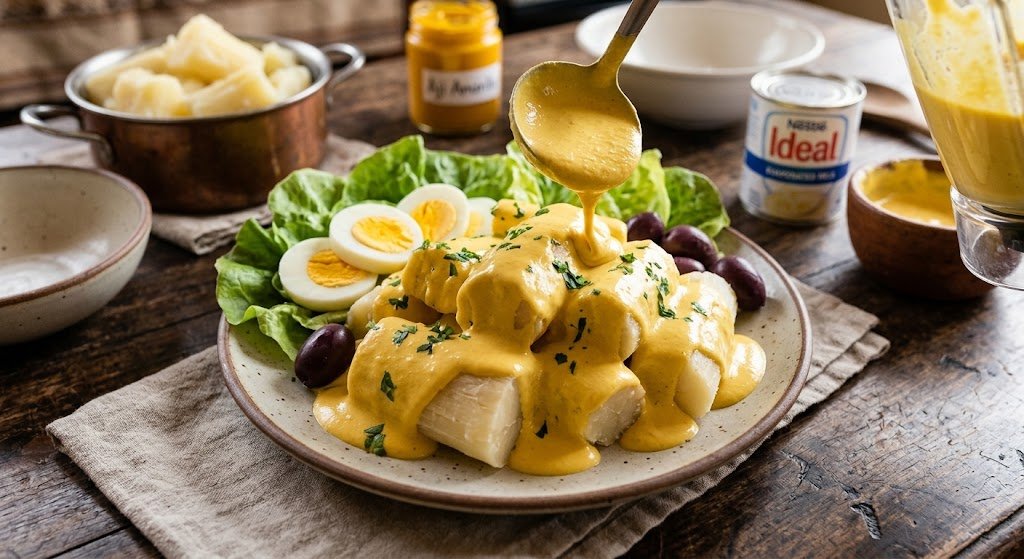
Arrange the yuca on a plate, spoon the sauce over generously (don’t be shy — it should really coat the pieces), then add the egg, olives, and lettuce. A little parsley on top if you want. Serve it warm, or let it sit until it’s closer to room temperature, which honestly might be my preference — the sauce tastes a bit more balanced once it’s not piping hot.
Mistakes I’ve Made With This Recipe (So You Don’t Have To)
The first time I made this, I boiled the yuca way too long because I was multitasking and lost track of time. It went from tender to falling-apart mush in about five minutes flat — yuca doesn’t give you much warning. Now I set a timer and start checking at the 25-minute mark instead of waiting until I think it’s probably done.
Second mistake: I didn’t know about the fibrous center the first few times I cooked yuca, and served a plate with that tough string still in a couple of pieces. It’s not dangerous, just unpleasant to bite into, kind of like chewing on a thread. Worth the extra thirty seconds to check each piece.
I also used to add all the evaporated milk into the blender at once, which usually left me with a sauce closer to soup. Pouring it in gradually and stopping once it looks right has fixed that for good.
A Few Other Things I’ve Learned Making This
The fibrous center isn’t always obvious until you cut into the piece, so check before you plate rather than after — nobody wants to bite into that at the table.
If you’re using frozen yuca, it’s usually already peeled and often cooks a bit faster than fresh — check the bag, but start checking for doneness around the 20-minute mark instead of 30.
The sauce actually tastes better after it’s had ten or fifteen minutes to sit. Straight out of the blender it can taste a little flat; once the flavors settle it rounds out more.
Fresh vs. Frozen Yuca
Fresh yuca has a slightly better texture once it’s cooked, but the peeling is annoying and it takes longer. Frozen yuca is genuinely fine for this recipe and saves a good chunk of prep time — I keep a bag in the freezer for exactly this reason. Nobody at the table has ever noticed the difference.
One thing worth knowing: not all frozen yuca is created equal. Some brands cut it thicker than others, which changes the cooking time by ten minutes or more. If it’s your first time with a particular brand, just start testing earlier than the package says.

A Couple of Variations Worth Trying
If you want something with more texture, fry the boiled yuca in a bit of oil until the edges go golden and slightly crisp before adding the sauce. It’s a different dish at that point, closer to yuca fries with huancaína on the side rather than over the top, but it’s worth doing at least once.
For a spicier version, don’t seed the ají amarillo, or add a small piece of rocoto pepper into the blender along with everything else. It changes the heat level noticeably, so start with a small amount and taste as you go.
What Goes Well With It
This works as a starter before something like lomo saltado or grilled chicken, or just as a side next to any roasted meat — the sauce is rich enough that it doesn’t need much competition. If you’re serving a full spread, a simple salad with a sharp vinaigrette cuts through the richness nicely.
Storing Leftovers
Keep the yuca and sauce in separate containers — if you store them together, the yuca gets soggy overnight. Both will keep about 3 days in the fridge. Reheat the yuca gently (microwave works fine); the sauce can go back on cold or sit out for ten minutes to take the chill off.
Questions People Ask
Is yuca the same thing as cassava?
Yes, same root vegetable, different name depending on where you’re from.
Can I use frozen yuca?
Yes — it’s what I use half the time. Just watch the cooking time since it tends to go faster than fresh.
No queso fresco — what else works?
Ricotta or a mild farmer’s cheese. It won’t be identical but it gets close.
Is it spicy?
Mild-to-medium, depending on how much ají amarillo you use. Pull the seeds and ribs out if you want to keep it gentle.
Can the sauce be made ahead?
Yes, a day ahead is fine. It thickens in the fridge, so stir in a splash of milk before serving.
What’s the difference between this and papa a la huancaína?
Just the base — potatoes versus yuca. Same sauce, same garnishes, different texture underneath.
Final Thoughts
I keep coming back to this recipe mostly because it’s forgiving. The yuca doesn’t need to be perfectly shaped, the sauce doesn’t need to be restaurant-smooth, and even if you get the consistency slightly wrong the first time, it still tastes like something worth eating. That’s probably why it’s stuck around in so many Peruvian kitchens for as long as it has — it’s not fussy food, it’s just good food that happens to look a little impressive on a plate.
If you’ve only ever had the potato version, give this one a shot before you decide which you prefer. And if you’re new to Peruvian cooking altogether, this is a reasonable place to start — the ingredient list is short, nothing here requires special equipment, and the payoff is bigger than the effort it takes to get there.

1 Comment
Pingback: Yuca a la Huancaina Recipe: A Creamy Peruvian Classic – peruvianspicy