
Christmas in Peru is a special time for families, and food is a big part of the celebration. Peru food for Christmas brings together roasted meats, flavorful rice, fresh salads, sweet sides, panetón, and a warm cup of chocolate. Many families prepare their main meal on Christmas Eve, known as Nochebuena, and spend the evening eating, talking, and celebrating together. While every family has its own recipes, several dishes have become closely connected with a traditional Peruvian Christmas.
What Is Christmas Food in Peru Like?
Christmas dinner in Peru is usually a bigger and more carefully prepared meal than an everyday dinner. Families often spend hours preparing the meat and side dishes, especially when many relatives are coming over.
The main dish is often roasted turkey, called pavo navideño, or roast pork, known as lechón. These are usually served with rice, salads, potatoes, or sweet purées. After the main meal, panetón and hot chocolate are often enjoyed together.
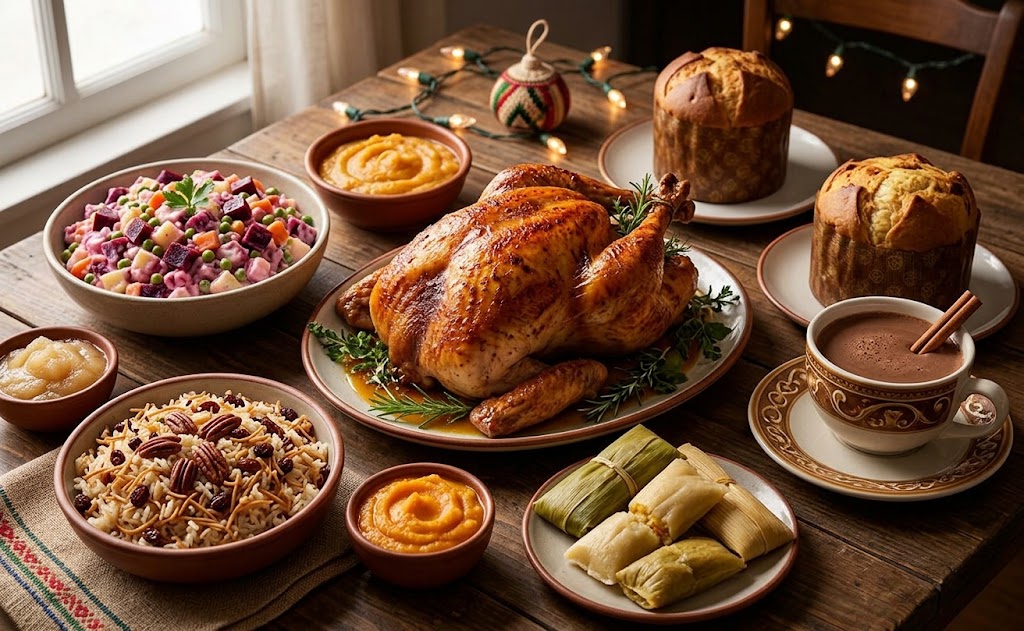
One thing I like about a Peruvian Christmas menu is the balance of flavors. You can have savory roasted meat next to sweet apple purée, raisins in the rice, and a slice of sweet panetón afterward. Nothing has to be overly complicated, but the complete meal feels festive.
Of course, there is no single Christmas menu that every Peruvian family follows. Recipes change between regions and families, and many people continue dishes that their parents or grandparents made.
12 Traditional Peru Food for Christmas
If you are planning a Peruvian Christmas meal or simply want to learn about the country’s holiday traditions, these dishes are a great place to start.
1. Pavo Navideño — Peruvian Christmas Turkey
Pavo navideño is one of the most familiar main dishes on a Peruvian Christmas table. A whole turkey is seasoned and roasted until the skin is browned and the meat is tender.
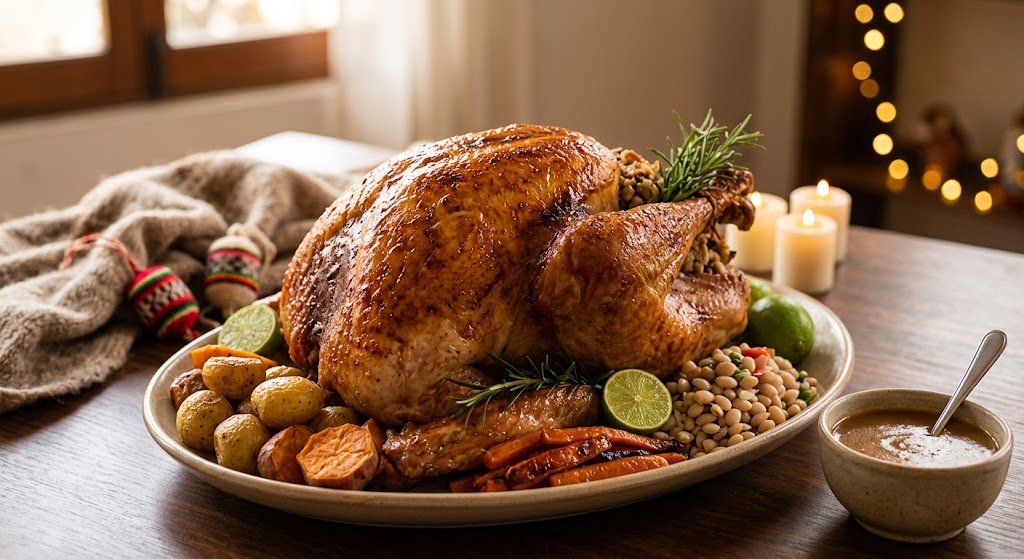
The seasoning can vary from one family to another. Garlic, cumin, black pepper, herbs, soy sauce, citrus juice, and other seasonings are often used to build flavor. Many cooks prefer to marinate the turkey the night before because it gives the seasoning more time to work into the meat.
How to Prepare Peruvian Christmas Turkey
- Pat the turkey dry and prepare it for roasting.
- Mix garlic, spices, herbs, and your chosen liquid ingredients into a marinade.
- Rub the marinade over the turkey, including under the skin where possible.
- Cover the turkey and refrigerate it overnight.
- Take it out before cooking so it is not ice-cold when it goes into the oven.
- Roast according to the turkey’s size and your recipe.
- Baste it occasionally with the juices from the roasting pan.
- Check that the thickest parts have reached a safe internal temperature.
- Let the turkey rest before carving.
- Slice and serve with your Christmas side dishes.
Do not rush the resting stage. Giving the turkey time to rest helps the meat stay juicy when you cut it.
2. Lechón — Peruvian Christmas Roast Pork
If turkey is not your family’s favorite lechón is an excellent Christmas choice. Lechón means roasted pork, and it is enjoyed for celebrations and large family gatherings.
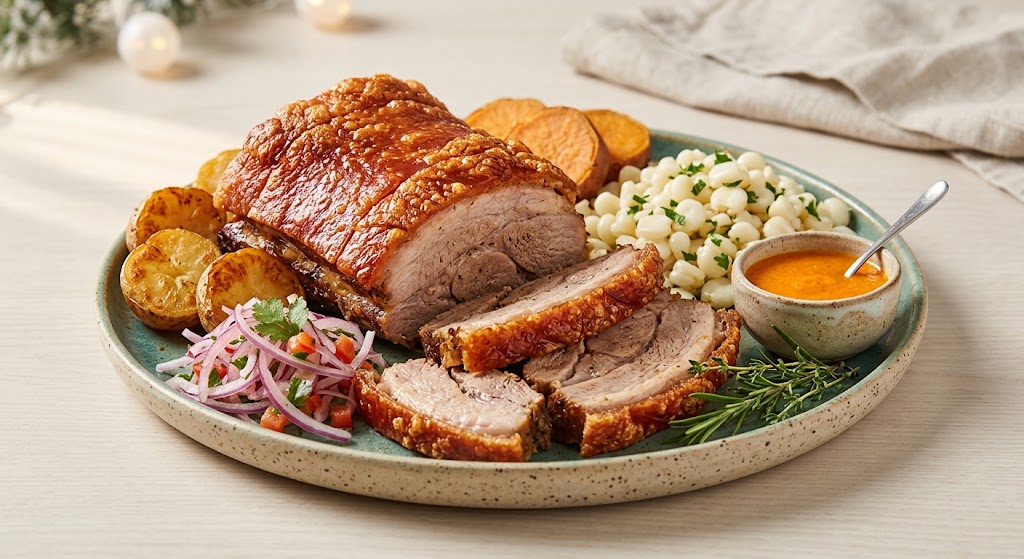
The pork is normally seasoned generously before roasting. Garlic, cumin, pepper, herbs, and other spices can give it a deep, savory taste. Slow roasting helps the meat become tender while the outside develops a delicious browned surface.
How to Prepare Lechón
- Choose a good-sized piece of pork suitable for roasting.
- Make a few shallow cuts in the meat.
- Prepare a marinade with garlic, spices, herbs, and other ingredients.
- Rub the mixture thoroughly over the pork.
- Cover and refrigerate it for several hours or overnight.
- Place the pork in a roasting pan.
- Roast slowly until it is tender and fully cooked.
- Increase the oven temperature toward the end if you want more browning.
- Rest the meat before slicing.
- Serve with rice, potatoes, salad, or purée.
Lechón is particularly practical for a large gathering because one roast can provide plenty of servings.
3. Arroz Árabe — A Festive Peruvian Rice Dish
Arroz árabe is a popular side dish for festive meals in Peru. It is especially good with turkey and roast pork because it adds both texture and a little sweetness to the plate.
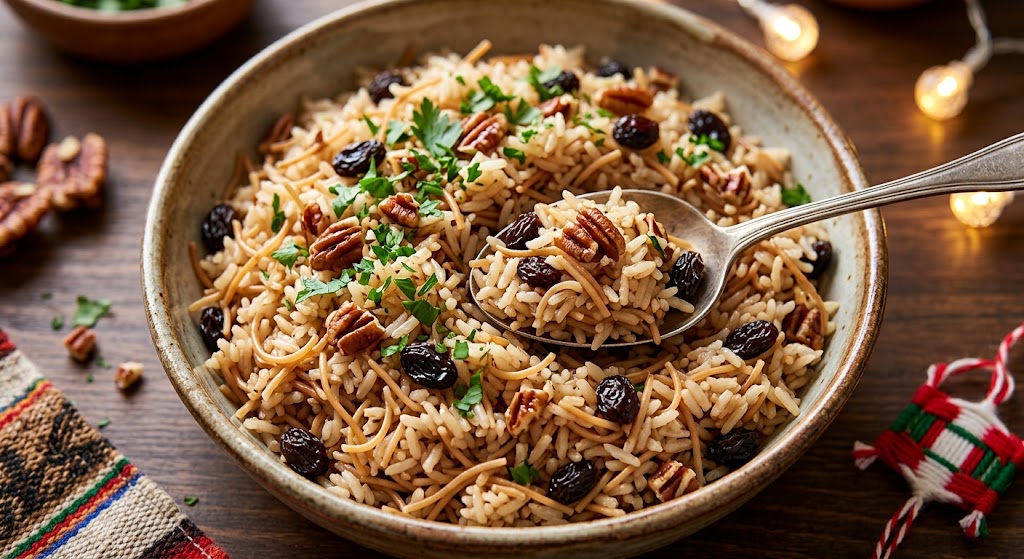
The basic dish combines rice with toasted noodles, raisins, and often nuts. The noodles are browned first, which gives them a pleasant toasted flavor. Raisins add small bursts of sweetness, while nuts provide crunch.
How to Make Arroz Árabe
Start by heating a little oil in a pot and lightly browning the noodles. Add the rice and stir it for a short time so it picks up some of that toasted flavor.
Add the cooking liquid and seasonings, then cover and cook until the rice is tender. Raisins can be added during cooking or mixed in afterward. Toasted nuts are best added near the end so they keep some of their crunch.
The result should be fluffy rice rather than a wet or sticky dish.
4. Ensalada Rusa — Peruvian Russian Salad
Ensalada rusa is a creamy vegetable salad that is often served alongside rich Christmas dishes. The usual ingredients include potatoes, carrots, beets, peas, and mayonnaise.
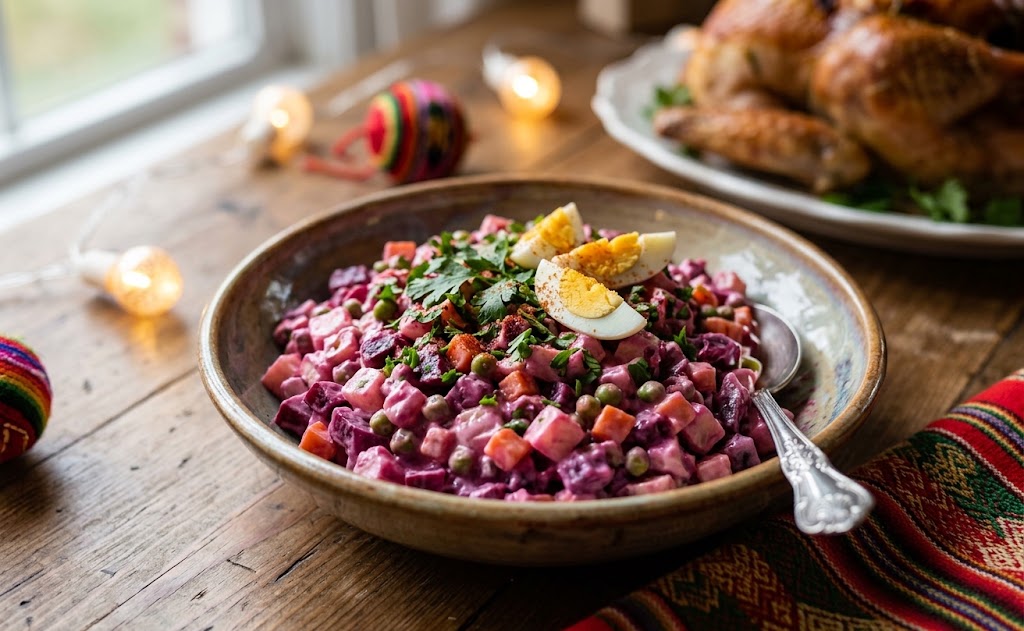
The deep purple color from the beets makes it look especially attractive on a holiday table. It is also served cold, so it provides a nice contrast to freshly roasted turkey or pork.
How to Make Ensalada Rusa
- Peel the potatoes and carrots.
- Cut them into small, even pieces.
- Boil them separately or together until tender.
- Cook the beets separately.
- Allow the vegetables to cool completely.
- Cut the beets into small pieces.
- Add peas if you like.
- Mix everything gently with mayonnaise.
- Season with salt to taste.
- Refrigerate before serving.
The trick is not to overcook the vegetables. If they become too soft, the salad can turn mushy when mixed.
5. Puré de Manzana — Apple Purée
Apple purée is a simple sweet side that pairs surprisingly well with roasted meat. The mild sweetness works particularly nicely with salty turkey or rich pork.
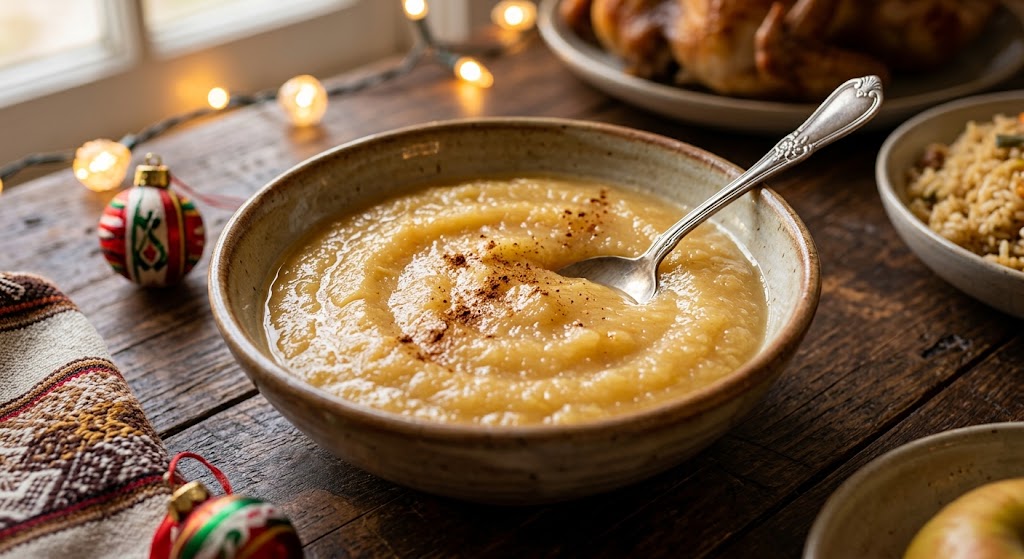
To make it, peel and chop fresh apples and cook them with a small amount of water until soft. Mash them with a fork or blend them if you prefer a smoother texture.
Cinnamon can be added for extra warmth, although it is not necessary. Some families prefer the natural taste of the apples without adding much sugar.
This is also a convenient dish to make ahead because it can be refrigerated until dinner.
6. Puré de Camote — Sweet Potato Purée
Sweet potatoes, known as camote in Peru, can also be served as part of a festive meal. Their natural sweetness makes them a good match for savory roasted meat.
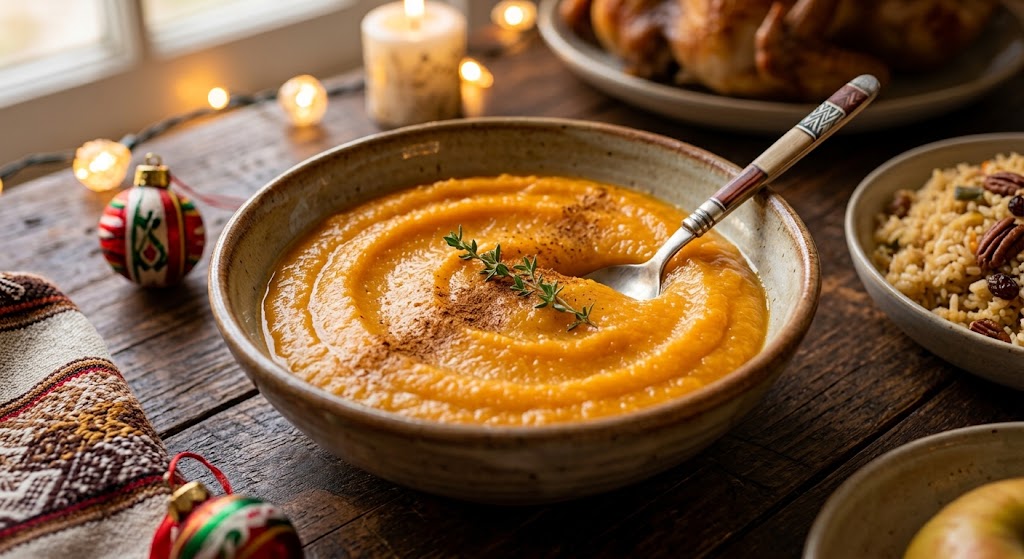
The preparation is straightforward. Boil or bake the sweet potatoes until completely tender, remove the skin, and mash the flesh.
For a richer purée, mix in a little butter and milk. A small amount of cinnamon or nutmeg can be added if you enjoy a warmer, sweeter flavor.
When serving it with pork, I would keep the purée only mildly sweet. The natural sweetness of the camote is usually enough.
7. Humitas Peruanas
Humitas are a traditional Peruvian food made mainly from fresh corn. They are prepared by grinding or blending corn into a soft mixture, which is then wrapped in corn husks and steamed.
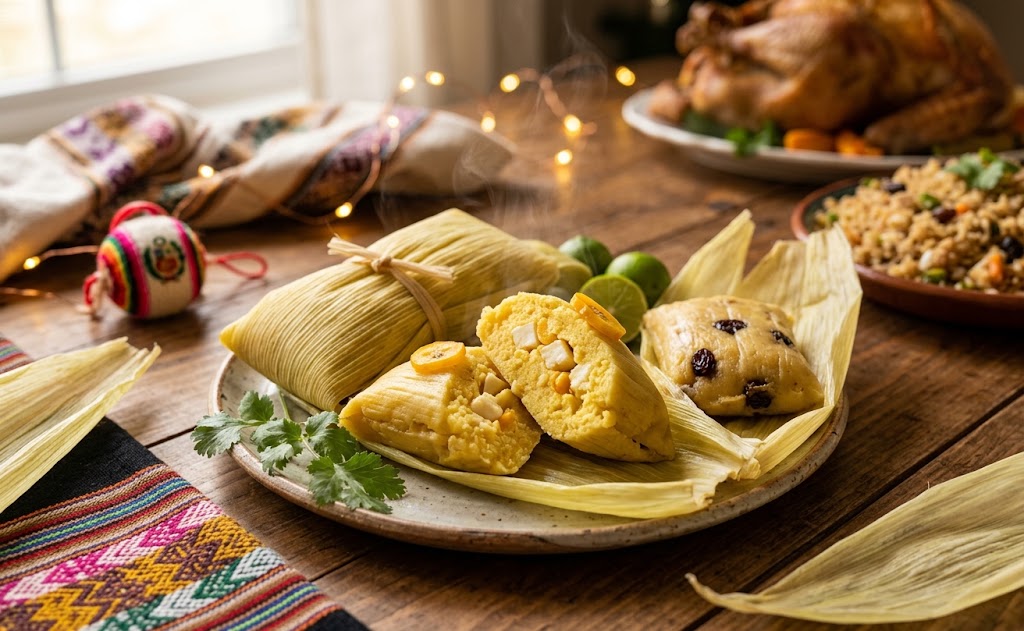
Humitas can be savory or sweet. The recipe can also change depending on the region and family.
They take more preparation than a simple salad, but they are worth trying if you want something deeply connected to traditional Peruvian cooking.
How Humitas Are Prepared
Fresh corn is prepared into a soft mixture and seasoned according to the recipe. A portion is placed inside a clean corn husk, which is then folded around the mixture.
The wrapped humitas are arranged in a steamer and cooked until the corn mixture becomes firm.
Making humitas can be a family activity because preparing and wrapping them takes some time. That is one reason they feel especially appropriate for a holiday meal.
8. Tamales Peruanos
Tamales are another traditional food that can appear during special celebrations in Peru. Peruvian tamales are usually made from corn dough and filled with ingredients such as chicken, pork, olives, eggs, or seasonings.
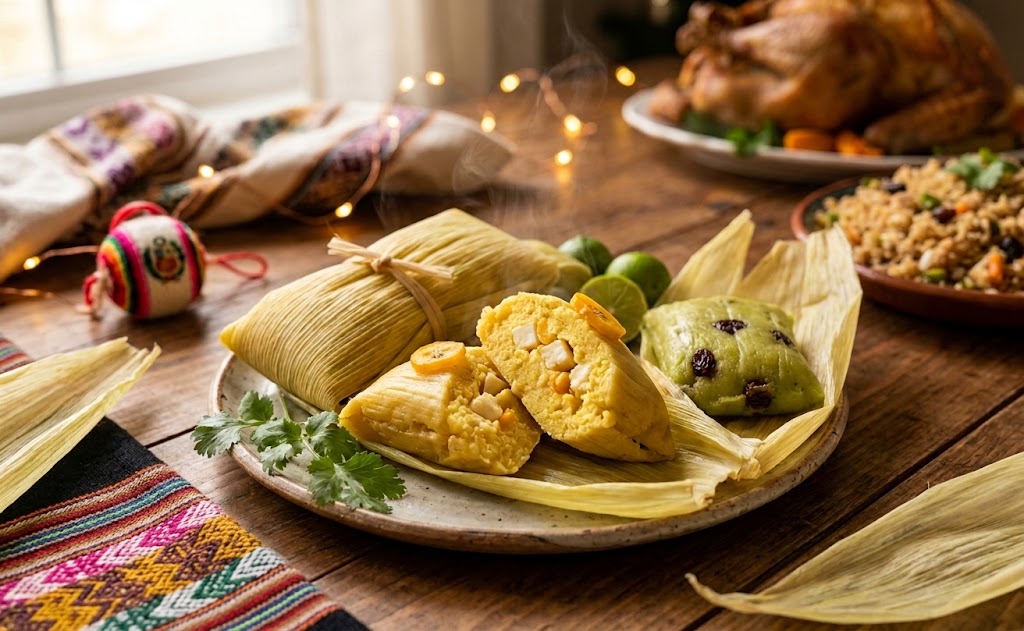
The filling is placed inside the prepared dough, which is wrapped in leaves and steamed.
Tamales take some effort, but the process becomes easier when several people help. One person can prepare the dough while another works on the filling and wrapping.
If you are making them for Christmas, it is a good idea to prepare them earlier in the day so you are not trying to cook everything at the last minute.
9. Panetón — Peru’s Favorite Christmas Bread
For many people, Christmas in Peru would not feel complete without panetón.
Panetón is a tall, soft, sweet bread traditionally filled with raisins and candied fruit. Although the bread has Italian origins, it has become a major part of Christmas celebrations in Peru.
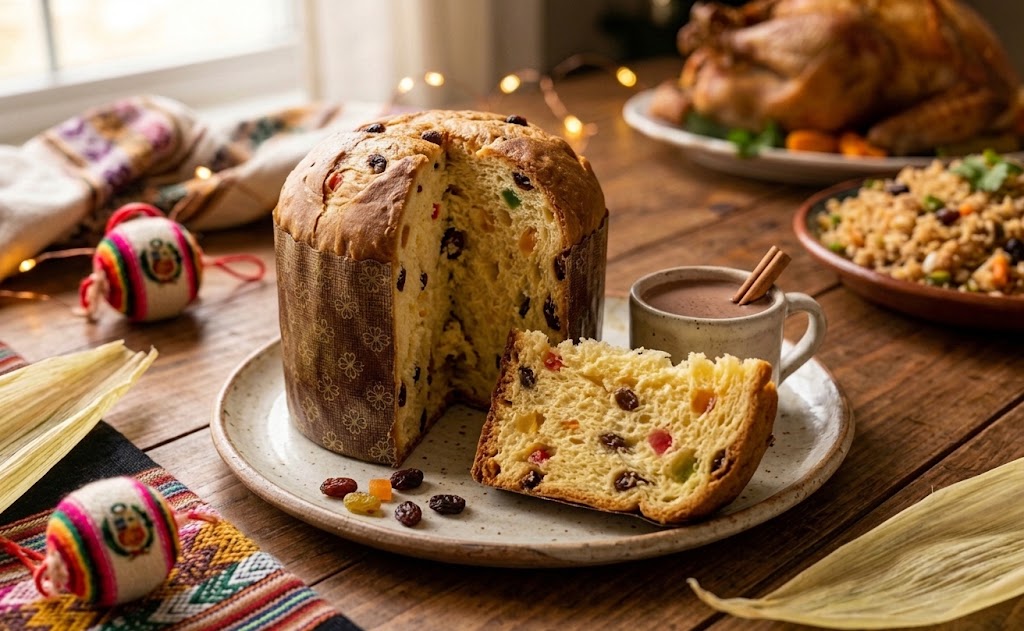
During December, panetón is everywhere. Families buy it from supermarkets and bakeries, and it is often shared with relatives and friends.
The most popular way to enjoy it is with hot chocolate. A thick slice of panetón and a warm drink make a simple combination that works especially well during a late-night Christmas celebration.
You can serve panetón at room temperature, or warm it slightly if you prefer it soft and fragrant.
10. Chocolate Caliente Peruano
One of the most interesting parts of Peruvian Christmas food is hot chocolate. It may seem strange to drink a hot beverage during December because Peru celebrates Christmas in summer, but the tradition remains very popular.
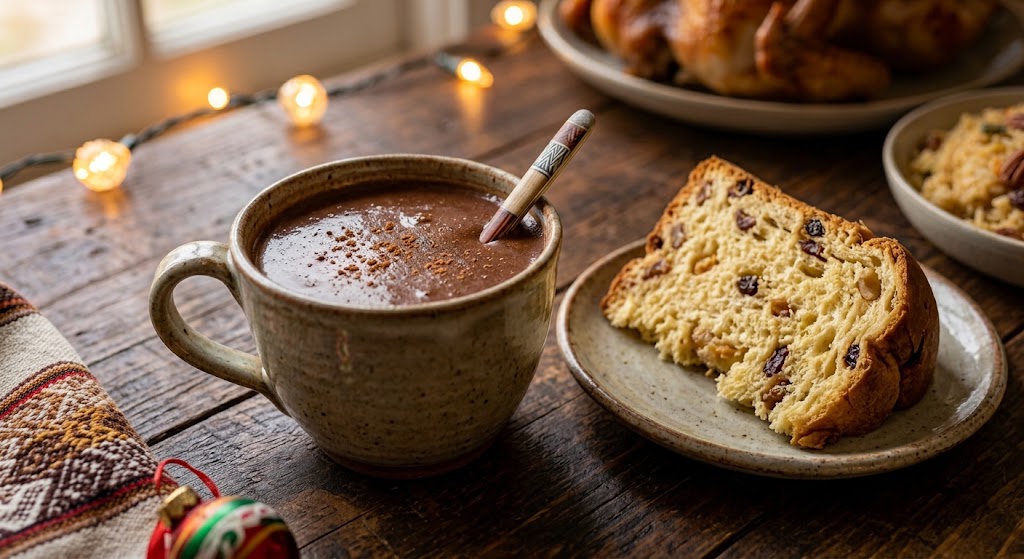
Peruvian hot chocolate is usually richer than a simple cocoa drink. Depending on the recipe, it may contain chocolate, milk, cinnamon, cloves, sugar, and evaporated milk.
How to Make Peruvian Hot Chocolate
- Pour milk into a saucepan.
- Add chopped chocolate.
- Heat gently while stirring.
- Add a cinnamon stick and a few cloves if desired.
- Keep stirring until the chocolate has completely melted.
- Add sugar according to your taste.
- Continue heating without allowing the milk to boil aggressively.
- Remove the spices before serving.
Serve it hot with slices of panetón.
This combination is one of the easiest ways to bring a little Peruvian Christmas tradition into your own kitchen.
11. Mazamorra Morada
Mazamorra morada is a classic Peruvian dessert made with purple corn. It has a thick texture, deep purple color, and a fruity, spiced flavor.
Purple corn is cooked with fruits and spices, then thickened until it reaches a pudding-like consistency. Cinnamon and cloves are commonly used to give it a warm aroma.
Mazamorra morada is not only a Christmas dessert, but it can fit beautifully into a Peruvian holiday menu. If you already have a rich main course, its fruity flavor provides a different finish from heavier desserts.
12. Regional Peruvian Christmas Foods
There is no single recipe book that defines Christmas in every part of Peru. The country’s geography and cultural history have created many different food traditions.
Coastal families may have menus centered around turkey or pork. In the Andes, local ingredients and regional dishes can play a bigger role. Families may also continue recipes that are specific to their hometown.
Some people may include traditional foods such as cuy or other regional dishes during the holiday season, while others prefer the more familiar Christmas menu of turkey, rice, salads, panetón, and chocolate.
That variety is an important part of Peruvian food culture. A dish does not have to appear on every Christmas table to be authentic.
What Is a Traditional Peruvian Christmas Dinner?
A traditional Peruvian Christmas dinner often includes several dishes served together rather than one main food.
A family menu might look like this:
- Main dish: Pavo navideño or lechón
- Rice: Arroz árabe
- Salad: Ensalada rusa
- Side: Apple or sweet potato purée
- Dessert: Panetón
- Drink: Chocolate caliente
Some families may add tamales, humitas, regional dishes, or their own favorite recipes.
The important thing is not to make every dish listed here. Christmas cooking can already be a lot of work. Choosing three or four dishes that your family enjoys is enough to create a festive meal.
Peruvian Christmas Eve Food and Nochebuena
When people talk about Christmas food Peru, they are often talking about the food served during Nochebuena, or Christmas Eve.
December 24 is an important family evening. People gather together, finish preparing the meal, and spend time with relatives before Christmas arrives.
Dinner may be served late, depending on the family’s tradition. After the meal, panetón and hot chocolate can be served while everyone continues talking and celebrating.
For children, the evening can also be filled with excitement because Christmas gifts and the midnight celebration are part of the night.
The exact timing and traditions vary from one household to another, but the family meal remains an important part of the celebration.
Christmas Food Peru vs. Christmas Food Bolivia
Peru and Bolivia have several similarities when it comes to Christmas food. Both countries have strong family traditions, and dishes such as roast pork, turkey, panetón, and hot chocolate can be found during the holiday season.
However, the two countries also have their own specialties.
In Peru, Christmas tables commonly feature turkey or lechón with dishes such as arroz árabe and ensalada rusa. Panetón and hot chocolate are also strongly associated with the season.
Christmas food in Bolivia can include picana, a traditional festive soup made with meat and vegetables, as well as roast pork or turkey. Panetón and hot chocolate are also enjoyed, and buñuelos may be served as a sweet treat.
| Peru | Bolivia |
| Pavo navideño | Turkey |
| Lechón | Roast pork |
| Arroz árabe | Picana and other regional sides |
| Ensalada rusa | Regional salads and sides |
| Panetón | Panetón |
| Chocolate caliente | Hot chocolate |
| Regional Peruvian dishes | Regional Bolivian dishes |
There is no need to decide which country’s food is better. Both have developed their own Christmas traditions, and both show how food can bring families together.
How to Make a Peruvian Christmas Dinner at Home
You do not need a huge menu to enjoy a Peruvian-style Christmas dinner. If this is your first time making these foods, keep things manageable.
A simple menu could include:
Main: Roasted turkey or lechón
Rice: Arroz árabe
Salad: Ensalada rusa
Sweet side: Apple purée
Dessert: Panetón
Drink: Chocolate caliente
One Day Before
Buy and organize all your ingredients. If you are making turkey or pork, prepare the marinade and refrigerate the meat.
You can also cook some vegetables for the salad ahead of time.
Christmas Eve Morning
Prepare the dishes that can be stored safely. Make the salad and purée, and measure the ingredients for the rice.
Doing this early leaves you with less work later.
Christmas Eve Afternoon
Start cooking the turkey or pork based on its size and recipe. While the main dish is cooking, prepare the rice and finish the side dishes.
Try not to leave everything until the final hour. A little planning makes the evening much more enjoyable.
Christmas Eve Evening
Set the table and make sure the side dishes are ready.
Once the turkey or pork is cooked, let it rest before carving. Serve the main dish with rice, salad, and purée.
Later, bring out the panetón and prepare the hot chocolate.
Tips for Making Authentic Peruvian Christmas Food
You do not need expensive ingredients or professional cooking equipment to make a good Peruvian Christmas meal. A few simple habits can make a big difference.
Prepare the meat early. Marinating turkey or pork overnight gives the seasoning more time to develop.
Keep vegetables firm. Overcooked potatoes and carrots can make ensalada rusa soft and watery.
Taste as you cook. Rice, purées, and sauces should be adjusted before they reach the table.
Balance the plate. Rich meat tastes better when served with lighter or slightly sweet sides.
Do not rush the turkey. Cooking time depends on the size of the bird, so use a food thermometer rather than relying only on appearance.
Use good chocolate. The hot chocolate is simple, so the quality of the chocolate can make a noticeable difference.
Make room for family recipes. Authentic Peruvian food does not mean every family has to use exactly the same recipe. Small differences are part of the tradition.
Frequently Asked Questions About Peru Food for Christmas
What is the most popular Christmas food in Peru?
Roasted turkey is one of the most common Christmas main dishes in Peru. Lechón, or roast pork, is another popular choice. The main dish is usually served with rice, salads, purées, and other sides.
What do Peruvians eat on Christmas Eve?
Many families enjoy their main Christmas meal on December 24, during Nochebuena. Turkey or pork may be served with arroz árabe, ensalada rusa, sweet sides, panetón, and hot chocolate.
What is a traditional Peruvian Christmas dinner?
A traditional Peruvian Christmas dinner can include pavo navideño or lechón, arroz árabe, ensalada rusa, apple or sweet potato purée, panetón, and chocolate caliente.
Do Peruvians eat turkey for Christmas?
Yes. Turkey is widely associated with Christmas celebrations in Peru, although many families choose roast pork or regional dishes instead.
Why do Peruvians drink hot chocolate at Christmas?
Hot chocolate has become a well-known Christmas tradition in Peru. It is commonly served with panetón during family gatherings and holiday celebrations.
What is panetón in Peru?
Panetón is a sweet bread containing raisins and candied fruit. It has Italian origins but has become an important part of Christmas traditions in Peru.
What is Christmas food in Bolivia?
Bolivian Christmas food can include picana, roast pork, turkey, panetón, hot chocolate, and buñuelos. The exact menu can vary by region and family.
What is the difference between Peruvian and Bolivian Christmas food?
Both countries share some Christmas foods, but their traditional menus are different. Peruvian meals often feature turkey or lechón with arroz árabe and ensalada rusa, while Bolivia is known for festive dishes such as picana.
Final Thoughts
Peru food for Christmas is a beautiful mix of family tradition, comforting food, and festive flavors. A Peruvian Christmas table can have a roasted turkey or lechón in the center, flavorful arroz árabe on the side, a colorful Russian salad, and sweet purées to balance the meal.
Then comes the part many people look forward to most: panetón with a cup of creamy hot chocolate.
What makes these foods special is not simply the ingredients. It is the tradition behind them. Recipes are shared between generations, families gather in the kitchen, and everyone brings something to the Christmas table.
You do not need to cook all 12 dishes to experience it yourself. Start with a simple combination of turkey or pork, arroz árabe, ensalada rusa, panetón, and chocolate caliente. Once you get comfortable with those, you can explore more regional Peruvian Christmas recipes and make the celebration your own.
