
Peru’s big-name dishes — ceviche, lomo saltado, pollo a la brasa — get the spotlight, but the country’s snack culture is where a lot of the everyday cooking happens. These are the foods sold from carts outside markets, wrapped in paper at bus stops, or made in someone’s kitchen because it’s a Tuesday and there’s leftover corn. Corn, potato, cassava, plantain, and fresh cheese show up again and again, not because Peruvian cooks lack imagination, but because these ingredients are genuinely everywhere in Peru — the country grows thousands of native potato varieties and dozens of corn types, so it would be strange if they didn’t dominate the snack table.
Below are 20 of the most traditional ones, with a sense of where they come from and why people keep making them.
What Makes Peruvian Snacks Special?
Peruvian cooking is a layered thing — Indigenous Andean and coastal traditions form the base, and centuries of Spanish, African, Chinese (chifa), and Japanese (nikkei) influence sit on top of it. You can taste that history in the snacks as much as in the main dishes.
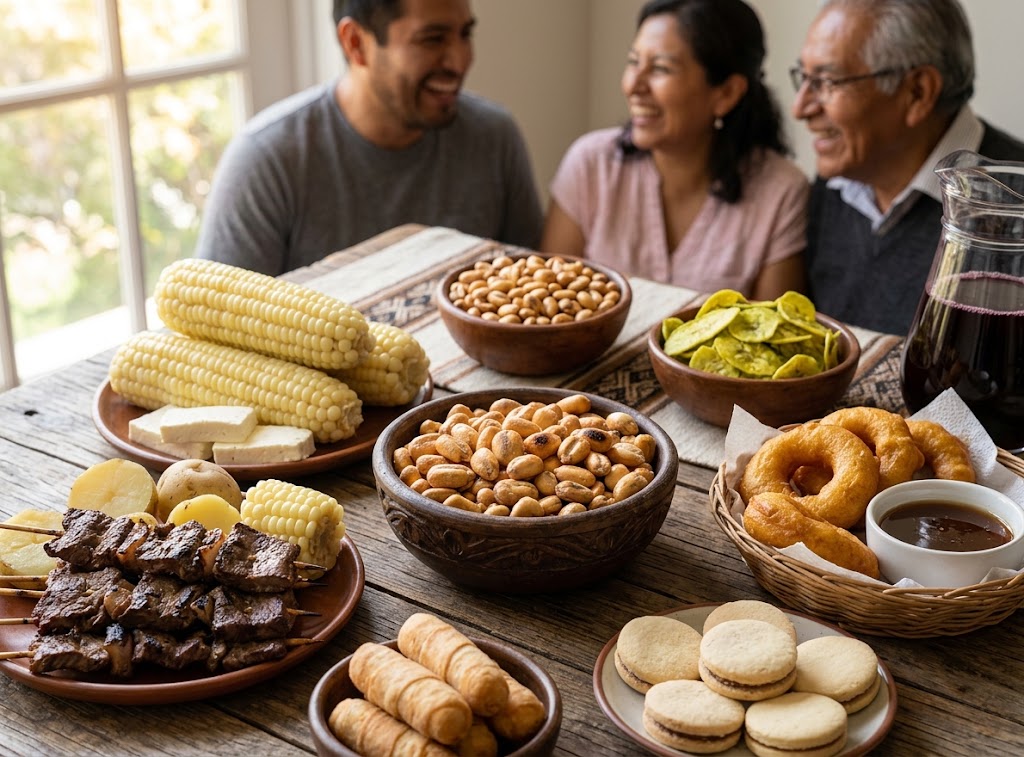
Corn and potatoes anchor most of the list, partly because Peru is one of the biological homelands of both crops. But cassava, plantains, chili peppers, and fresh Andean cheeses show up constantly too, especially the further you get from Lima.
What I like about Peruvian snacks specifically is that they’re not fussy. A lot of them are street food — sold from a cart, eaten standing up, gone in five minutes. Others are strictly homemade, the kind of thing a grandmother makes because that’s how it’s always been made. Neither version needs to be dressed up to be good.
20 Peruvian Snacks Worth Trying
1. Cancha
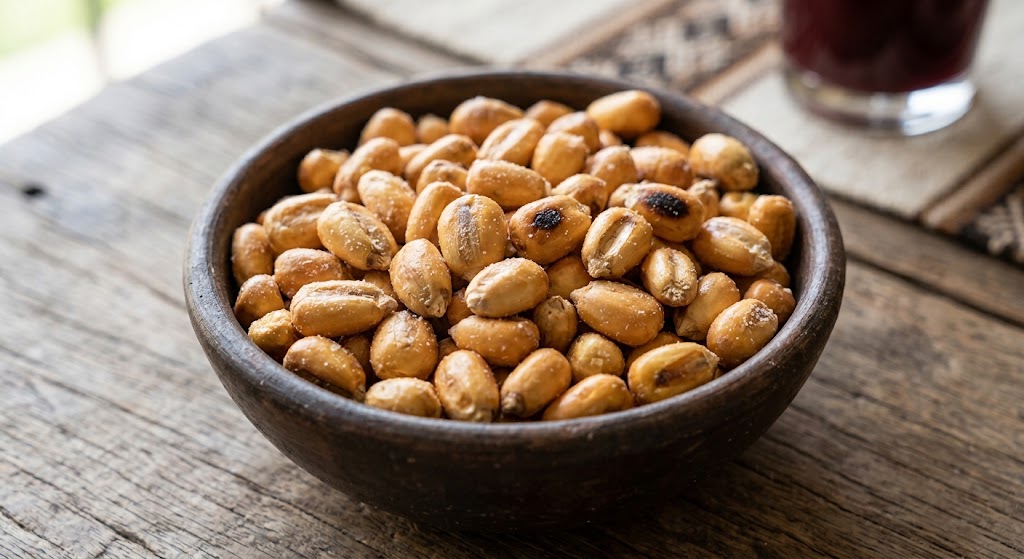
Toasted corn kernels, salted, nothing else. Cancha isn’t popcorn — the kernels don’t burst open, they just dry out and crisp up, so you end up with something crunchy on the outside and slightly chewy in the middle. It usually shows up in a little bowl next to ceviche or ceviche-adjacent dishes, working the same role tortilla chips do at a Mexican restaurant. If you want to try making Peruvian food and don’t trust yourself with anything complicated yet, start here — it’s basically corn, oil, and salt in a hot pan.
2. Choclo con Queso
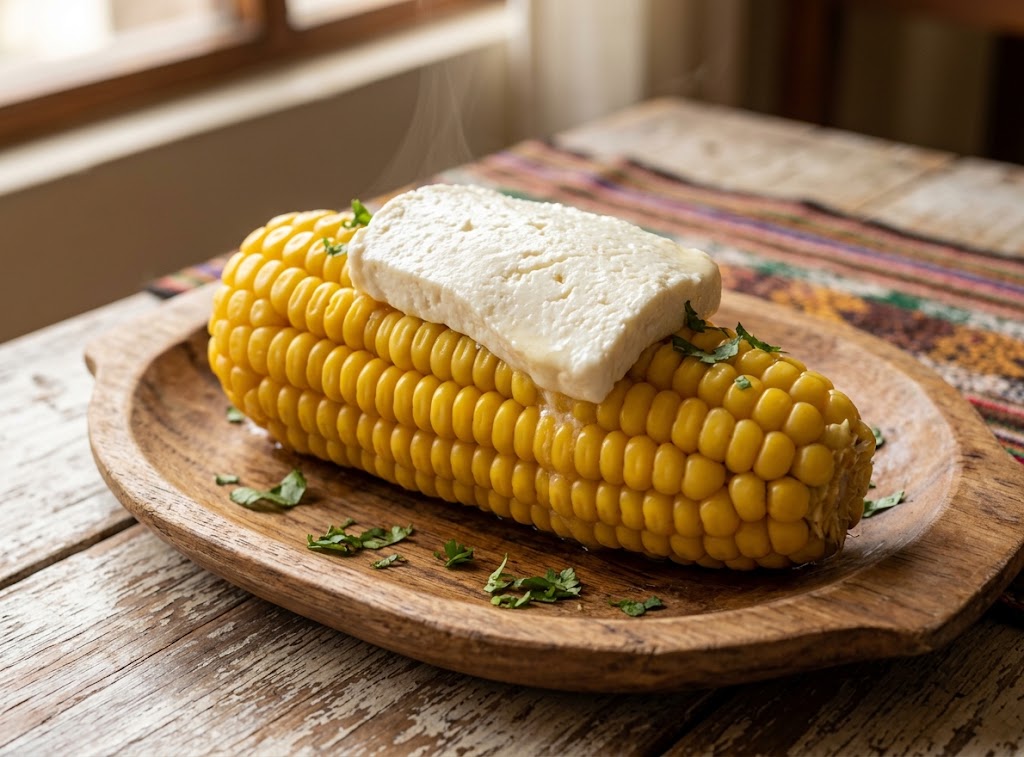
Big, starchy kernels of Peruvian corn (choclo is a different variety from what most people think of as sweet corn — larger kernels, less sugar, more bite) boiled until tender and served with a slab of fresh cheese, usually queso fresco. It’s an Andean staple, and it’s the kind of snack that makes you realize how much flavor two plain ingredients can carry when they’re both good quality.
3. Picarones
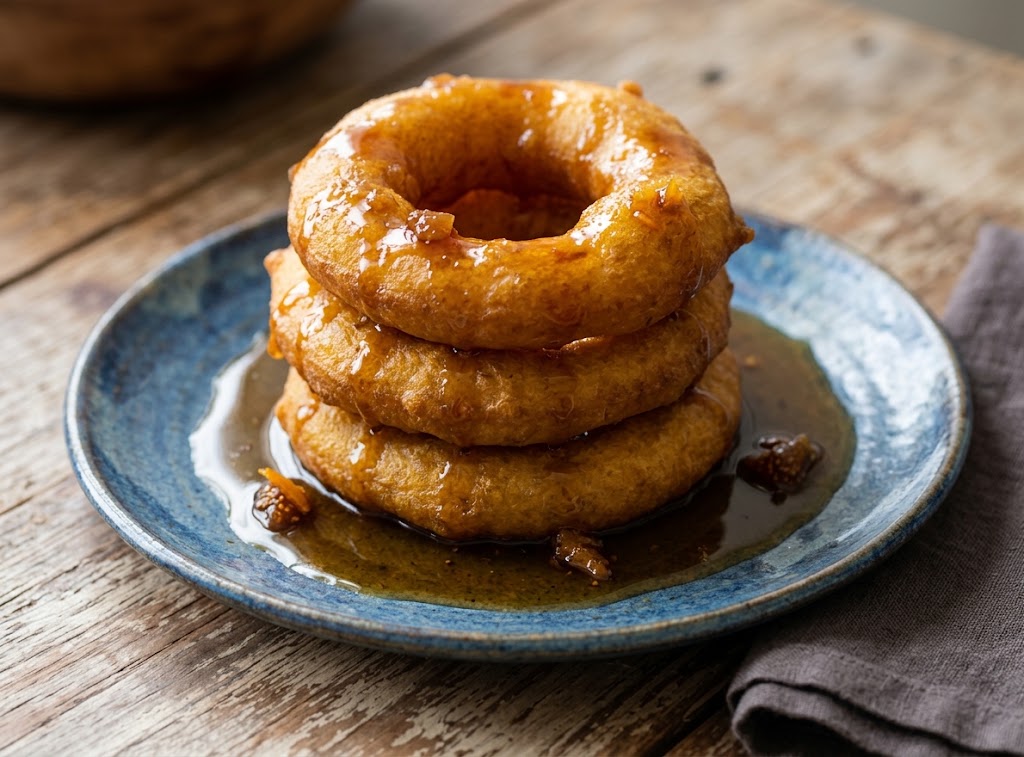
These look like doughnuts but they’re not made like doughnuts. The dough is built from squash and sweet potato instead of flour and eggs, which gives the rings a softer, slightly denser bite once they hit the hot oil. They come out drenched in chancaca, a syrup made from unrefined sugarcane that tastes closer to molasses than to regular syrup. Buy these from a street stall if you can — they’re best minutes out of the fryer, while the outside is still faintly crisp.
4. Papa Rellena
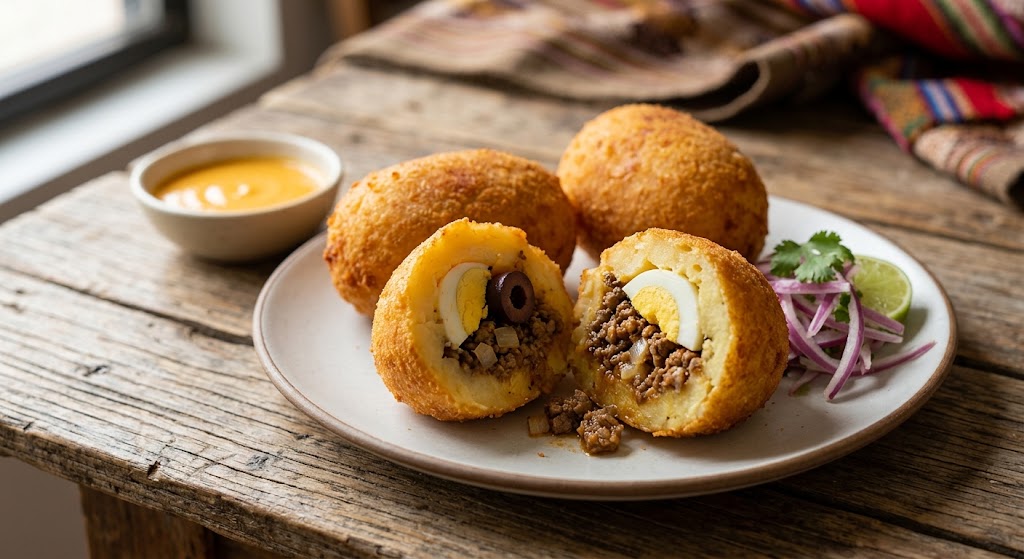
A ball of mashed potato wrapped around a savory beef filling — usually ground beef cooked down with onion, plus olives or a slice of hard-boiled egg depending on who’s making it — then deep-fried until the potato shell turns golden. It’s dense, portable, and filling in a way most snacks on this list aren’t. Order it at a Peruvian restaurant in the US and it’ll often come with a side of salsa criolla or aji sauce to cut through the richness.
5. Tamales Peruanos
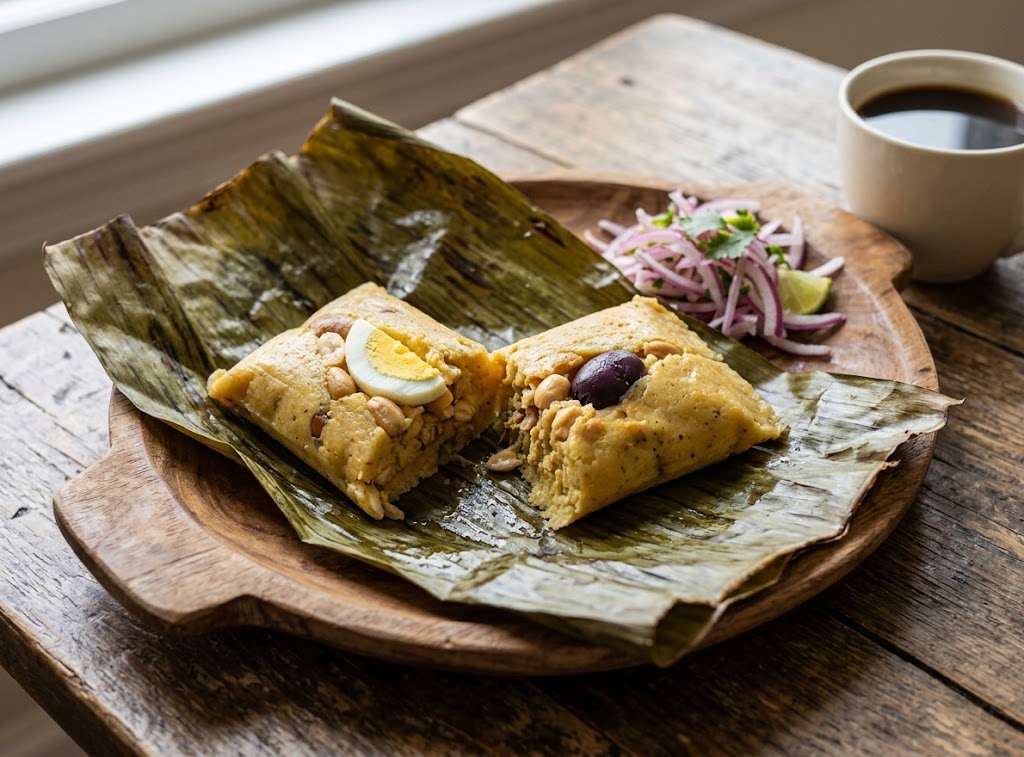
Peruvian tamales diverge from the Mexican version pretty quickly once you look closely — the corn dough is often studded with peanuts, olives, or hard-boiled egg, and the whole thing is wrapped in banana leaf rather than corn husk in many regions. They’re a common breakfast item, sold hot from big pots at market stalls, and pair naturally with a cup of coffee.
6. Anticuchos
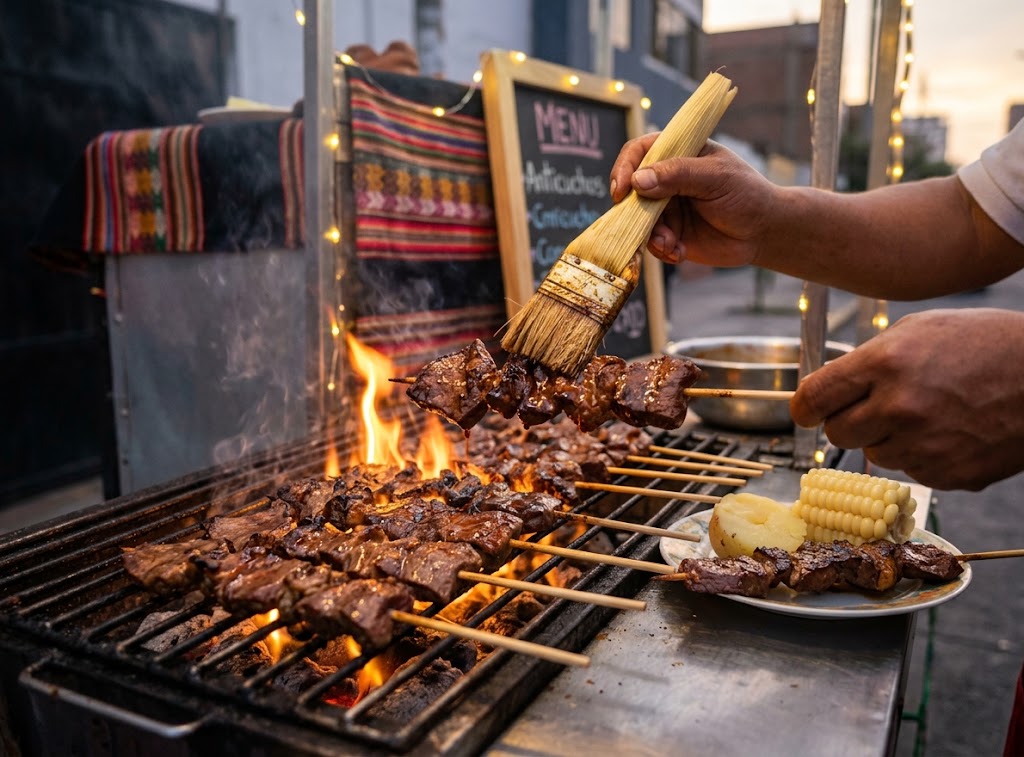
Grilled skewers, traditionally made from beef heart marinated in a mix of vinegar, cumin, and aji panca (a mild, fruity Peruvian chili). The marinade does a lot of work tenderizing the meat, and the char from the grill adds a smokiness that beef heart on its own doesn’t really have. These are sold on nearly every street corner in Lima after dark, usually with a boiled potato and a chunk of corn on the side. Calling them a “snack” undersells them a bit — a couple of skewers is basically a meal.
7. Tequeños
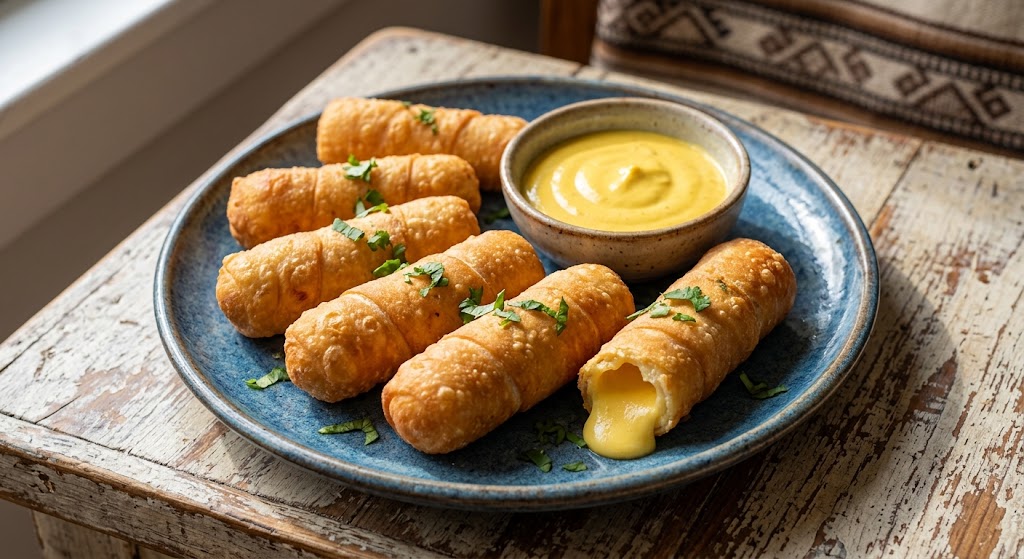
Thin strips of dough wrapped around a stick of cheese and fried until the outside blisters and the inside goes fully molten. These actually originated in Venezuela, but they’ve been fully adopted into Peruvian party food — you’ll see trays of them at birthdays and family gatherings, usually next to a bowl of huancaína sauce for dipping.
8. Chifles
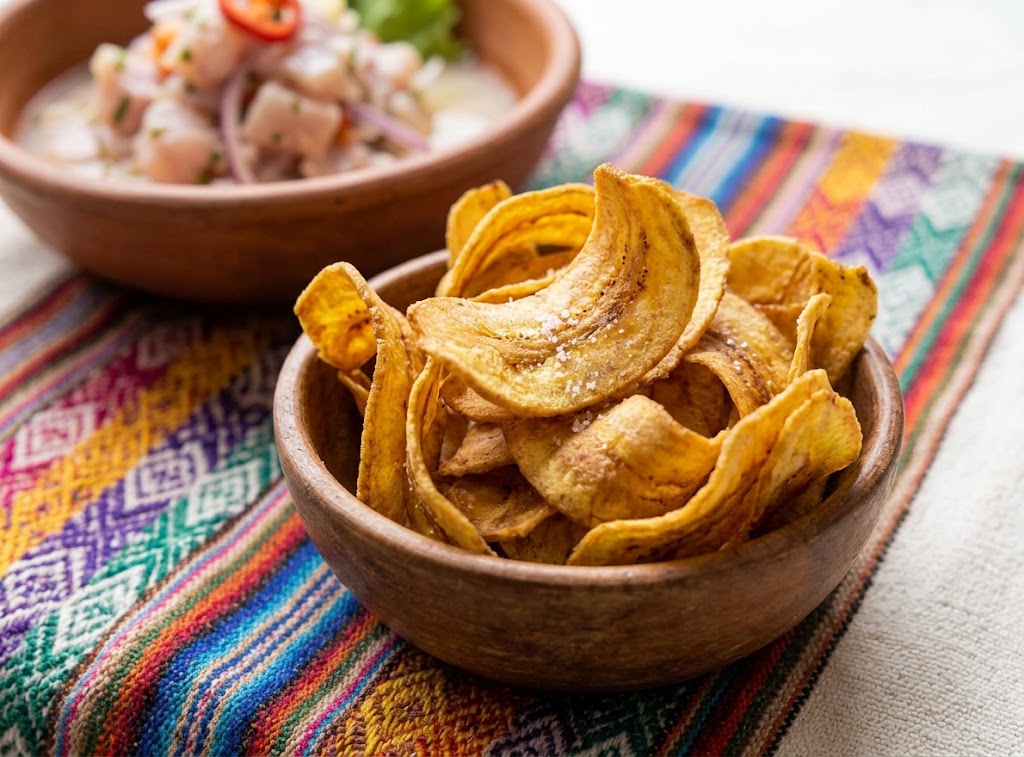
Green plantain, sliced thin and fried until it snaps like a chip. Unlike ripe plantain (which turns sweet), green plantain fries up starchy and mildly savory, closer to a potato chip than to anything dessert-adjacent. They’re the classic accompaniment to ceviche on the coast — the crunch and neutral flavor are there specifically to offset the acidity of the fish.
9. Habas Fritas
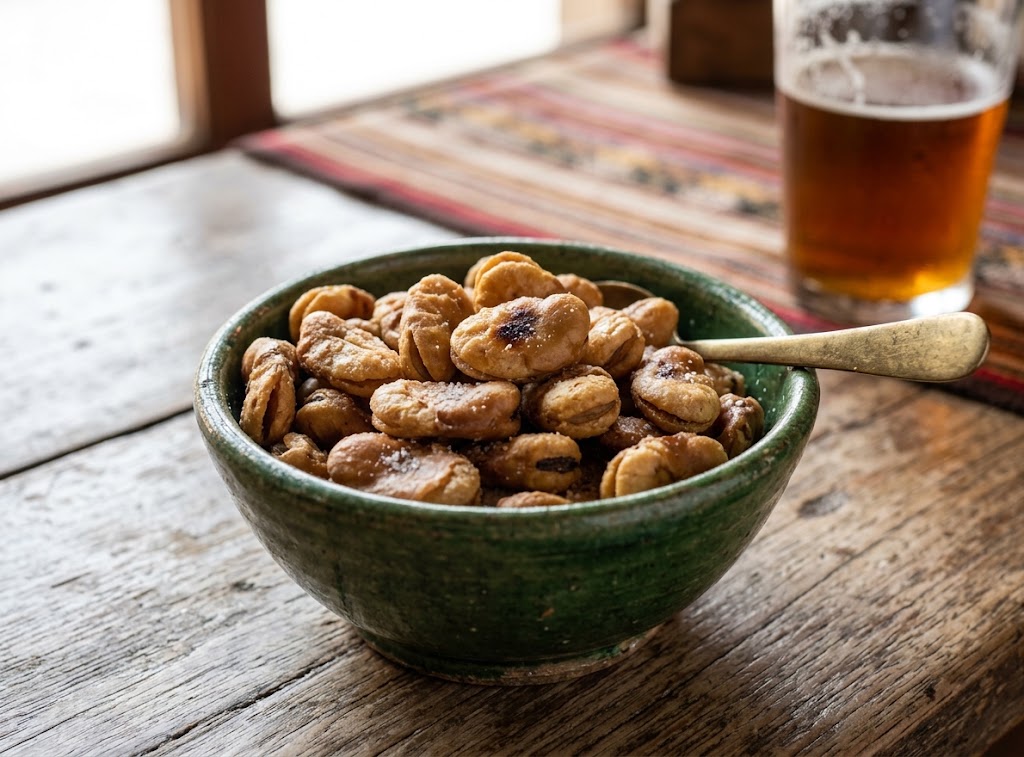
Dried broad beans, fried until they’re hard and crackly, then salted. These are an Andean bar snack more than anything — the kind of thing that shows up in a bowl next to a cold beer. The texture is closer to roasted chickpeas than to peanuts, with a slightly earthier, more mineral flavor.
10. Chocotejas
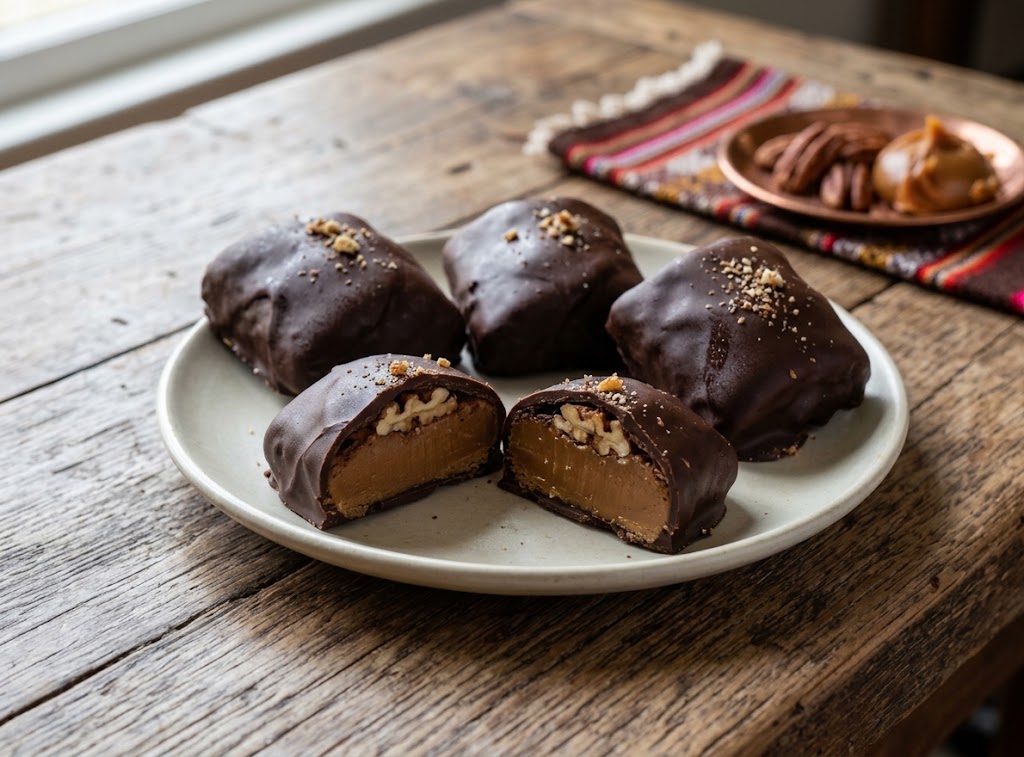
A dense, chocolate-covered candy built around manjar blanco (Peru’s version of dulce de leche) and usually a pecan or walnut in the center. These read more as a gift item than an everyday snack — they’re sold in decorative boxes around Lima and often given during holidays, similar to how a box of good chocolates functions elsewhere.
11. Alfajores
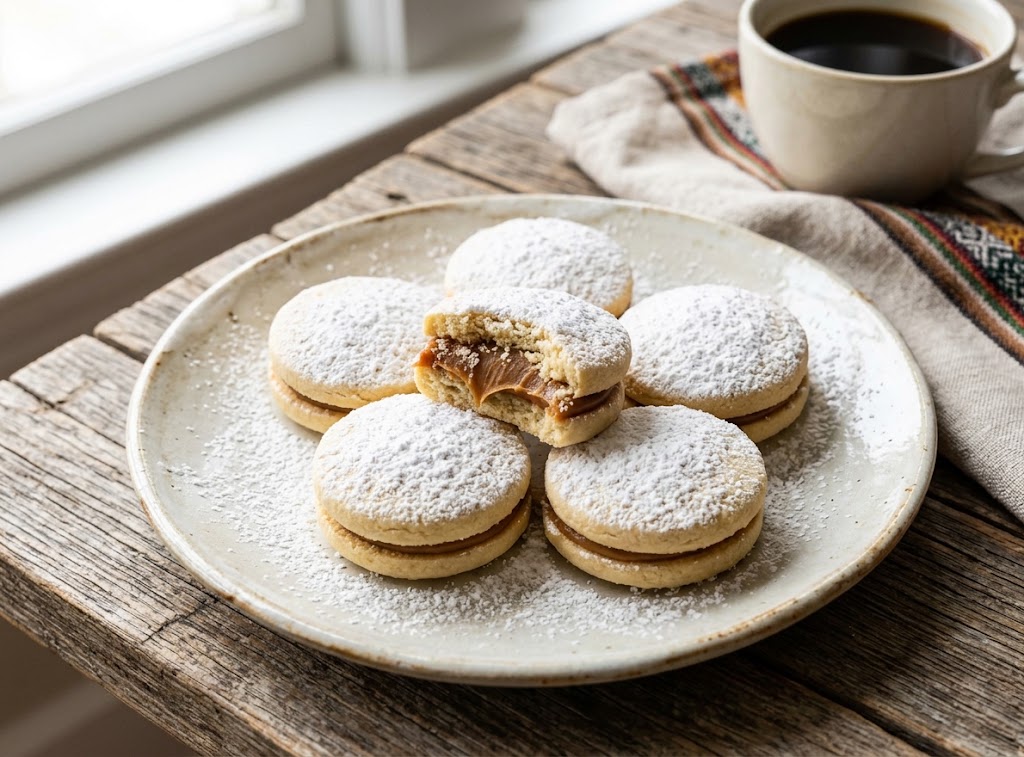
Two soft, crumbly shortbread-style cookies sandwiching a thick layer of manjar blanco. Argentina, Chile, and several other Latin American countries all claim versions of this cookie, and Peru’s take tends to be a little smaller and less sweet than some of its neighbors’. It’s an easy match for coffee, and it travels well, which is part of why it’s such a common gift and party food.
12. Turrón de Doña Pepa
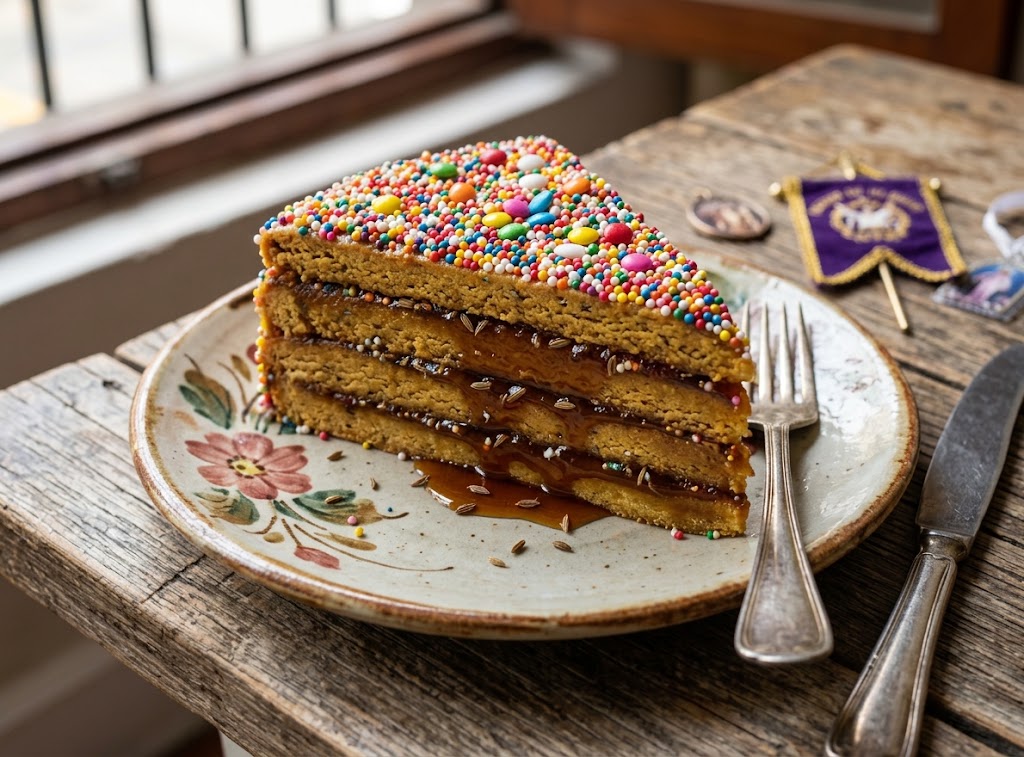
Layers of anise-flavored dough stacked with sweet syrup and topped with rainbow sprinkles. This one is tied specifically to October in Lima, when the city celebrates the Señor de los Milagros (Lord of Miracles) procession — bakeries sell almost nothing but turrón de Doña Pepa for weeks around that date. It’s rich enough that a small square is genuinely plenty; this isn’t a snack you eat a full serving of casually.
13. Yuquitas Fritas
Fried cassava dough, formed into small pieces and cooked until the outside crisps while the inside stays soft and a little starchy. Cassava (yuca) has a much milder, more neutral flavor than potato, which is part of why it works so well fried plain — it soaks up whatever sauce you dip it in rather than fighting with it.
14. Empanadas Peruanas
Baked rather than fried, in most cases, which gives Peruvian empanadas a drier, flakier crust than the fried versions common elsewhere in Latin America. Fillings run from seasoned ground beef to chicken to cheese, and sweet dessert versions exist too. They’re bakery staples — the kind of thing you grab on your way somewhere else.
15. Humitas
Fresh corn, ground down into a soft paste, wrapped in the corn’s own husk, and steamed. They split into two camps: savory humitas, often studded with cheese, and sweet ones, flavored with cinnamon, sugar, or raisins. Either way, the texture ends up somewhere between a tamale and a soft corn pudding, and the husk wrapping keeps everything moist while it cooks.
16. Butifarra
A sandwich, not a bite-sized snack, but one worth knowing: sliced ham on crusty bread, topped with salsa criolla — thin-sliced red onion marinated in lime juice, salt, and sometimes a little chili. The acidity from the onion cuts through the ham, and a good butifarra depends almost entirely on how fresh the bread is.
17. Choritos a la Chalaca
Mussels on the half shell, topped with a cold mix of diced onion, tomato, corn, chili, and lime juice. This is coastal food through and through — you’ll find it in seafood-heavy cities like Callao, where “chalaca” (a nod to the region) comes from. It sits closer to an appetizer than a casual snack, but it’s a good entry point into Peru’s seafood traditions if ceviche feels like too much of a commitment.
18. Cachangas
Simple fried flatbread, made from a basic dough and cooked until lightly crisp on the outside. They can go sweet, dusted with sugar, or savory, and they’re strongly associated with home cooking rather than restaurants or markets — the kind of thing a family makes with whatever flour and oil is already in the kitchen.
19. Mazamorra Morada
A thick, pudding-like dessert made from purple corn (maíz morado), simmered down with fruit, cinnamon, and cloves until it thickens. The color is startling if you’ve never seen it — a deep violet that comes entirely from the corn itself, no dye involved. It’s usually served chilled in small bowls, and it’s common enough at Peruvian households that many people grew up eating it as a matter of course rather than as a special occasion food.
20. King Kong de Manjarblanco
A layered pastry built with sheets of dough, manjar blanco, and often fruit preserves like pineapple, stacked several layers high and cut into large rectangular slices. It comes from Lambayeque, in northern Peru, and its size alone makes it more of a shared, cut-to-order treat than something you eat on your own. If your only reference point for Peruvian sweets is Lima bakeries, King Kong is a good reminder that the north has its own dessert traditions worth chasing down.
Sweet or Savory: How to Choose
If you’re picking based on mood rather than curiosity, it’s a fairly clean split.
Savory: cancha, papa rellena, tamales, anticuchos, chifles, empanadas — good for when you want something salty or filling.
Sweet: picarones, alfajores, chocotejas, turrón de Doña Pepa — and worth noting, a lot of these sweets are tied to specific holidays, so trying them can tell you something about the Peruvian calendar, not just the flavor palette.
First Time Trying Peruvian Snacks?
Don’t overthink the order. Cancha and chifles are the safest, most familiar entry points if you like anything crunchy and salty. Papa rellena is the move if you want something that actually fills you up. Anticuchos are worth it if grilled meat is your thing, beef heart or not — the marinade does more of the flavor work than the cut itself. And if you have a sweet tooth, picarones bought hot off a street cart beat almost any bakery version.
Markets are genuinely the best place to do this. You’ll find things that never make it onto a restaurant menu, and watching a vendor fry chifles or ladle chancaca over picarones is half the fun.
Making These at Home
A few of these are realistic weeknight projects. Cancha needs almost nothing — corn kernels, oil, salt, a hot pan, and some patience so they don’t burn. Chifles are nearly as simple if you can find green (unripe) plantains, which is the part people usually get stuck on outside of Latin American grocery stores.
Alfajores take more effort — you’re making shortbread and often the manjar blanco from scratch — but they’re forgiving for a first attempt. Papa rellena is the most involved of the bunch, since you’re making a potato shell and a separate meat filling before you even get to frying.
If you’re new to all of this, pick one recipe and get comfortable with it before stacking on a second. The ingredients repeat enough across this list that skills transfer quickly once you’ve got a couple of them down.
Frequently Asked Questions
What’s the most iconic Peruvian snack for someone who’s never had one?
Cancha, hands down — it’s the one you’ll actually get served without ordering it, sitting in a bowl next to your ceviche before you’ve even asked for anything.
Is Peruvian street food safe to eat?
Generally yes, especially anything cooked to order in front of you (anticuchos, picarones, chifles). The usual travel advice applies: go where there’s a line of locals, and be a little more cautious with anything raw or pre-cooked and sitting out, like ceviche from a stall with no visible refrigeration.
What’s the difference between a Peruvian tamale and a Mexican one?
Mostly the wrapping and the mix-ins — Peruvian tamales often use banana leaf instead of corn husk, and it’s common to find peanuts, olives, or egg inside, which isn’t typical in Mexican versions.
Are Peruvian snacks spicy?
Some are, but it’s usually more about depth than heat. Aji peppers (aji amarillo, aji panca) show up often, and they lean fruity and mildly spicy rather than aggressively hot — closer to a jalapeño than a habanero in most preparations.
What should I try if I only have time for one Peruvian snack?
Papa rellena. It’s filling, easy to find, and gives you a sense of two Peruvian staples — potato and seasoned beef — in one bite.
Final Thoughts
What stands out about Peruvian snacks, once you’ve tried a handful, is how little effort some of the best ones take. Corn, oil, and salt make cancha. Potato and beef make papa rellena. Nobody’s trying to impress anyone with a long ingredient list — the ingredients themselves are just good, and the technique is old enough to have been refined over generations.
Start with something familiar — a fried cheese stick, a corn snack, a sweet fritter — and work outward from there. Somewhere between cancha and King Kong, you’ll probably land on a favorite you didn’t expect.
